400km in Three Days: Guy Bridge's Long-Distance Wing Foiling Downwind Along the UK South Coast
The Short Version
- Guy Bridge covered 400km of UK south coast from Devon to Folkestone in three days, spending 19 hours and 48 minutes on the water — a number that makes the pacing requirements very concrete.
- The Parawing's non-inflatable design gave it a real advantage for a multi-day expedition: no bladder to fail, no pump to carry, lighter and smaller than an inflatable wing.
- Bridge stepped down from a UHA 770 foil on day 1 to a UHA 670 for days 2 and 3 — an adjustment that reflects both changing conditions and the reality of managing fatigue across three long sessions.
- Emma Bridge ran all land logistics from shore throughout the mission; expedition-scale foiling is a two-person operation, not a solo one.
- The south coast route involves tidal races, active shipping lanes, and heavy seaweed — planning frameworks that apply to any serious downwind mission, not just a 400km one.
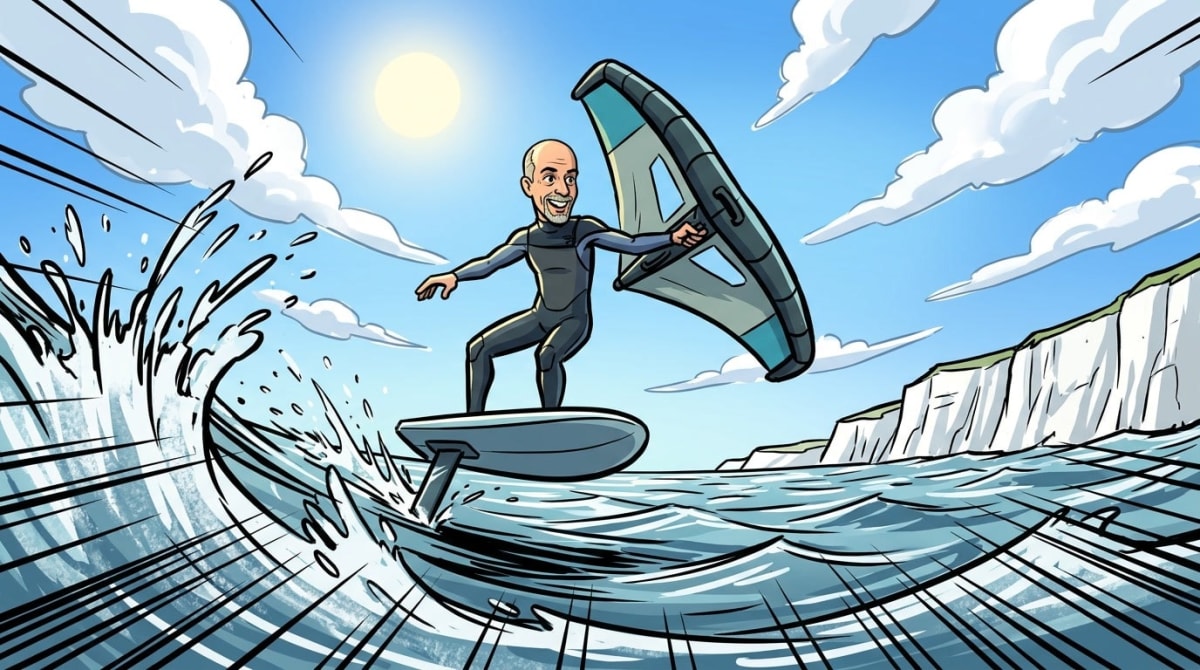
Three days along the English Channel. Four hundred kilometers under a wing. Nineteen hours and forty-eight minutes of actual foil time — broken across three hard days of tidal races, shipping traffic, seaweed, and shifting forecasts. When Armstrong athlete Guy Bridge completed his long-distance wing foiling downwind run from Devon to Folkestone along the UK south coast, he didn't just set a personal milestone. He showed what the sport looks like when you stop treating it as a session.
The Mission: Devon to Folkestone Along the English Channel
The Mission: Devon to Folkestone Along the English Channel
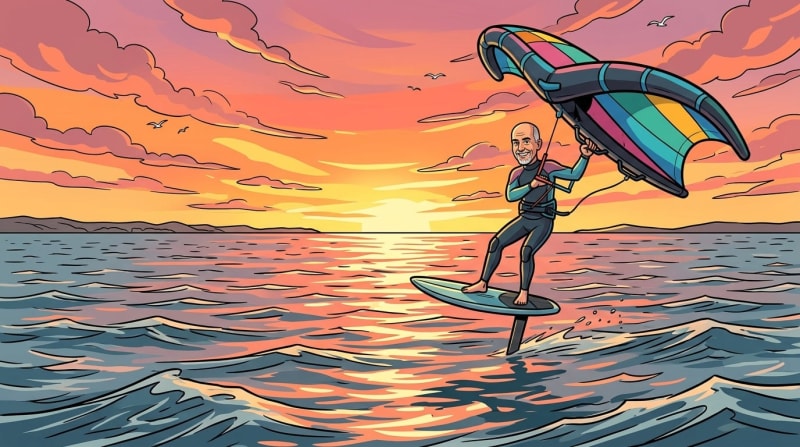
The route ran the entire UK south coast — roughly 250 miles by road, significantly more by water once you account for tidal routing and the irregular geometry of a Channel coastline. Bridge averaged just under 7 hours of foil time per day to cover the distance, which means long hours on the water and carefully calculated rest windows between stages.
What made this feasible wasn't just fitness. Emma Bridge managed the land side: logistics, safety, filming, and resupply at each stage. Expedition-scale foiling requires a team. A rider managing land logistics solo from a phone between sessions isn't running an expedition — they're running a serious risk. Emma's role was as load-bearing as Guy's.
The Gear That Made 400km Possible — and the Adjustments Between Days
The Gear That Made 400km Possible — and the Adjustments Between Days
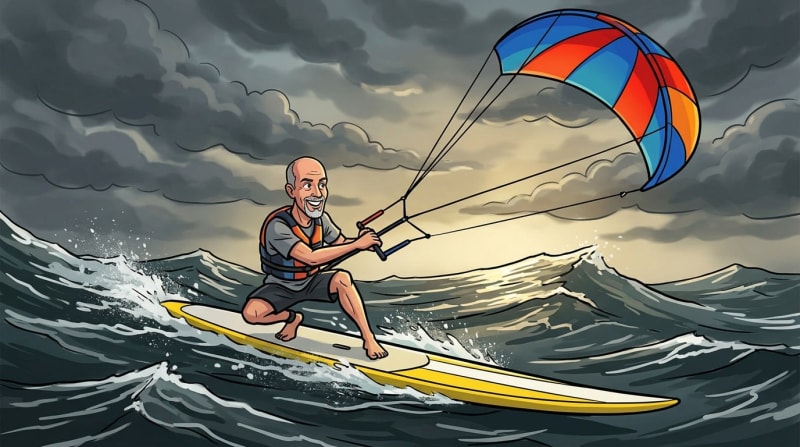
Day 1 setup, per Armstrong Foils: an 8'2" Downwind Ocean Board, UHA 770 foil, 3.6m Parawing, PM-X 795 mast, Dart 140 stabilizer, and TC60 fuselage. For days 2 and 3, Bridge dropped to the UHA 670 foil and a 3.0m Parawing — smaller foil, smaller wing.
The step-down matters. A 770cm² foil generates lift at lower speeds, which is useful on day one when you're fresh and the conditions allow some range. Smaller gear for days 2 and 3 suggests the central south coast sections were delivering more consistent or faster winds, that fatigue was a real factor, or both. When you have three days to cover a coast, you manage your energy the same way you manage your tidal windows.
The Parawing's role in a multi-day mission is worth naming specifically. A non-inflatable wing has no bladder to fail. No pump to carry. The rig is lighter and packs smaller. For an expedition where gear failure at sea is a genuine problem — not an inconvenience — those are real advantages over a traditional inflatable wing.
Long-Distance Wing Foiling Downwind: What the Conditions Actually Demand
Long-Distance Wing Foiling Downwind: What the Conditions Actually Demand
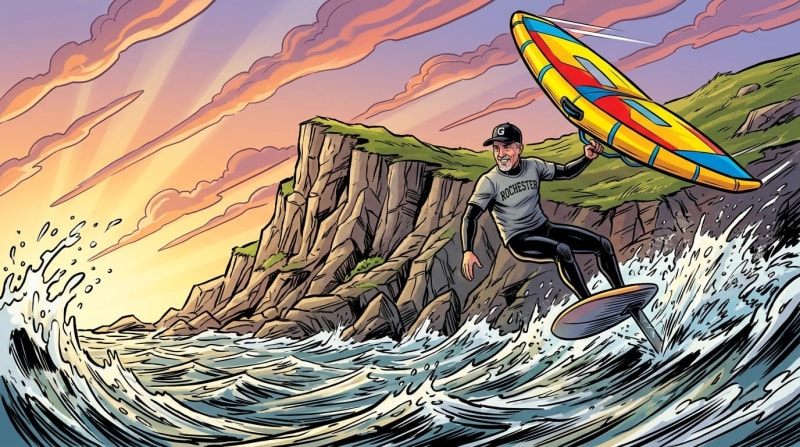
The south coast of England is not a forgiving downwind venue. Tidal races run hard off the headlands. Shipping lanes in the Channel carry commercial traffic around the clock. Seaweed was heavy enough that Bridge flagged it as a genuine obstacle. Add shifting forecasts and the open-water crossings between ports, and you have a route that requires maritime navigation knowledge, not just foil skill.
Most foilers reading this aren't planning a 400km run next season. But the planning frameworks apply at any scale. Tidal windows matter on a 3-hour crossing as much as a 3-day mission. Weather routing — picking a forecast window rather than fighting an unfavorable one — saves energy and reduces risk at every level. And nutrition on the water, which sounds minor until you bonk at hour four, is something worth solving before you need to.
The sport is expanding into territory it didn't occupy three years ago. Multi-day downwinding, channel crossings, expedition-scale logistics — these are part of the conversation now. Bridge's route is an edge case today. In five years, it will be a template.
Content ID: DT7ubKMjHAE598WfOoUEimUn
See an error? Tell us.
Comments
Share with the Community