

Ozone Pocket Rocket V2: Is This the Future of High-Wind Wing Foiling?
The Short Version
- The V2 fixes the two most-cited V1 failures — canopy shape retention under pressure and poor packability — making it a genuine quiver piece rather than a specialty novelty.
- Pocket wings are advanced-discipline gear: they reward riders who've already mastered standard wings and want to extend their wind range upward past 25 knots, not a shortcut for beginners.
- Front wing pairing is where most riders go wrong — a 750–1000cm² fast-geometry front wing matches the V2's performance envelope; pair it with something larger and the system fights itself.
- The 2026 GWA World Tour now includes dedicated high-wind expression formats where pocket wings dominate, validating sub-2m wings as performance-level gear with competitive legitimacy.
- A 2m Pocket Rocket fits in checked luggage and extends a standard three-wing quiver's rideable ceiling from roughly 26 knots to 35 — a meaningful gap at windy travel destinations.
The wind is blowing 30 knots. Your 3m wing is already borderline. Your 2.5m is in the back of the van — and honestly, it's still too much canvas for what the water looks like right now. If you've been wing foiling long enough to have that problem, congratulations: you're exactly who this gear was built for.
The Ozone Pocket Rocket V2 is Ozone's second-generation entry into the pocket wing category — sub-2.5m wings built specifically for 25-plus-knot sessions where a standard quiver runs out of answers. According to Wingfoil Daily, pocket wing riding in 25–35 knot conditions has emerged as a genuine discipline within the community, complete with dedicated event formats and riders who build their entire practice around it. This isn't fringe gear anymore.
This Ozone Pocket Rocket V2 review covers what actually changed from the original, what riding a sub-2m wing requires of you technically, and whether the Pocket Rocket earns its place next to your standard wings.
What Is a Pocket Wing and Who Is It Actually For?

What Is a Pocket Wing and Who Is It Actually For?
The pocket wing category sits below standard small wings — typically 1.0m to 2.5m, built for conditions where you'd otherwise be overpowered or simply waiting on the beach for the wind to back off. The Ozone Pocket Rocket V2 covers the full spectrum, from a 0.6m micro wing designed for extreme high-wind specialists up through a 2.5m model that bridges the gap between pocket and standard territory.
The most common misconception about pocket wings is that smaller means easier — less power, less to manage. The opposite is true. Pocket wings reward technical riding. To generate consistent lift at 30 knots with a 1.5m wing, you need efficient foil selection, active body movement, and a pumping cadence that doesn't come until you've logged serious hours on standard gear. This is not beginner equipment. It's a tool for riders who have already mastered their quiver and want to extend it into conditions where standard wings become genuinely unpleasant.
The rider who gets the most out of a pocket wing is someone already pushing the limits of their 3m or 2.5m on those 22–25 knot days — who wants to keep riding when that same wind climbs to 30 and their smallest standard option becomes more workout than session. Have you been sitting out those overpowered days instead of riding them? That's the gap the pocket wing was designed to close.
What's New in the V2: Key Changes from the Original Pocket Rocket

What's New in the V2: Key Changes from the Original Pocket Rocket
Ozone was transparent about the V1's weaknesses when they announced the V2. Community feedback on the original Pocket Rocket centered on two consistent complaints: the canopy lost shape under sustained pressure, and the wing packed down awkwardly for travel. Both are addressed in the V2.
Ozone's design notes describe a revised canopy profile that delivers improved low-end grunt — the V2 generates usable power earlier in its wind range than its predecessor, which required near-ideal conditions to feel efficient rather than just survivable. The strut construction is stiffer, which translates directly into better shape retention when the wing is loaded under real pressure. Handle placement has also shifted to improve leverage during pump cycles — a small change that becomes meaningful when you're working hard to maintain flight through the lulls between gusts.
Packability was a genuine problem with the V1, not just an aesthetic one. Pocket wings are supposed to be travel-friendly — fitting a sub-2m wing in checked luggage is a core part of the value proposition. The V2 rolls down more compactly and holds that shape without the canopy creasing at stress points. Riders who travel to windy destinations and need a wing that survives the checked-bag journey intact will notice the difference.
At $1,009, the V2 sits in the middle of the current pocket wing market. The North Seek Ultra comes in below it; the Duotone Unit D/Lab commands a premium. The Ozone doesn't win on price, but it covers a broader size range than most competitors — and the 0.6m option exists if you ever want to find out what 45 knots actually feels like with a wing in your hand.
On the Water: What a Sub-2m Wing Actually Changes About How You Ride

On the Water: What a Sub-2m Wing Actually Changes About How You Ride
This is the section most reviews skip. A pocket wing is not a small version of your standard wing. It rides differently — and if you pick up a 1.5m expecting it to behave like a 3m in stronger air, you'll be confused and probably frustrated for your first few sessions.
Stance changes first. With a standard wing, you can be relaxed about body position — the wing does a significant amount of the organizational work. A pocket wing requires active engagement. Your stance needs to be wider for stability, your weight distribution shifts dynamically with gusts, and your leading arm does more work managing angle of attack. Riders who learned on larger wings often describe pocket wing sessions as physically demanding in a way the sport doesn't always require. That's not a flaw — it's the discipline.
Pumping cadence shifts too. On a standard wing, you pump to get on foil and then maintain height somewhat passively. With a sub-2m in 30 knots, you're working continuously — not frantically, but attentively. The wing rewards rhythm. Short, efficient strokes from the elbow outperform big arm swings every time.
"A pocket wing doesn't make the session easier. It makes a different session possible."
Foil selection matters enormously and is where many riders first go wrong. A pocket wing generates lift through speed and technique, not raw sail area. That means a large, slow front wing becomes a liability rather than an advantage. According to community coverage on Wingfoil Daily, pocket wing specialists consistently report needing front wings in the 750–1000cm² range to match the wing's performance envelope. Pair a 1.5m Pocket Rocket with a 1200cm² front wing and you'll fight the system in every gust. Pair it with a well-matched 900cm² option and the whole thing clicks together.
The sessions pocket wings unlock are specific but real. Overpowered beach days that would otherwise be a walk become legitimate riding windows. Choppy inland lakes with thermal gusts peaking at 32 knots — manageable. That gusty afternoon window that comes and goes in 20-minute surges — a pocket wing is exactly what that calls for. As The Foiling Magazine reports, the 2026 GWA World Tour now includes dedicated high-wind expression session formats where pocket wings don't just appear — they dominate. What the pros have codified in competition is already true in community sessions: high-wind wing foiling is its own discipline, and the pocket wing is the hardware that defines it.
Sizing the Pocket Rocket Into Your Quiver

Sizing the Pocket Rocket Into Your Quiver
The practical wind range for the V2's 2m model runs roughly 24–34 knots. The 1.5m overlaps the top of that range and extends upward to around 38. Below 22 knots, a pocket wing of any size requires more effort than a 3m would provide freely — you're fighting for lift the larger wing gives away. That wind floor matters when you're deciding how the pocket wing fits your existing setup.
For foil pairing, the V2 rewards front wings in the 800–1000cm² range with moderate-to-high aspect ratios. Ozone's own foil lineup works naturally here, but the Pocket Rocket is not a system-locked wing. Any fast-geometry front wing from Armstrong, Axis, or Moses in the right area will perform. The Armstrong FG Wing SUP Foilboard, currently $599 at REAL Watersports (marked down from $699), is a board pairing that comes up consistently in the pocket wing community — its stable platform handles the choppy, aggressive conditions where the V2 shines without adding unnecessary volume underfoot.
The one-bag travel case for the pocket wing is genuine, not marketing. A rolled 2m Pocket Rocket fits inside checked luggage. For a windy destination — the Canaries, Maui, Tarifa — bringing a pocket wing instead of your smallest standard option means one less board bag, full coverage on high-wind days, and the ability to ride conditions that most rental fleets can't touch. For riders who travel with specific wind forecasts in mind, this is a real quiver decision worth taking seriously.
The honest gap the pocket wing doesn't cover: anything below its wind floor. If you're regularly riding in 15–22 knots, the V2 contributes nothing to those sessions. It's a high-wind extension, not a replacement. Your 3m is still working in that range. Plan the quiver accordingly.
Verdict: Should You Add a Pocket Wing to Your Quiver This Season?
Verdict: Should You Add a Pocket Wing to Your Quiver This Season?
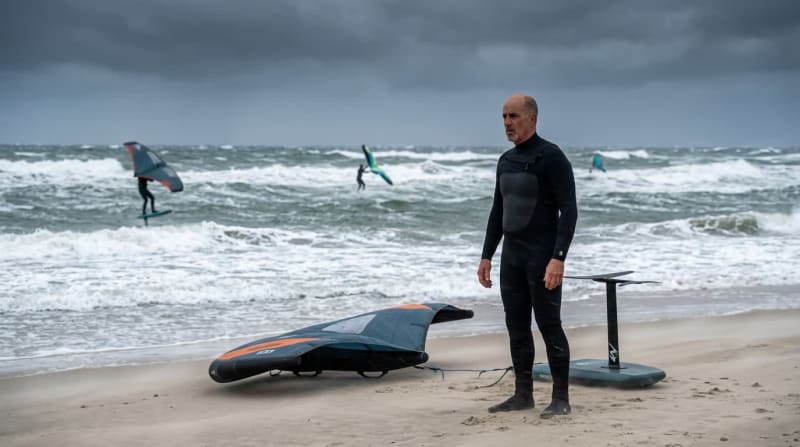
Buy the Pocket Rocket V2 now if you've already pushed the limits of your 3m or 2.5m on strong-wind days and there are sessions you've been sitting out. If you live somewhere that sees genuine 28–35 knot days with any regularity — or travel to places that do — the V2 delivers on the category's premise in a way the original didn't quite manage. The V1's shape-retention and packability issues were real. They're fixed.
Wait if you're still developing your core technique on standard wings. A pocket wing will not teach you anything — it will amplify what you already know, for better or worse. If your 3m still feels like a challenge on 22-knot days, that's the investment that comes first. The pocket wing community is welcoming, but the gear itself is unforgiving of fundamental gaps.
The larger trend in pocket wing development points somewhere interesting. Better low-end engagement (already improved in the V2), lighter canopy construction, and a continued push downward in size — 0.6m wings are here, someone is already riding them in 50 knots, and there's video to prove it. As The Foiling Magazine notes, GWA team rosters are shifting toward riders who specialize in technical high-wind conditions. The brands follow where the riding leads. In 2026, the riding is leading toward smaller, faster, and more technically demanding — and the Pocket Rocket V2 is a legitimate entry point into that direction.
The wing foiling community built something generous and specific at the same time: a sport that welcomes newcomers and simultaneously keeps expanding the frontier for people who want to push. Pocket wings are the current edge of that frontier. What's your high-wind ceiling right now — and what becomes possible when you move it?
Content ID: hLiaYknCtjsFCXfEYwVOZmHI
See an error? Tell us.
Comments
Share with the Community