
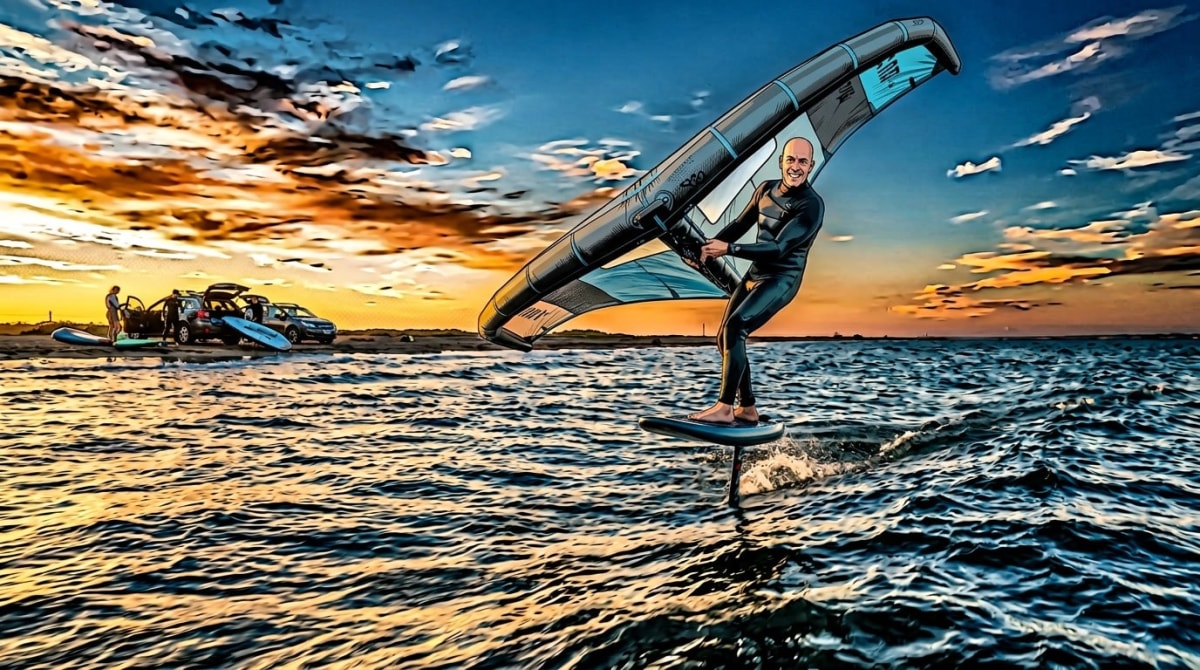
Pump Foiling for Wing Foilers: Your Zero-Wind Superpower
The Short Version
- Wing foilers already own the most critical piece of pump foil gear — a high-aspect foil — making the crossover cost roughly $1,700–$2,000 rather than $6,000 from scratch.
- Pump foiling is the zero-wind extension of wing foiling: glassy, windless mornings that ruin wing sessions are actually ideal conditions for pump foiling.
- The dock start is the foundational skill, and most competent wing foilers reach sustained flight within five to ten sessions because foil-feel transfers directly from wing riding.
- Armstrong Foils, the leading wing brand, is the 2026 FSRL title sponsor — a clear industry signal that wing-to-pump crossover is the primary growth path for foiling.
- Atlanta Foil Fest (June 12–14, Lake Lanier) offers free spectator access, pump foil demos, and expert clinics — the lowest-barrier way to see and try the discipline before buying anything.
- The pump foiling community is genuinely generous: every local foiling scene has at least one experienced pump foiler who will teach you the dock start in a parking lot for free.
The forecast lied. It does that. You checked it twice the night before, loaded the rig, set the alarm for early — and the water is glass. Eight knots, maybe. Probably less. Not enough to wing, not even close.
Most wing foilers pack up and head home. But something different is happening at ramps across the country in 2026. Someone doesn't leave. They pull a small board out of their car — three and a half feet long, lighter than your front wing — walk to the end of the dock, and fly.
That's pump foiling. And pump foiling for wing foilers isn't as far a leap as it looks — most of the gear translates, and the learning curve is shorter than you'd expect.
What Is Pump Foiling and Why Wing Foilers Are Crossing Over
What Is Pump Foiling and Why Wing Foilers Are Crossing Over
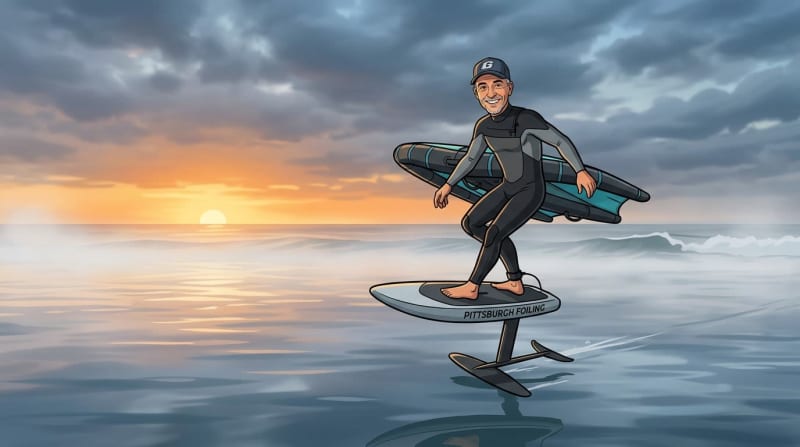
Pump foiling for wing foilers is the natural zero-wind extension of the sport: you use rhythmic body motion — not wind — to generate lift on a hydrofoil and sustain flight across flat water. No wing, no kite, no motor. Just you, the board, and the physics of a foil responding to every move your body makes.
The concept has existed for years in the wave foiling community. What's different in 2026 is the infrastructure now surrounding it. The Foil Surf Race League is running a full three-stop US series with 1v1 pump race as a headline event — equal billing alongside surf race, wake freestyle, and e-foil. Armstrong Foils, the brand most wing foilers associate with high-performance wing gear, is the title partner of the 2026 FSRL tour. That's not an accident. The industry is betting on wing-to-pump crossover, and it's betting big.
The appeal for wing foilers is direct. The conditions that make pump foiling ideal — glass-flat, windless water — are exactly the conditions that ruin wing sessions. Pump foiling doesn't just fill the gaps. It flips the equation entirely.
Here's how pump race sits alongside the other FSRL disciplines across all three 2026 stops:
What does it mean for your season when a glassy no-wind morning stops being a day off?
What Gear You Already Own (and What You Need to Add)
What Gear You Already Own (and What You Need to Add)
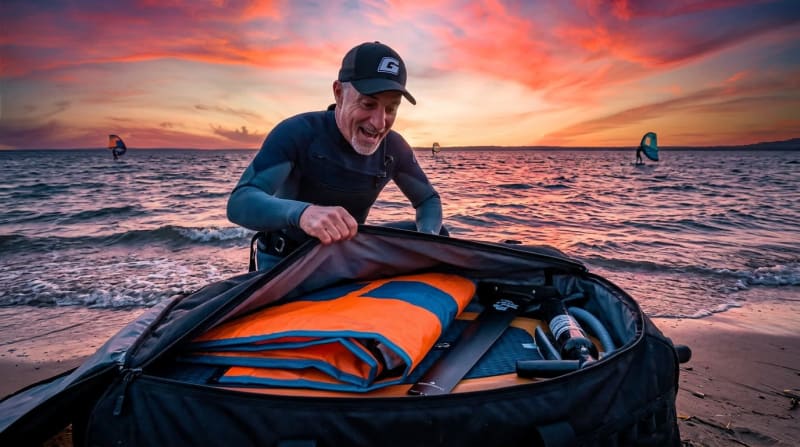
Here's where the pump foil crossover gets genuinely interesting: you likely own most of what you need.
The foil is the critical piece, and the news is good. high-aspect foils — the hardware most dedicated wing foilers have moved toward for glide, efficiency, and light-wind performance — translate directly to pump foiling. Armstrong HA and UHA series foils, the Axis HPS, the F-One Phantom, the Slingshot Phantasm — these are architecturally suited for pump foiling. Their long-span, low-drag front wings generate the lift and glide needed to sustain flight from pumping rhythm alone. Low-aspect surf foils are a different story. They're optimized for steep, punchy waves, not sustained glide, and they'll make learning pump foiling significantly harder without any real payoff. If you're on surf foil hardware, that's worth addressing before you invest in a board.
Your mast and fuselage will almost certainly transfer. Most 60–90cm aluminum or carbon masts work fine for dock-start sessions. Longer masts offer advantages for deep-water pumping eventually, but that's a future conversation, not a Day 1 consideration.
What you don't own yet is a dedicated pump foil board. This is the one required addition, and the difference from a wing foil board is significant. A pump foil board is short — 3'6" to 4'6" — with a flat deck, minimal rocker, and a kick tail that gives you the leverage for the initial dock start pop. Wing foil boards are built for water starts: longer, higher volume, and too heavy for sustained pump efficiency.
Slingshot's new One-Lock Wake Progression package, released in April 2026 at $1,699, is built around a tool-free foil swap system that lets the same foil move between your wing setup and a pump board without hardware. It's a direct acknowledgment that these disciplines are converging in the same quiver.
Here's what it actually costs to add pump foiling depending on where you're starting:
The wing foiler number uses Slingshot's entry package as the anchor and assumes you already own a compatible high-aspect foil. Your actual cost will vary, but the gap between adding pump to an existing wing setup and building from scratch is real and meaningful.
The Dock Start: Your First Skill to Learn
The Dock Start: Your First Skill to Learn
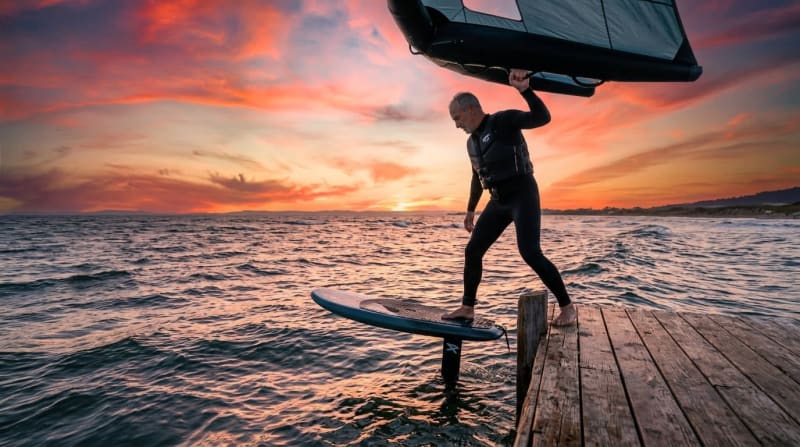
Every pump foiler starts the same way: standing at the edge of a dock with a small board beneath their feet, looking at the water below, trying to time the step correctly.
The dock start is your entry into zero wind foiling, and it's more nuanced than it looks from shore. The sequence that works: position yourself at the dock's edge with the board in the water below. Front foot comes first, placed roughly over the mast track. Back foot lands at the kick tail. Your stance is lower and more centered than you're used to on a wing board — resist the urge to stand up tall immediately.
The pop comes from your back foot driving through the kick tail as you step off the dock, generating enough initial speed for the foil to catch. Then the foil pump technique begins immediately: rise through your front leg, drive down through your back leg, timing the movement to the foil's natural oscillation. The foil will tell you its rhythm if you let it.
The mistake wing foilers consistently make is treating the pump board like a wing board. Wing foiling puts you in a relatively static stance managing an external power source. Pump foiling requires continuous full-body movement — you are the engine. Foilers who default to a quiet body on a pump board drop out of foil almost immediately.
The practice progression the community has converged on: dock start and get three clean pumps before touching down. Then ten pumps. Then sustained flight. Most competent wing foilers reach first sustained flight within five to ten practice sessions — the foil feel you've already built carries over more than you'd expect.
These numbers reflect community-reported benchmarks, not a controlled study. The real variable is how much time you're willing to spend on a dock before the muscle memory locks in.
Technique Transfer: What Wing Foiling Teaches You (and What It Doesn't)
Technique Transfer: What Wing Foiling Teaches You (and What It Doesn't)
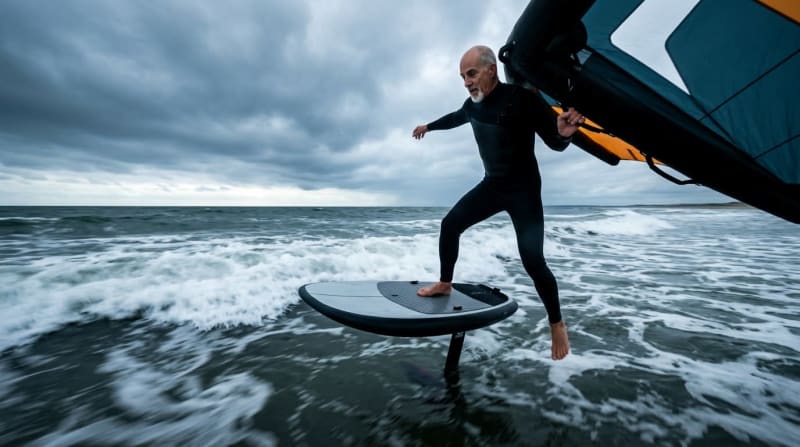
Wing foiling gives you a genuine head start on pump foiling. The advantages are specific, though, and it's worth being honest about what doesn't carry over — so you're not confused when something that worked perfectly behind a wing offers nothing without one.
Foil height control is your biggest asset. Wing foilers develop a feel for the foil's position in the water column — the subtle pressure shifts that signal a breach, the micro-adjustments that maintain the right flight height. This is exactly what pump foiling demands from your feet, and wing foilers consistently learn it faster than kitefoilers or wake foilers making the same crossover.
Weight distribution carries over almost completely. The understanding of how small stance adjustments change the foil's pitch, roll, and height is directly applicable. Reading water surface for the cleanest pump lines is another skill that transfers without translation.
What doesn't transfer is static stance. Wing foiling allows long stretches of relative body stillness once you're flying — the wing handles the power and you manage trim. Pump foiling has no such mode. Every second in the air is an active decision. Wing foilers who unconsciously default to quiet-body flying drop out of foil immediately on a pump board.
The rhythm is also unlike anything wing foiling teaches. Foil pump technique is a full-body oscillation — closer to swimming freestyle than to sailing. The sequence feels strange at first precisely because you have no external frame of reference from your wing sessions. The learning curve for this specific motion is real, even if it's compressed for wing foilers relative to most other crossover athletes.
Is there a skill from wing foiling you're underestimating right now that pump foiling would sharpen and accelerate?
Racing and Events: Where Pump Foiling Gets Competitive
Racing and Events: Where Pump Foiling Gets Competitive
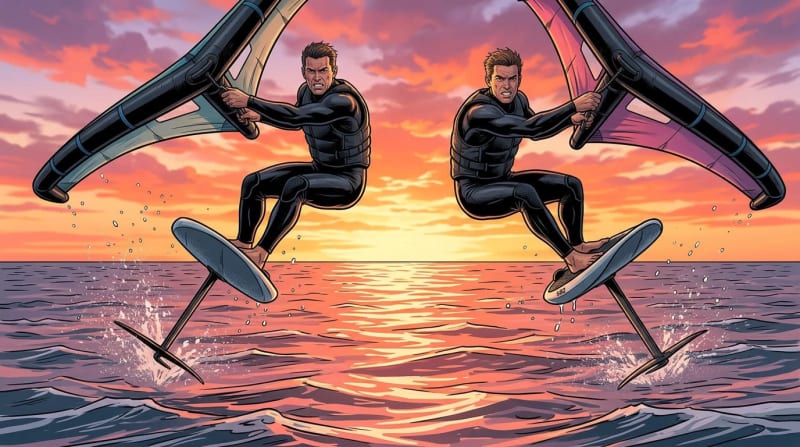
The competitive scene for pump foiling has matured faster than most wing foilers realize. The Foil Surf Race League 2026 series runs three US stops: Cocoa Beach (March 6–8, now completed), Atlanta Foil Fest at Lake Lanier Olympic Park (June 12–14), and Orlando (August 7–9). The 1v1 FSRL pump race format is head-to-head sprint racing on a defined course — pure pumping output, no tactics, no equipment advantage beyond the foil and the athlete generating its lift.
The Atlanta stop is worth attending even if you're not competing. Atlanta Foil Fest offers free spectator admission ($20 parking), expert-led clinics, and demo programming alongside the competition. You can watch FSRL pump race heats, talk to competitors, and potentially get on demo hardware — all before committing to any gear purchase. That kind of low-barrier access is the community working the way it's supposed to work.
Armstrong Foils is also running 2026 demo days structured explicitly around multi-discipline sessions — wing foiling, pump foiling, and downwind foiling in a single day at Northern Hemisphere summer locations. The framing is the signal: the brand most associated with wing foiling performance is actively building the pipeline from wing to pump.
Below the competition circuit, dock-start meetups are forming organically at foiling spots without any formal structure. No registration, no wind check, no entry fee. Someone shows up with a pump board, someone else asks how it works, and a parking lot teaching session happens. This is what makes the foiling community worth belonging to.
Getting Started This Summer: A Realistic Plan
Getting Started This Summer: A Realistic Plan
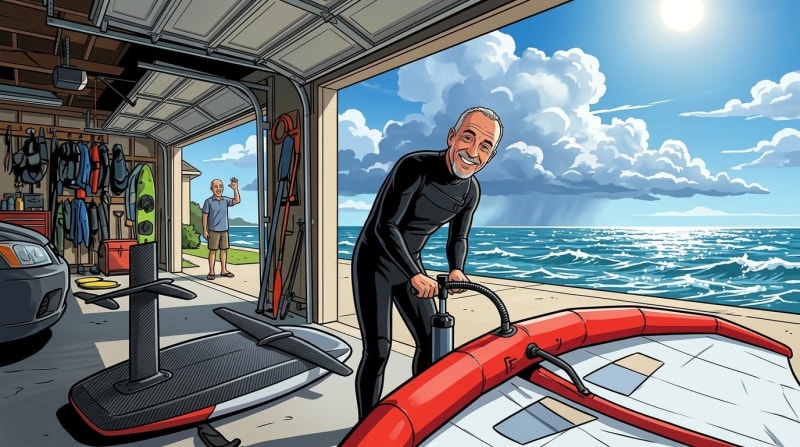
If you're a wing foiler reading this in May 2026, the timing is genuinely good. Atlanta Foil Fest is six weeks out. The Orlando FSRL stop is in August. If you want to be pump foiling before summer ends, here's the honest plan.
Check your foil first. If you're on high-aspect hardware — Armstrong, Axis HPS, F-One Phantom, Slingshot Phantasm series — you can likely use what you own. If you're on a surf foil, talk to someone in your local community before spending anything.
Find your local pump foiler. This is the most underestimated part of the plan. Every foiling community in 2026 has at least one person who's been pump foiling longer than everyone else, who learned the hard way, and who will absolutely spend twenty minutes in a parking lot teaching you the dock start sequence. Find that person. Ask. The generosity in this community is genuine — it's worth naming explicitly, because it's rarer than it should be in recreational sport.
Get a pump foil board and find flat, protected water with a dock or boat ramp for early sessions. Save open water for when the dock start is reliable. The Slingshot One-Lock package at $1,699 is a solid new-gear entry point. Used pump boards come up regularly in foiling Facebook groups at $400–700 for clean hardware. Either path works.
What would it mean to have a second discipline ready for you every time the wind dies?
The infrastructure is already there. The gear overlap is real. The events are on the calendar. And when you show up at the dock for the first time with a pump board under your arm, someone who's been doing this longer than you will walk over and show you exactly what to do next. That's not a side feature of pump foiling. That's the whole point.
Content ID: LHucv7CgZTUZEhplGIS5Nxsx
See an error? Tell us.
Comments
Share with the Community