

Wing Foil Safety Gear: What You Actually Need and When to Wear It
The Short Version
- Helmet and impact vest are non-negotiable at the beginner and intermediate stage — helmets reduce serious head injury risk in water sports by around 85%, and the foil mast and board are both hard objects that move fast.
- Two leashes are required: a coiled wrist leash for the wing, and a waist/belt leash for the board — ankle leashes on foil boards create a serious swing-back hazard and should be avoided.
- Replace leashes at least once a year or immediately when wear appears — a failure offshore compounds every other problem simultaneously.
- A wetsuit is safety gear as much as comfort gear, keeping hypothermia at bay when sessions run longer than planned; cut-resistant layers add meaningful protection at the learning stage.
- A harness is not required to start but becomes a safety factor once arm fatigue starts affecting decision-making at the end of sessions.
The foil is the thing that gets your attention when you first see wing foiling. The wing, the board, the water, the speed. What tends to get less attention — until someone has a bad session — is what you're wearing while all of that is happening. Getting your wing foil safety gear right doesn't make the sport less exciting. It makes it sustainable.
Wing foiling involves a carbon mast moving at speed through the water, a board with real momentum, and a rider who is, at various points, learning to fall in new and creative ways. The right gear doesn't slow any of that down. It just means you get back to the beach, rig up again, and keep building.
This is a practical guide to what you actually need — not a maximum-protection checklist, but an honest breakdown of what protects you, what helps you improve, and where you can be more relaxed about it as your skills develop.
The Helmet: Required, Not Optional

The Helmet: Required, Not Optional
The community conversation about helmets has largely settled. At the beginner and intermediate stage, a helmet is not a suggestion — it is the piece of safety gear that matters most. The foil mast and board are both hard objects moving at speed, and falls during learning are frequent and unpredictable.
The question is not whether to wear one, but which one. A water-specific helmet is what you want — not a cycling or skate helmet, which are not designed for repeated water exposure. Look for a high-impact outer shell with soft interior foam, a secure fit system, and coverage that extends to the temples.
The Mystic Legacy Helmet 2026 is one of the newer options worth noting — a slim-fit ABS shell with extended temple and jaw coverage that fits close to the head without bulk, following in the footsteps of the popular Impact Cap but adding the hard outer shell that serious foilers have been asking for. Manera, Dakine, and GONG all make well-regarded water helmets in the same category.
Helmet choice comes down to fit above everything else. Try it on. It should not move when you shake your head. If it shifts, it will not protect you when you actually need it.
Research cited by watersports safety programs suggests helmets can reduce the risk of serious head injuries in water sports by around 85%. In a sport where the foil is in the water under you and the board can come up fast, that number means something.
What is the one piece of gear you would keep if you had to strip everything else back? For most riders at the learning stage, the answer is the helmet.
The Impact Vest: Protection and Buoyancy Together

The Impact Vest: Protection and Buoyancy Together
An impact vest protects your torso from the board, the foil, and the water surface on hard falls. It also provides some buoyancy — not enough to replace a life jacket in a serious emergency, but enough to matter when you're exhausted and a long way from shore.
For beginners, an impact vest is non-negotiable. The ribs, spine, and sternum are all vulnerable in wing foiling falls, particularly when the board comes up or the foil swings around. According to GONG, an impact vest is a must-have for protecting the upper body from hard falls at any level.
The key specs: EVA or NBR foam padding across the ribs and back, enough stretch to allow full arm movement for pumping and wing handling, and a fit that stays in place rather than riding up when the wing pulls.
As you progress, vests with an integrated harness hook — like the Mystic Endure Wing Impact Vest — consolidate your protection and harness into one piece, which simplifies setup and keeps everything in position during dynamic riding. Beginners can start with a straightforward impact vest and add harness functionality later.
If you're riding in cold water, a vest with a 50N buoyancy rating is worth considering for the extra flotation margin in a self-rescue situation.
What does it mean to have a piece of gear that protects you and gives you the confidence to push a little further — knowing the fall has a softer landing?
Leashes: Your Connection to Everything That Floats

Leashes: Your Connection to Everything That Floats
A leash failure offshore is one of those situations where everything else goes wrong at once. Wind usually decides to go offshore. The current is unfavorable. The board, or the wing, disappears faster than you expect.
Wing foiling requires two leashes: one for the wing, one for the board. Neither is optional.
"You'll be feeling very lonely if you lose one of these elements offshore. Good luck swimming after a board or a wing pushed by a strong wind."
— GONG Wing Foiling Safety Guide
Wing leash: A coiled wrist leash is the standard for most riders. It stays compact when you're flying, doesn't drag in the water, and keeps the wing within reach after a fall. The alternative — a belt leash — gives more freedom of movement and is preferred by some riders for downwinding and longer sessions.
Board leash: For foil boards, a waist or belt leash is strongly preferred over an ankle leash. An ankle leash on a foil board creates a real hazard — the board and foil can swing back toward you after a fall, and having that attached to your ankle limits your ability to get clear. A 6-foot waist leash with at least 7mm diameter cord is the standard recommendation for beginners.
Replace leashes at least once a year, or immediately if you spot any cuts or wear. A leash that fails when you're a kilometer offshore is not a problem you recover from easily.
The Wetsuit: Not Just Comfort

The Wetsuit: Not Just Comfort
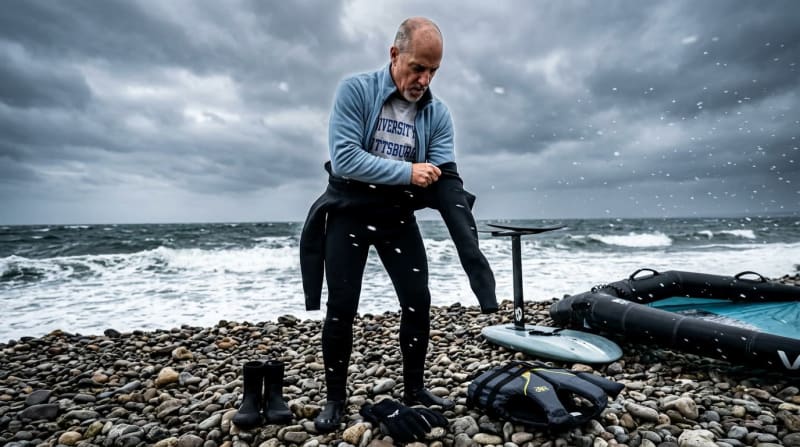
A wetsuit is safety gear, even when it doesn't feel like it. In the event of a gear failure, fatigue, or injury that extends your time in the water beyond what you planned for, your wetsuit is what keeps hypothermia from becoming a serious threat.
Water temperature should drive your thickness choice. A 3mm full suit handles most spring through fall conditions in temperate waters. Drop to 4-5mm for cold-water sessions. In warmer water, a rash guard provides cut protection from the foil without thermal insulation.
Cut-resistant protective layers — long-sleeved shirts and shorts designed to protect against foil contact — are worth adding at the beginner stage when falls are more frequent. GONG's Bodyguard range is one option; similar products are available from most foil-focused brands.
Neoprene booties serve a dual function — protecting feet from the foil on falls, and from anything on the bottom during shallow-water learning sessions.
The Harness: Nice-to-Have Until It Becomes Essential

The Harness: Nice-to-Have Until It Becomes Essential
A harness is not required to start wing foiling, and many riders spend their first months without one. But once you're riding for longer sessions, downwinding, or working in more powered conditions, arm fatigue becomes a real performance limiter — and a safety factor. Tired arms make worse decisions.
A wing foil harness sits at the waist and transfers some of the wing's pull to your core rather than your arms. The Mystic Majestic and similar options from Manera are designed specifically for wing foiling — lighter and less restrictive than kite harnesses, with rear leash attachment points that keep your board leash tidy and out of the way during riding.
The harness becomes most valuable when you're riding long enough for fatigue to accumulate. At that point it's not just comfort — it's the thing that keeps you making sound decisions at the end of a session rather than pushing tired on a foil.
The Honest Priority Order
The Honest Priority Order
If budget or logistics require you to build your kit in stages, here is the sequence most experienced riders and instructors recommend:
Wing leash and board leash first — these protect others as much as yourself. Helmet next, non-negotiable for anyone learning. Impact vest immediately after. Wetsuit appropriate to your water temperature. Harness once sessions regularly extend past an hour or into more powered conditions.
Protecting yourself keeps you in the sport longer — more sessions, more progression, more time on the water with people who are building something together. Safety gear is not caution. It is commitment to being out there for the next session, and the one after that.
What would change about how you approach your next session if you knew the gear you were wearing had you fully covered?
Content ID: Z6AJpkEerV04PoKSPEk1Niqp
See an error? Tell us.
Comments
Share with the Community