Formula Wing Racing Explained: The Olympic Pathway Discipline Most Wing Foilers Have Never Watched
The Short Version
- Formula Wing racing is the Olympic pathway discipline for wing foiling — fleet racing around marks with registered equipment, governed by the IWSA under World Sailing, with no freestyle judging.
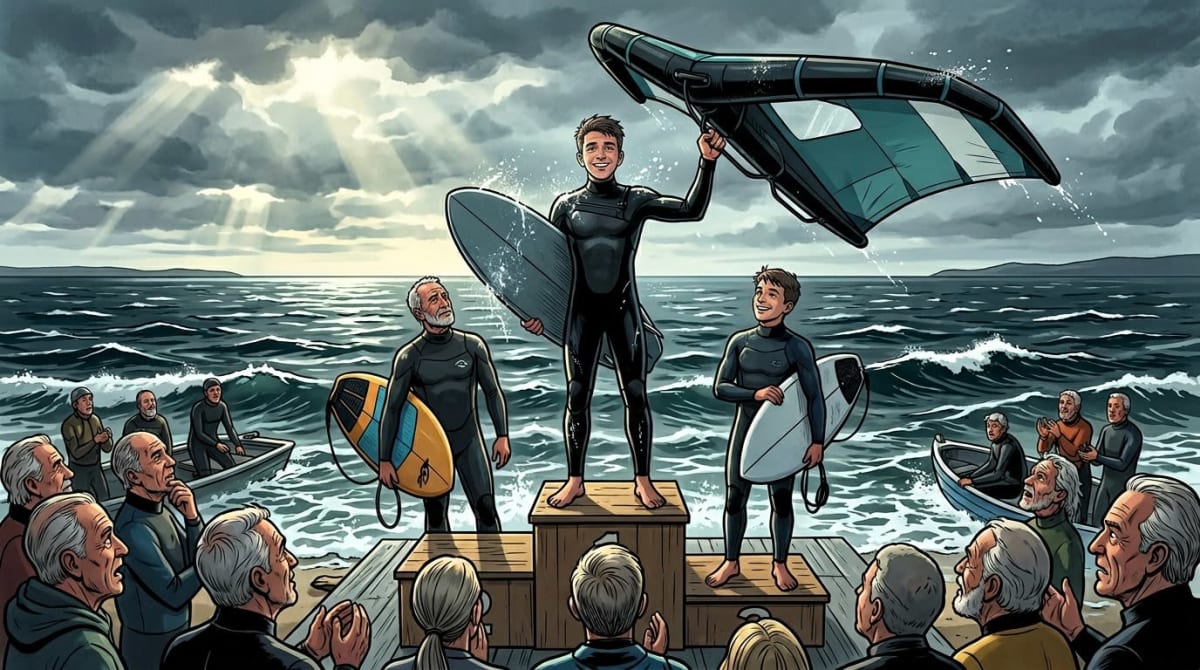
- The 2026 European Championship in Naples concluded April 12 with France sweeping both golds: 16-year-old Vaina Picot won nine of twelve races in the women's fleet, Julien Rattotti dominated the men's.
- The IWSA and GWA run parallel circuits with fundamentally different formats — GWA rewards judged expression, IWSA racing rewards the first rider across the finish line, which maps directly onto Olympic competition.
- World Sailing formally endorsed both tours in 2022, with the Formula Wing class specifically designed as a one-design-style level playing field to build toward Olympic inclusion.
- Nearly 100 athletes from 16 nations competed in Naples — including New Zealand and Australia — signaling that Formula Wing's competitive base is international and deep enough to sustain an Olympic pathway.
- Most recreational foilers follow GWA content but the IWSA racing circuit is shaping the equipment standards, class rules, and institutional legitimacy that will define wing foiling's future as a sport.
Two Wing Foiling Worlds Running in Parallel

Two Wing Foiling Worlds Running in Parallel
Most recreational wing foilers follow the GWA Wingfoil World Tour — the expression circuit, where riders compete in wave riding, freestyle, and surf-slalom across dramatic locations like Jericoacoara and the Canary Islands. The content is beautiful, the athletes are exciting to watch, and the Instagram feed is good.
There is another circuit most recreational foilers have never watched. It runs under the IWSA — the International Wing Sports Association — and the format looks nothing like the GWA. No freestyle judging. No wave scores. Instead: fleet racing around marks, in standardized conditions, aboard registered equipment, with the same competitive structure that sailing has used at the Olympics for decades.
That circuit held its 2026 European Championship in Naples last week. According to Live Sail Die, France emerged as the standout nation, claiming both European titles and a total of four medals. Most of the wing foiling community missed it entirely.
Here is what happened — and why it matters to anyone who rides.
What Formula Wing Racing Actually Is
What Formula Wing Racing Actually Is
The split between the GWA and IWSA is not an accident. It reflects a deliberate structural decision made by World Sailing, the sport's international governing body, when it formalized wingfoiling's competitive future in 2022.
World Sailing endorsed two parallel tours: an Expression World Tour delivered by the GWA, crowning world champions in wave, freestyle, big air, and surf slalom; and a Racing World Tour delivered by the IWSA, crowning world champions in racing disciplines including a Formula class requiring registered equipment from affiliated brands and an Open class where any wingfoil equipment can be used.
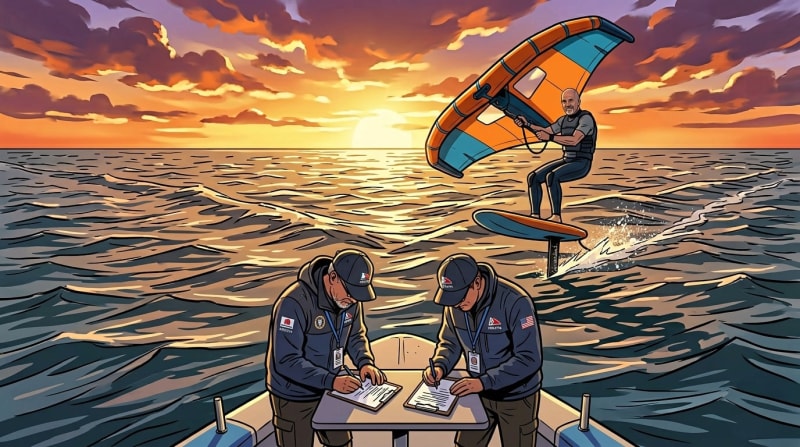
The Formula Wing class is the one with the Olympic pathway. It uses a one-design-style equipment registration system to create a level playing field — the same principle that governs Olympic sailing classes: everyone on equivalent equipment, racing the same course, decided by the sailor. The racing format is fleet racing around a windward-leeward course, with multiple short races over several days and a medal series finale to crown champions. The IWSA describes the Formula Wing class as providing "Olympic style racing on a level playing field." That phrase is not casual marketing. It is a description of where this is headed.
What Just Happened in Naples

What Just Happened in Naples
The 2026 Formula Wing European Championships ran April 8–12 at the Reale Yacht Club Canottieri Savoia in Naples — the same waters that will host the America's Cup in 2027. According to Il Nautilus, nearly 100 athletes from 16 nations competed, including top international names from New Zealand and Australia alongside the European field.
In the women's competition, 16-year-old Vaina Picot from French Guadeloupe dominated the week, winning nine of the 12 races to become the youngest Formula Wing European champion. "I'm so happy. The conditions were super tricky all week but I managed to adapt well and that is very satisfying," she said. The men's title went to Julien Rattotti of France, who finished almost exclusively inside the top two across the series, adding the European title to his Wave world title. "I need to stop for a moment, my brain can't understand what's happened," he said after the win.
According to Yachting New Zealand's coverage, New Zealand's Sean Herbert finished fifth overall — just nine points off the podium — after posting five top-three finishes across the week, underlining his status as one of the sport's leading forces outside Europe.
Formula Wing vs. GWA — The Difference That Matters

Formula Wing vs. GWA — The Difference That Matters
GWA freestyle and wave events are judged by humans evaluating creativity, difficulty, and execution. The outcome depends on how a panel scores the riding. It rewards spectacle and is exciting to watch precisely because it requires interpretation.
Formula Wing racing has no judges. The first rider across the finish line wins the race. After enough races, the rider with the lowest points total wins the championship. This is the format that maps directly onto Olympic sailing competition, where the same structure has decided gold medals since yachting joined the Games in 1900.
The athletes competing on the IWSA circuit are specifically building toward a world where wing foiling racing appears at an Olympics. As IWSA analysis has noted, if wingfoil racing is to fulfil its destiny as a future discipline in Olympic sailing competition, the riders will need to be able to compete in six to seven knots of wind — and equipment choices and class rules are being calibrated toward that threshold.
Why Recreational Foilers Should Pay Attention

Why Recreational Foilers Should Pay Attention
The honest answer is that most recreational wing foilers will never compete in a Formula Wing event. The skill gap between a weekend rider and the athletes at a European Championship is roughly the same as in any sport between recreational participants and elite competitors.
But the Formula Wing circuit is shaping the institutional future of wing foiling in ways that will eventually reach every rider. The equipment registration requirements being developed for the Formula class influence what brands build and how they design wings and foils. The rules being written for Olympic qualification will determine whether wing foiling has an Olympic presence by the late 2020s. The credibility of the IWSA circuit is what gives wing foiling a seat at the table with World Sailing.
As World Sailing CEO David Graham said when the partnership was announced: "The Expression World Tour and the Racing World Tour will bring the sport of wingfoiling together and form a powerful platform to accelerate development."
A 16-year-old from Guadeloupe winning nine of twelve races at a European Championship in Naples is not just a results headline. It is a signal that the competitive base of Formula Wing racing is deep, young, and international enough to sustain the pathway that World Sailing is building toward.
What does it mean to ride a sport that is quietly constructing the infrastructure for Olympic competition — and to be part of the community that gets to watch it happen in real time?
Content ID: G5JG8FJplvKhpBHhRABGPTcg
See an error? Tell us.
Comments
Share with the Community