
Wing Foiling at Durand Beach Rochester NY: Your Complete Local Spot Guide
The Short Version
- Durand Beach is a north wind launch on Lake Ontario, and real fetch means swell can build faster than expected — watching the wind trend over several hours beats relying on a single snapshot from Windy or PredictWind.
- A no-wind forecast doesn't have to cancel the trip: the local crew runs Foil Drive electric assist setups on flat calm days specifically to drill pumping, carving, and altitude management without any wind variables in the way.
- Wing foiling only emerged as a distinct discipline around 2019–2020, so the Rochester community at Durand is still forming — there's no established pecking order, no protected lineup, and experienced riders will talk gear with a stranger in the rigging zone without much prompting.
- The grass staging area between the parking lot and the waterline is wide enough to fully lay out a five-meter wing without sand getting into foil connections — a detail that sounds minor until you've rigged on a sandy beach in a cross-shore breeze and paid for it later.
- Small, high-performance gear like the AXS Carbon 4'0" sinker board shows up at this spot alongside beginner-friendly inflatables, which tells you the spot handles a real range of skill levels rather than catering to just one end of the learning curve.
I've launched from a lot of spots around Lake Ontario, but wing foiling at Durand Beach Rochester NY keeps pulling me back — there's something about a sandy beach, a north wind swell, and your crew all rigging up together on that big open grass that just feels like the sport is firing on all cylinders. I couldn't find a proper local guide when I first started scoping this place out, so I wrote the one I wish had existed. Consider this your complete briefing before you make the drive.
Why Durand Beach Belongs on Every Rochester Wing Foiler's Radar
Why Durand Beach Belongs on Every Rochester Wing Foiler's Radar
This is genuinely one of the best Rochester wing foiling spots hiding in plain sight — and I say hiding not because it's secret, but because the foiling community hasn't fully claimed it yet. That's both the problem and the opportunity, and I'd rather focus on the opportunity.
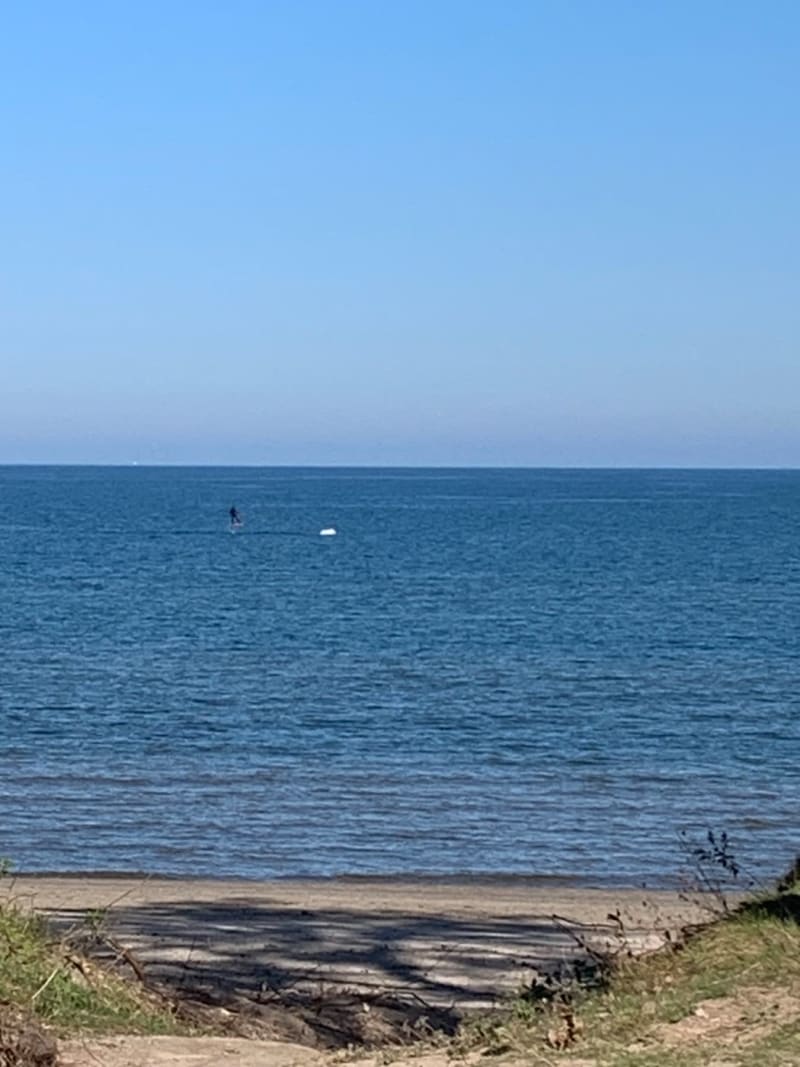
The vibe at Durand is immediately welcoming. You pull up and get this wide open Lake Ontario horizon that does something good to your nervous system — it's big water energy without the stress of a crowded surf break. The beach itself is sandy, which matters more than people think when you're arriving with foil bags, wings, and all the gear that comes with this sport. There's a generous grass area set back from the waterline that serves as a natural staging zone, and a short hill between the parking lot and the beach that looks slightly annoying on first glance and turns out to be completely manageable with a good gear strategy (more on that in a minute).
The general layout: park in the lot, walk your gear across the grass rigging area, carry assembled kit down the short hill to the waterline, and you're in. First-timers can picture it clearly because there's not much to confuse you. There are no complicated entry points, no sketchy rock scrambles, no surf break to time your way through on flat days.
What makes this place feel different is the way people naturally congregate here. It's not a solo mission spot. When the conditions are right, you'll find other foilers setting up in that grass zone, and that social energy before a session is half the joy of this sport. The Rochester wing foil tribe is still forming — which means you're not walking into an established, exclusive scene. You're walking into something that's still being built, and there's real room for you in it.
If you've been curious about this spot and haven't made the drive yet, this guide covers everything you need to know to show up informed and ready.
Getting There and Rigging Up: The Practical Stuff That Matters

Getting There and Rigging Up: The Practical Stuff That Matters
Let's talk about the wing foil launch setup at Durand, because the logistics here are genuinely well-suited to this sport in ways that aren't obvious until you've experienced a few bad launches elsewhere.
The parking situation is straightforward — you can get your vehicle reasonably close to the grass rigging area, which means the carry from car to water doesn't become its own workout before you've even hit the lake. The short hill between the lot and the sand sounds like a footnote but it's worth mentioning because the first time you see it with a loaded foil bag over your shoulder, you'll wonder for about three seconds if it's going to be a problem. It isn't. The grade is gentle, the footing is solid, and once you've done it twice you stop thinking about it entirely.
The grass rigging zone is the real gift here. There's enough room to fully lay out a wing — we're talking five-meter wings with full span — without encroaching on anyone else's space. You can assemble your foil, run through your connections, do your pre-flight checks, and not once worry about sand working its way into your fuselage joints or mast base. If you've ever tried to rig on a busy sandy beach in a cross-shore breeze, you know exactly why this matters. Sand in your connections is the kind of problem that feels minor until it isn't.
The practical sequence that works well here: rig everything on the grass, get fully organized and ready, then carry your assembled gear down the hill to the waterline in one trip. It's dramatically easier than rigging on the beach, and your equipment stays cleaner.
The Naish inflatable setup you'll see in the photos from this spot is not a coincidence — inflatables are particularly friendly at a launch like Durand because the carry distance rewards lighter, more packable boards. You don't have to wrestle a stiff carbon hard board down a hill when there's a perfectly capable inflatable that travels well and launches cleanly from sand.
And here's the thing about the rigging zone that I think matters most: it becomes a social hub without anyone planning it that way. You set up next to someone, you comment on their foil setup, they ask what wing you're running, and by the time you're both walking to the water you've already had a conversation that makes the session better. That happens at Durand. It doesn't happen everywhere.
North Wind Days: When Durand Really Turns On

North Wind Days: When Durand Really Turns On
Durand Beach is a north wind launch, and on Lake Ontario, that designation carries real weight. The lake runs roughly east-west, which means a true north wind has significant fetch to work with before it reaches the Rochester shoreline. Fetch — the unobstructed distance over which wind can generate wave energy — is what separates a choppy, disorganized surface from genuine swell with shape and rhythm. On a solid north wind day at Durand, you're getting Lake Ontario wing foil conditions that surprise people who've only ridden flat water or ocean spots with protected bays.
When the north wind fills in, the waves can get genuinely crazy by Great Lakes standards. I want to be careful not to oversell this — it's not Pipeline — but it's also not the mirror-flat lake that outsiders imagine when they think about freshwater foiling. You can find real faces to work with, real energy underfoot, and the kind of downwind runs that make you understand why people drive hours for a good Lake Ontario swell window.
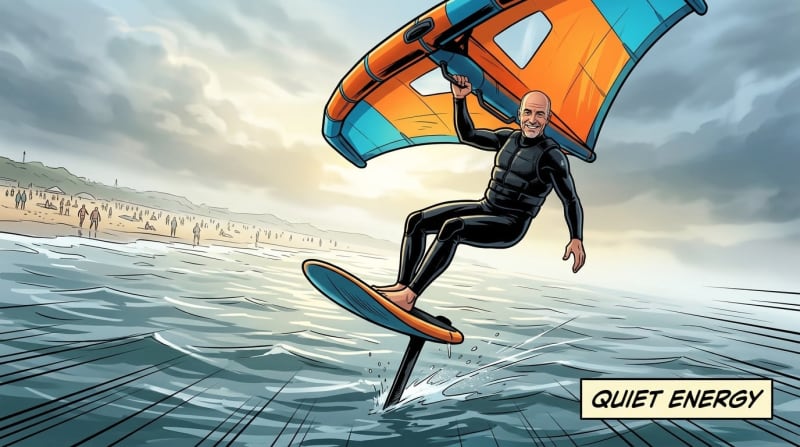
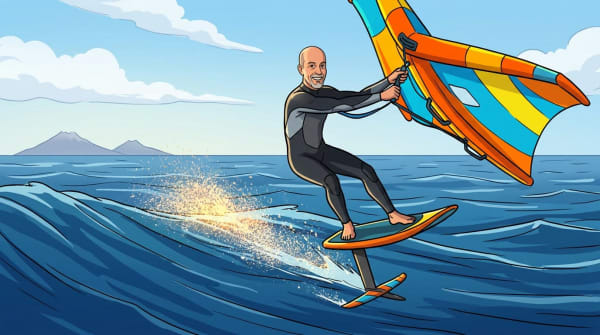
From the water on a good north day, the feeling is immediately different from a light-wind flat session. There's texture, there's energy moving under the foil, and the wingable pressure is consistent enough that you can focus on the riding rather than fighting to stay powered up. The rider photos from this spot tell that story well — there's a reason the on-water shots show spray rather than glass.
For riders newer to the sport, moderate north wind days in the 12–18 knot range offer powered sessions without the overwhelm of full-send Lake Ontario conditions. More experienced riders start looking at this spot seriously when the forecast pushes into the 20s and the swell window is clean. The honest advice is to watch the wind trend over several hours rather than just the current reading — north fetch means conditions can build faster than expected, and a session that starts manageable can escalate if the forecast is accelerating. Check Windy or PredictWind for trend lines, not just snapshots.
One practical safety habit worth developing here: always know your exit strategy before you launch. On a building north day, the water between you and the beach can look very different an hour into your session than it did when you rigged up.
No-Wind Days Aren't Wasted Days: Foil Drive Sessions on Flat Water

No-Wind Days Aren't Wasted Days: Foil Drive Sessions on Flat Water
Here's where Durand gets interesting in a different way, and where the local crew has developed a session culture that I genuinely think is worth knowing about.
For anyone who hasn't encountered it yet: Foil Drive is a small electric assist motor system that mounts to your mast or board and generates enough thrust to get you up on foil without wind. It's not about replacing wing foiling — it's about expanding what a day on the water can be. The system has become legitimately popular in the foiling community because it unlocks something that used to be impossible: pure foil technique practice in flat, glassy conditions with no wind variables to manage. According to Foil Drive's own documentation, the system is specifically designed for foil skill development and allows riders to practice pumping, carving, and altitude management independently of wind conditions (foldrive.com.au).
On no-wind days at Durand, the local crew brings Foil Drive setups out onto the flat water and turns what used to be a wasted trip into a skills session. Pumping efficiency, clean carving turns, staying comfortable at altitude — all of it improves faster on flat water with Foil Drive assist than it does when you're also managing a wing in variable conditions. The Naish inflatable with the Foil Drive mount visible in the first photo from this spot is exactly the setup being described here — it's a real, active part of how this crew rides.
The reframe matters: a no-wind forecast doesn't mean you text your crew and cancel. It means you text your crew and tell them to bring the Foil Drive setup. The trip still happens, the water time still happens, and your foil skills improve in ways that directly translate to your next windy session.
There's also something about the social texture of a Foil Drive session that I've noticed consistently. Without the intensity of wind management and the noise of a fully powered wing, these sessions tend to be more conversational, more collaborative, and considerably funnier. Someone falls at low speed in flat water and everybody laughs, including the person who fell. Someone figures out a pump rhythm that suddenly unlocks extra glide and spends ten minutes showing everyone else how they're doing it. The coaching happens naturally because the conditions invite it. No-wind days at Durand have become some of the most enjoyable sessions I've had at this spot — which I would not have predicted when I first started thinking of wind as a requirement.
The Gear We're Running at Durand: Naish, F-One, and More
The Gear We're Running at Durand: Naish, F-One, and More
The wing foil gear quiver showing up at Durand reflects both the spot's character and the range of riders who use it — and it's worth walking through what's actually in the photos from this location rather than giving you a generic gear overview.
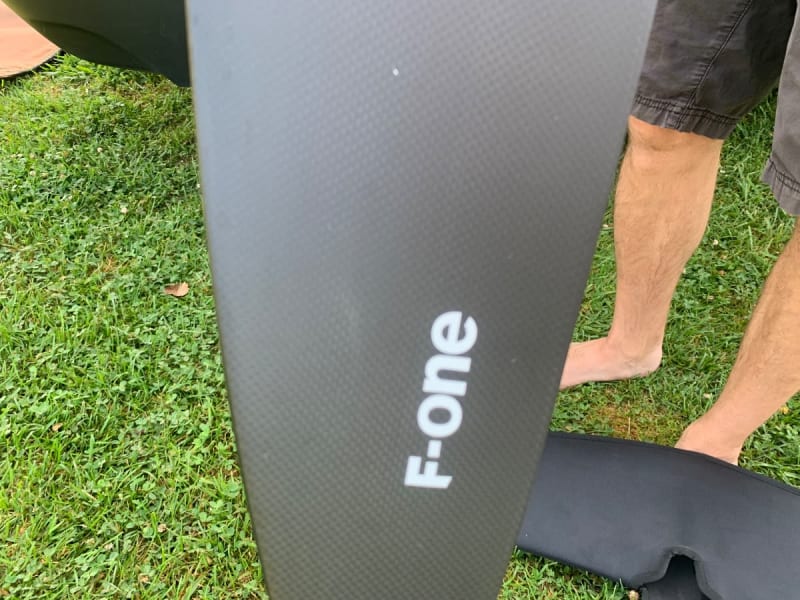
The F-One carbon mast in the photos represents the other end of the quiver spectrum — high-end carbon construction, lower drag profile, the gear you reach for when conditions are powered and you want the equipment to disappear under you and let you focus on riding. If you see someone at Durand running F-One carbon hardware, they probably know what they're doing and are worth talking to.
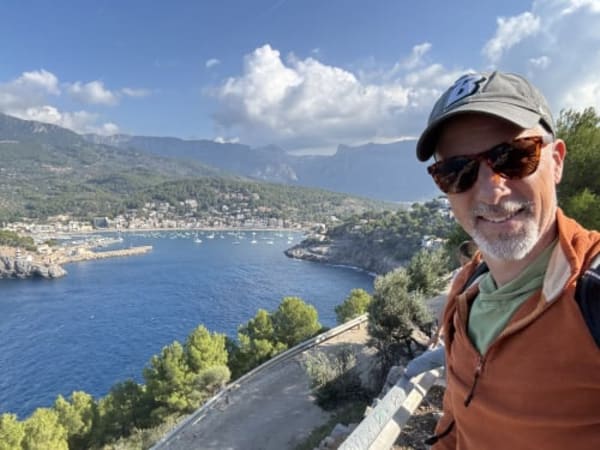
The AXS Carbon 4'0" board in the selfie photo is a different animal entirely — a small, sinker-style board that requires real foil competency to use effectively. You're not getting on a 4-foot board if you're still working on your water starts. This is experienced-rider territory, and it targets powered conditions where you want a board that disappears once you're up. That it shows up at Durand at all tells you something about the range of skill levels and session types this spot supports.
The honest gear note I'd add: you don't need any particular brand to have a great session at Durand. What matters is understanding why your quiver choices interact with this specific launch. The hill carry rewards lighter and more packable. The sandy entry rewards boards that don't require babying. North wind swell rewards foil setups with enough span to handle moving water. Match your kit to the conditions, not to the logo.
The Vibe at Durand: Peaceful Water, Good People, Real Community
The Vibe at Durand: Peaceful Water, Good People, Real Community
This is the section that's hardest to write and most important to get right, because the wing foil community in Rochester is the real reason to make Durand part of your regular rotation.
On moderate days, the water at Durand has a particular quality once you're out past the near-shore break. Even when the beach has weekend visitors doing beach things, the moment you're out on the water, it gets quiet in the best way. There's just the wing, the foil, the lake, and the horizon. It's one of those sport experiences that resets something in your brain — the kind of thing that's nearly impossible to explain to someone who hasn't felt it, and completely obvious to anyone who has.
The local wing foil crew here is welcoming in a way that matters. This is not a competitive lineup scene. Nobody is protecting their peak or establishing a pecking order. If you show up and someone's rigging in the grass zone, go say hello. You will almost certainly end up in a conversation that includes a session debrief, some unsolicited (but useful) gear opinions, and at minimum an offer to answer questions. The image of someone prepping their orange Foil Drive board by the trailer captures that pre-session energy perfectly — relaxed, focused, collaborative, and entirely without pretension.
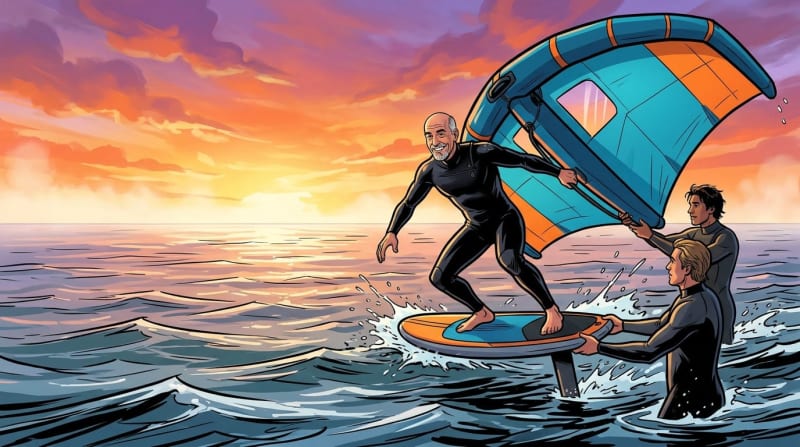
The sport itself is still relatively young — wing foiling only emerged as a distinct discipline around 2019–2020 (International Windsurf Boards Association, various industry timeline sources) — which means local communities everywhere are still in the process of forming their own culture and traditions. The Rochester wing foil community at Durand is part of that global story, and what you find here reflects the best of what this sport can be when it hasn't calcified into hierarchy.
If you're learning — genuinely new to this and still working through the basics — Durand on a moderate north wind day with a friendly crew nearby is one of the better environments in the Rochester area to take your first real water time on a wing foil. The launch is forgiving, the conditions are readable, and the people around you are rooting for you to get up on foil.
What kind of session would make you finally load up the car and make the drive?
If you've been on the fence about checking out wing foiling at Durand Beach Rochester NY, stop overthinking it. Load the car, text your crew, and go find out what a north wind Lake Ontario session actually feels like under your feet. The grass is there to rig on. The tribe is there to ride with. The lake is doing what the lake does. All that's missing is you.
Content ID: 588HW7gCDcW3z2tN1IBUOkQn
See an error? Tell us.
Comments
Share with the Community