Why Tarifa Is the Wing Foil World's Most Important Destination Right Now
The Short Version
- Tarifa logs more than 300 windy days per year — about 125 more than Hood River and 50 more than Maui — making a week-long trip the closest thing to a guaranteed session count in the sport.
- The GWA Wingfoil World Cup returns to Tarifa on June 24, 2026 (Stop 3), running FreeFly-Slalom and Surf-Freestyle in conditions that strip away the technique deficiencies that flat-water racing allows riders to hide.
- Playa de Valdevaqueros and Playa de Los Lances serve fundamentally different skill levels — matching yourself to the wrong beach will cost sessions you can't recover.
- June is the sweet spot for most intermediate riders: peak Levante season is just beginning (20-28 knots rather than 30-35), crowds are lighter, and the GWA event adds live pro sailing to watch on the water.
- A Tarifa trip pays off once you can consistently get onto foil in 20 knots and gybe at 50%+ reliability — before that threshold, the conditions teach frustration more than skill, and the honest thing is to wait.
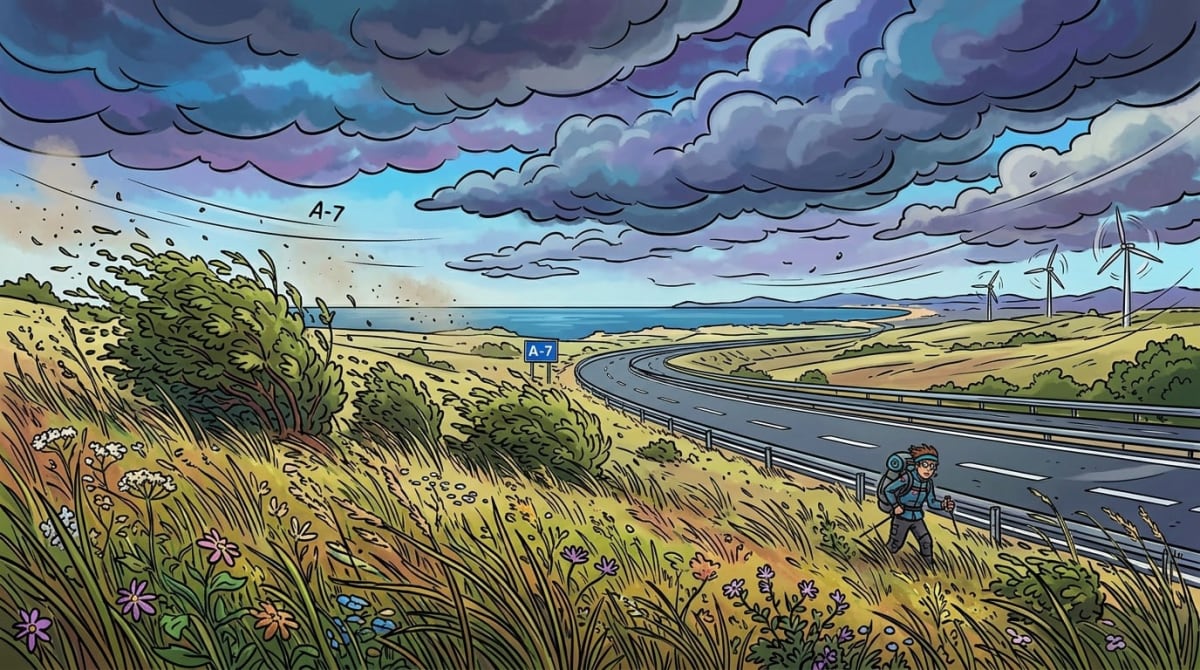
There's a moment — pulling off the A-7 outside Tarifa, windows down — when the wind shows up before you're ready for it. The Levante, the easterly that funnels through the Strait of Gibraltar between Europe and North Africa, hits the car, bends the roadside grass flat in a single direction, and delivers a message you'll understand in about four seconds: you came to the right place. Tarifa wing foil culture didn't build itself through marketing. It built itself because the wind here is genuinely different from the wind everywhere else. And this summer, the GWA Wingfoil World Cup returns to Tarifa on June 24, 2026 as Stop 3 of the World Tour — because the pros already know that.
What Makes Tarifa's Wind Uniquely Good for Wing Foiling
What Makes Tarifa's Wind Uniquely Good for Wing Foiling
Tarifa sits at the absolute southern tip of the Iberian Peninsula, the point where the Atlantic and Mediterranean collide at the 14-kilometer-wide Strait of Gibraltar. That geography is the reason for everything that happens wind-wise here. When pressure differentials build between Atlantic low-pressure systems to the west and Mediterranean high pressure to the east — or vice versa — the Strait acts as a natural venturi tube, channeling and accelerating air through the bottleneck into sustained, directional wind that would be considered exceptional anywhere else on the planet.
Two main systems run the Tarifa forecast. The Levante blows from the east, typically at 20-35 knots during peak season, and is the wind that built the destination's reputation. It's strong, consistent, and capable of running for three to five days without interrupting itself. The Poniente arrives from the west at lighter, cleaner velocities — 15-25 knots typically — and is better suited for progression days and sessions when the Levante has run its course. Together, according to local wind sport operators including ION Club Tarifa, these systems produce more than 300 windy days per year.
Here's how that compares to the other destinations the wing foiling community talks about most:
That gap between Tarifa and Hood River isn't trivia — it's the difference between a trip where you can plan sessions in advance and a trip where you're refreshing the forecast app and hoping. When gear travel costs real money and your sessions are numbered, reliability is the first variable that matters.
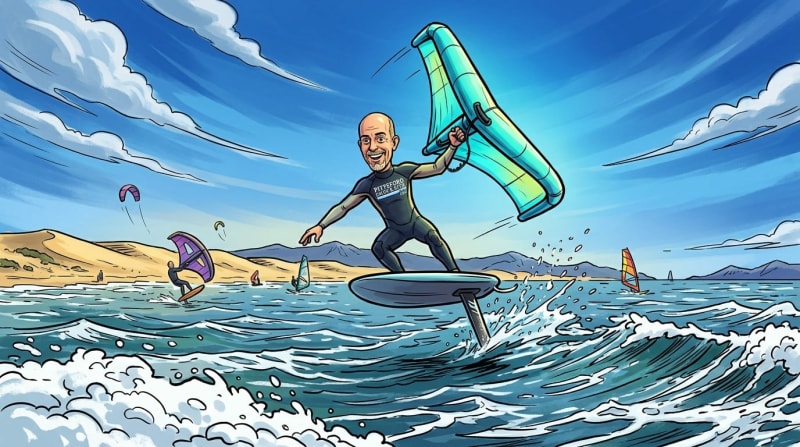
The Levante's particular gift to wave wing foiling is the specific angle it generates at Playa de Valdevaqueros, the main break on Tarifa's northeast shore. The east wind approaches side-offshore, which holds the waves up longer before they break and creates the clean, slightly crumbly face that rewards foil riding. In summer, this reliably delivers waist-to-head-high surf on a schedule predictable enough to plan an entire day around the tide window. Not occasionally. Repeatedly.
What would your progression look like if wind were never the limiting variable? In Tarifa, you get to find out.
The GWA Wingfoil World Cup Tarifa: What the Pros See There
The GWA Wingfoil World Cup Tarifa: What the Pros See There
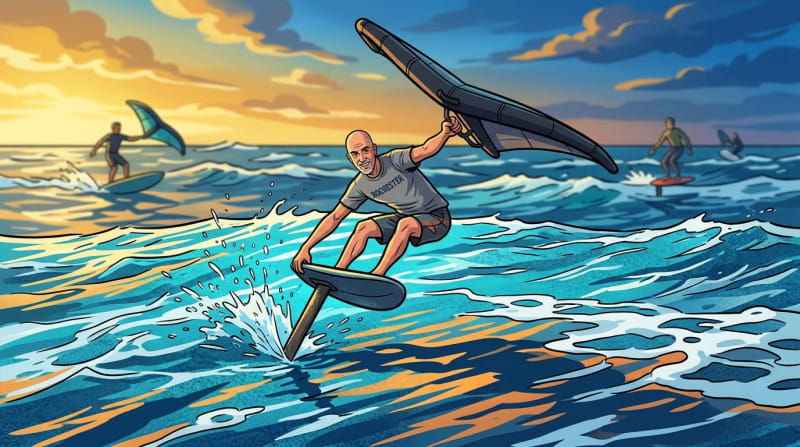
The GWA Wingfoil World Cup Tarifa 2026 runs June 24 as Stop 3 of the season, contesting FreeFly-Slalom and Surf-Freestyle disciplines — the two formats that most directly reward technical wing handling and foil precision over raw straight-line speed. If you want to see what refined wing technique looks like in real wind, this is the venue.
The tour returns here year after year because Tarifa is honest. The Levante punishes oversheeting, rewards pumping transitions, and creates the kind of combined chop-and-swell conditions that require constant, simultaneous micro-adjustments to both wing angle and foil pitch. Riders who do well here are not just fast — they are accurate, in real wind, in real conditions. Watching a GWA event in person at Tarifa teaches you more than watching any video can, because the scale of what the field is managing is visible from the beach.
Tarifa's place in the 2026 tour calendar is particularly telling: it falls eight days after Stop 2 at GWA Brac, Croatia (June 16). Brac rewards tactical flat-water course racing. Tarifa rewards wave instincts and wind management in rough, powerful conditions. The riders who place well at both are demonstrating what complete development in this sport actually looks like. The average monthly wind conditions at Tarifa explain why the GWA schedules the event in late June rather than mid-summer:
June sits at the beginning of the peak Levante season — strong enough for serious competition, before the July-August intensity that can push conditions past the point where technical wing work is consistently possible. The event window is not accidental.
Tarifa for the Recreational Wing Foiler: What You Can Expect
Tarifa for the Recreational Wing Foiler: What You Can Expect
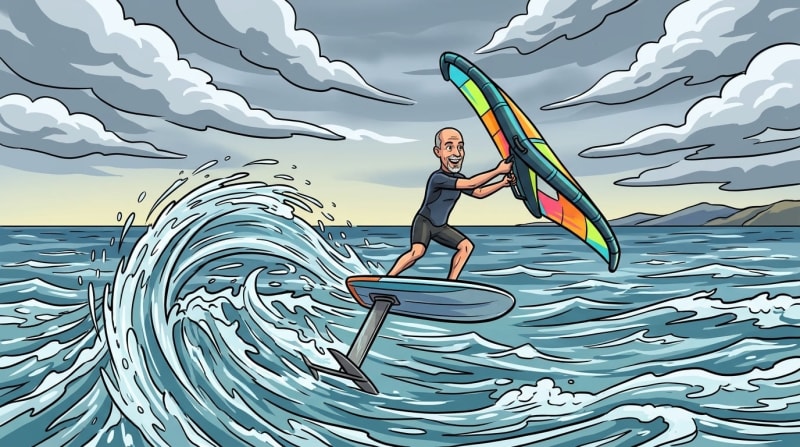
The two main beaches have entirely different personalities, and matching yourself to the right one is not optional.
Playa de Los Lances is the longer, wider stretch to the northwest — a 5-kilometer beach that receives lighter, cleaner Poniente conditions and has room to ride in both directions without pressure. The local schools set up here. Beginners start here. If you're still building consistent tacks and gybes and haven't locked in a reliable upwind angle, Los Lances is your beach. The wind is honest but forgiving. You can make mistakes here and recover from them without consequence.
Playa de Valdevaqueros is smaller and more concentrated, closer to the Strait, and exposed to the full Levante — the wave conditions that Tarifa is actually known for. Valdevaqueros is not a learning beach. The chop starts from the first hundred meters off the sand, and the Levante moves fast. If you can comfortably hold foil through a 5-knot gust increase, gybe at least half the time without resetting to the water, and read a wave face without stopping to think about it, you'll spend most of your time here. If you can't, you'll spend most of your time fighting the conditions rather than learning from them.
What separates a Tarifa session from one at the Great Lakes or on the East Coast isn't just wind strength — it's wind quality. The Levante and Poniente are directional in a way that patchy thermal or sea-breeze wind isn't. You're inside a sustained system that has picked a direction and committed to it. That consistency changes what's technically possible. Transitions that feel marginal in shifty wind feel achievable here. Sequences that felt like luck at home start feeling like skill.
The Tarifa windsport community has had thirty years to develop a culture of shared knowledge, and the gift it offers arriving wing foilers is specific: the accumulated session wisdom of thousands of hours on these beaches, freely available to anyone who shows up and asks. On a busy Levante day at Valdevaqueros, experienced riders who've been coming for seasons will tell you which wind shadow to avoid on the downwind run, which tide window produces the cleanest faces, which rigging choice the Levante rewards. That knowledge-sharing happens at other spots — but here it's a reflex.
Local operators including ION Club Tarifa and Club Mistral offer intermediate and advanced equipment rental by the day or week, so bringing your own gear isn't strictly required — though if you've calibrated your foil setup to your weight and style, travelling with it is worth the baggage fees.
What would it mean to arrive somewhere and have the accumulated knowledge of the entire venue freely offered to you, before you've even rigged?
Planning a Wing Foil Trip to Tarifa: The Practical Details
Planning a Wing Foil Trip to Tarifa: The Practical Details
The prime window runs June through September. July and August deliver the most concentrated Levante frequency and intensity, but June is often the preferred target for intermediate riders — conditions are typically 20-28 knots rather than 30-35, and the beach crowds are lighter before European school holidays bring peak season.
Flying into Málaga is the standard approach — approximately 100 kilometers from Tarifa, roughly 90 minutes by car or about 2 hours by bus via Algeciras. COMES bus service runs from Málaga's bus station through Algeciras to Tarifa for around €15 one way. Gibraltar Airport is a second option, particularly useful for UK-based riders, at approximately 40 minutes from town.
Gear transport is the main logistical decision. Wing foil board bags, foil cases, and wing bags typically run €50-100 each way as oversized luggage on European carriers — a round trip can add €200-400 to the total cost depending on airline and kit volume. The practical alternative is renting locally. A useful compromise: rent on day one to test the conditions and assess what your own setup would add, then decide for the remaining days.
One honest prerequisite: a Tarifa trip pays off when you can consistently get onto foil in 20 knots within two or three attempts, execute a gybe at least half the time without resetting, and read wind shifts without stopping to think about it. Before that point, the conditions will frustrate more than teach. Tarifa will give you more in a week — once those fundamentals are in place — than a full season at your home spot.
Tarifa vs. Hawaii, Cabarete, and Hood River: Why It's Different
Tarifa vs. Hawaii, Cabarete, and Hood River: Why It's Different
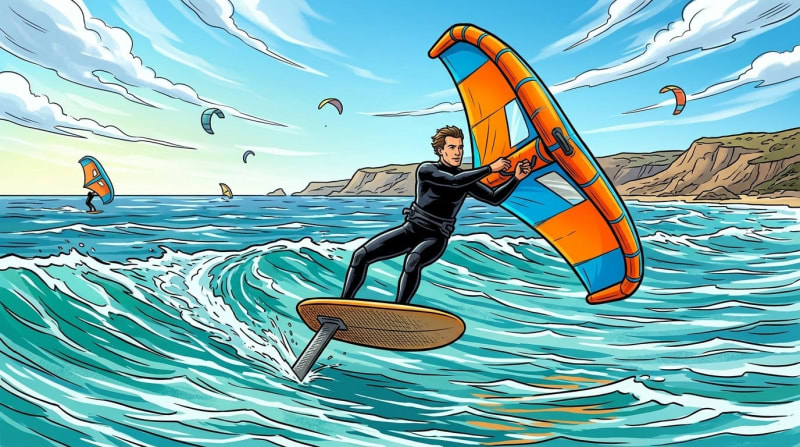
The Maui comparison comes up constantly, and it's worth being specific about what's actually different. Maui's Ho'okipa is world-class, but the trade wind pattern operates on a sea-breeze cycle — typically building through the morning and peaking in the afternoon — which means working around a wind clock rather than inside a sustained system. The waves at Ho'okipa are also larger and more powerful than what Tarifa typically generates, rewarding a more committed, high-consequence approach to wave riding. Tarifa develops something different: the ability to manage chop and mid-range swell simultaneously in strong, directional wind, with technical precision on shorter arcs.
Here's how the peak-season wave environment compares across the four destinations:
Caribbean Cabarete offers flatter water in the lagoon at Kite Beach and gentler ocean waves at Encuentro, with wind typically in the 18-25 knot range. It's an excellent destination for building flowing, smooth style at moderate speeds. It is a genuinely different destination than Tarifa for developing technical precision in strong, demanding conditions. Both have their place — they are just not the same place.
Hood River on the Columbia River Gorge is the most direct comparison for North American riders. The thermal effect through the Gorge creates consistent, strong wind comparable to the venturi effect at Gibraltar — but the Columbia is flat water. Hood River will build your gybe count and your upwind efficiency. It will not give you waves. Tarifa gives you both in the same session, which is why European wing foil progression has centered here and at Leucate, France rather than at tropical destinations with lighter, more forgiving conditions.
"You don't go to Tarifa to learn to wing. You go to find out what you've actually learned."
What Tarifa delivers that no home session can is context — the specific experience of flying efficiently in conditions that demand efficiency, rather than conditions that allow you to substitute muscle and recovery for technique. The Levante requires you to be in the right position, at the right wing angle, on the right part of the foil, before the gust arrives — because there's no recovering from being wrong at 25 knots in breaking chop. That honest feedback loop accelerates development in a way that forgiving home conditions simply can't replicate.
If you've been building your fundamentals and wondering when a destination trip actually makes sense, Tarifa will tell you plainly. Come when you can hold foil through a gust. Come when your gybes are more reliable than not. Come when you're ready for the wind to be honest with you. The community that shows up on those beaches every summer — riders from across Europe and beyond, all there for the same reason — is building something worth being part of. What's waiting when you arrive is the version of your riding you haven't met yet.
Content ID: g3D3DMf1Zh1VpvXHPsBdvTER
See an error? Tell us.
Comments
Share with the Community