
Wing Foiling for Former Surfers: What Actually Transfers and What You Have to Forget
The Short Version
- Surfers with five or more years of ocean experience consistently rate ocean awareness as their biggest advantage in early wing foiling — it compresses the safety learning curve in ways no technique tip can replicate.
- The knee-drop reflex — dropping to your knees when losing balance — is the most common and damaging surf habit to unlearn on a foilboard; it pitches the nose down and drives the foil into the water.
- Most surfers need 90-120 liters of foilboard volume to start, roughly 2-3x their surfboard volume — the instinct to go smaller will cost you sessions, not save them.
- Wing handling is a genuinely new motor skill that surfing hasn't built; the first three sessions often humble a 10-year surfer precisely because the wing is the unknown, not the water.
- Intermediate surfers typically reach their first sustained foil ride in around 8 sessions — faster than a complete beginner, but the surf advantage is specific and the friction points are equally predictable.
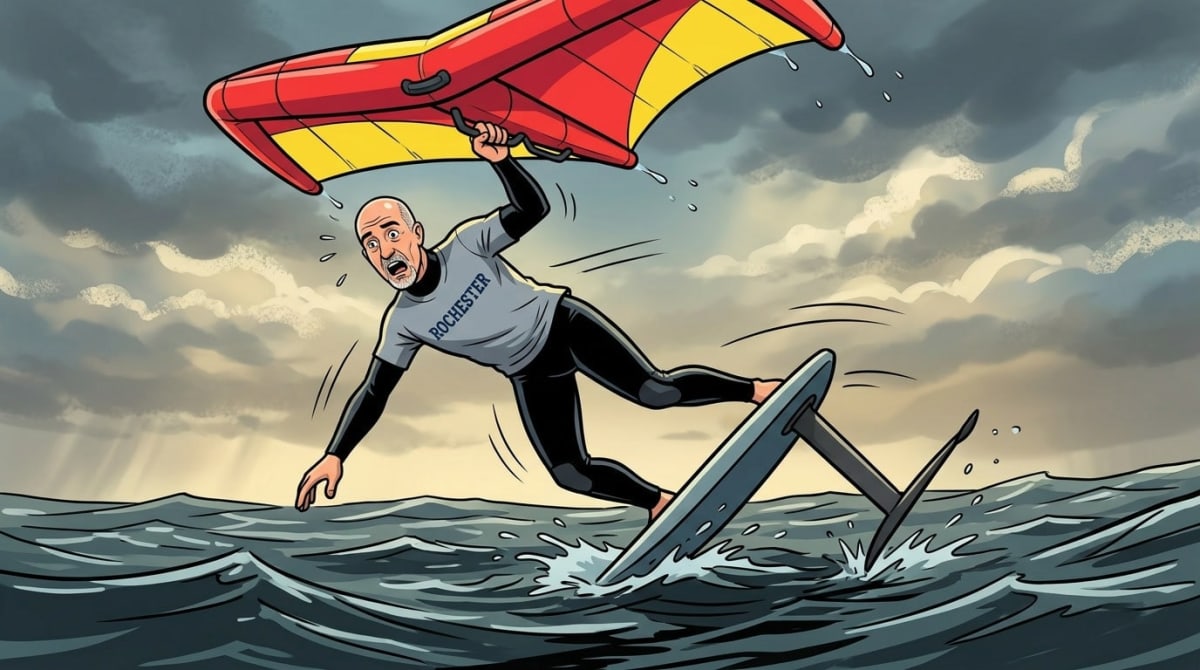
The first time you stand up on a foilboard after years of surfing, you'll probably pop up exactly right. Solid timing, good weight distribution, clean rise — ten years of muscle memory doing its job. And then the foil catches air, the board lifts, and you'll pitch forward in a way no wave has ever asked you to manage. You'll crash in a way that makes no sense given your experience.
wing foiling for surfers is one of the more interesting learning transitions in watersports because the transfer is partial and specific. Some of what you've built over years in the surf matters from the first session. Some of it creates friction in unexpected places. And a handful of hardwired surf reflexes will actively work against you until you've named and overridden them. Knowing which category each skill lives in before your first session is worth more than any single technique tip.
Why Surfers Are Drawn to Wing Foiling — And Why the Learning Curve Surprises Them
Why Surfers Are Drawn to Wing Foiling — And Why the Learning Curve Surprises Them
The draw is obvious to anyone who's spent years watching surf reports: wing foiling gives you water time in conditions that produce nothing for a surfer. Flat water, cross-shore wind, days when the swell is non-existent — all of it becomes viable when you've got a wing. The season extends. The number of days you can get on the water can double or triple in most coastal regions. For someone already comfortable in the ocean and already invested in the lifestyle, that's a proposition worth taking seriously.
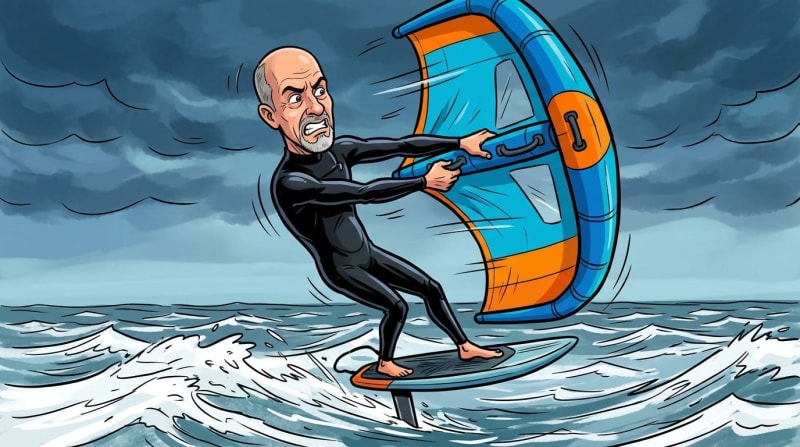
The wing itself is where the surprise comes from. You can read everything about wing handling before your first session and still find that holding an inflatable wing in 15-18 knots of real wind — managing it through gusts, keeping it depowered while you think about your feet, shifting it from side to side without losing your balance — is a motor skill that surfing hasn't trained. Your hands haven't done this. Your shoulders haven't done this. The cognitive demand of managing the wing while simultaneously learning foil balance is the reason a 10-year surfer can feel like a first-season beginner in their first three sessions.
That feeling is temporary. But expecting it is useful.
The intermediate surfer landing around 8 sessions — faster than a complete beginner, but notably behind a kiteboarder's existing body-drag and board-feel skill set — reflects both the real advantage surf background provides and the specific friction points it introduces. You get there faster than someone starting from zero. The path has two distinct sections, though: the part where your surfing helps, and the part where you have to work around it.
What Transfers Directly: Ocean Intelligence and Body Positioning
What Transfers Directly: Ocean Intelligence and Body Positioning
This is the real gift, and it deserves to be named explicitly rather than treated as obvious. Surfers with five or more years of water experience consistently rate ocean awareness as their biggest single advantage over non-surfers in early wing foiling — and instructors confirm it from the outside. Knowing how to read wind on the water surface, how to interpret chop patterns, how to position relative to incoming weather changes, how to identify current lines — all of that transfers completely and compresses the safety learning curve in ways that are genuinely difficult to teach from scratch.
You arrive at wing foiling knowing how to be in the ocean. That sounds like table stakes. It isn't.
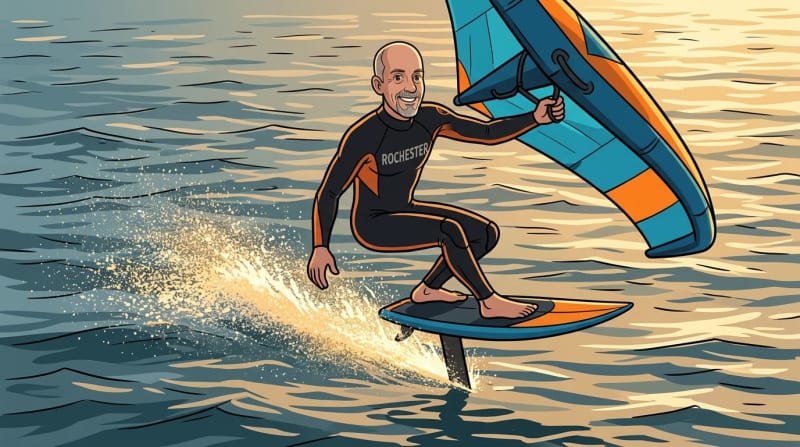
Pop timing is the second direct transfer. The whole-body instinct for when to load weight, drive through your feet, and rise — the timing that intermediate surfers have usually internalized without consciously realizing they've done it — maps surprisingly well onto the foil waterstart. You're loading in the right moment for the right physical reasons; you just need to redirect that energy onto a different plane. The gap between surf pop timing and foil waterstart timing is small compared to what a non-surfer has to build from nothing.
Back-foot weighting and rail engagement are also genuine transfers, specifically once you're flying. The core surfing movement — weighting the back foot to control speed and direction, engaging the rail to initiate a turn — is the right intuition for foil trim at speed. You'll need to recalibrate the sensitivity (foils respond dramatically faster than surfboards to the same input), but the movement pattern itself is correct.
What would it mean to actually trust this on the water — to let your ocean instincts run without second-guessing them, and only apply correction where you know the transfer is partial?
What Transfers Partially: Balance, Board Feel, and Wave Interaction
What Transfers Partially: Balance, Board Feel, and Wave Interaction
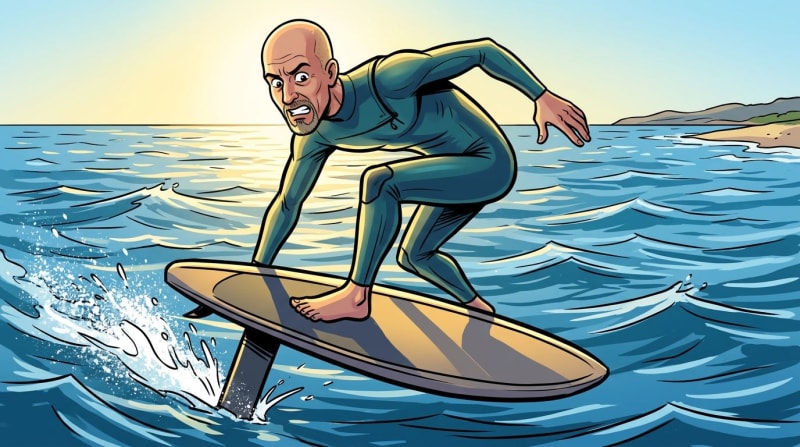
Balance is the category that surprises surfers most, because they know they have it — and they do. It's just trained for a different problem. A surfboard moves primarily laterally through a wave, with some pitch as the nose rises and drops. A foilboard adds a new axis that surfing has never addressed: continuous pitch control through active weight distribution fore and aft. The foil wants to climb or dive based on foot pressure, and managing that is a feedback loop your surfing hasn't built. Your balance is real. It's firing on the wrong input.
The volume issue is concrete and worth understanding before you shop for gear. Armstrong Foils and most major foil manufacturers recommend that surfers start with approximately 2-3x their typical surfboard volume as a foilboard starting point — a number that surprises almost every surfer who hears it. The instinct from surfing is to go smaller, thinner, more responsive. That instinct will cost you sessions. A foilboard's volume is distributed differently than a surfboard's, and the extra volume does specific work: it provides stability while you're simultaneously managing the wing, the foil pitch, and your stance.
Wave interaction on a foil uses surf knowledge but demands new timing. You know where a wave will peak and how fast it's moving. What you'll need to learn is that the foil's lift changes on a wave face, that your approach angle needs to be steeper than you'd use on a surfboard, and that foiling through the flat section after a wave is its own skill entirely. Front-foot pressure errors are among the most common technical mistakes for surfers in their first ten sessions, and they often come directly from surf stance habits applied to a different board geometry.
Which of your surfing habits are you most prepared to question when you get out there?
What to Unlearn: The Three Surfing Reflexes That Will Work Against You
What to Unlearn: The Three Surfing Reflexes That Will Work Against You
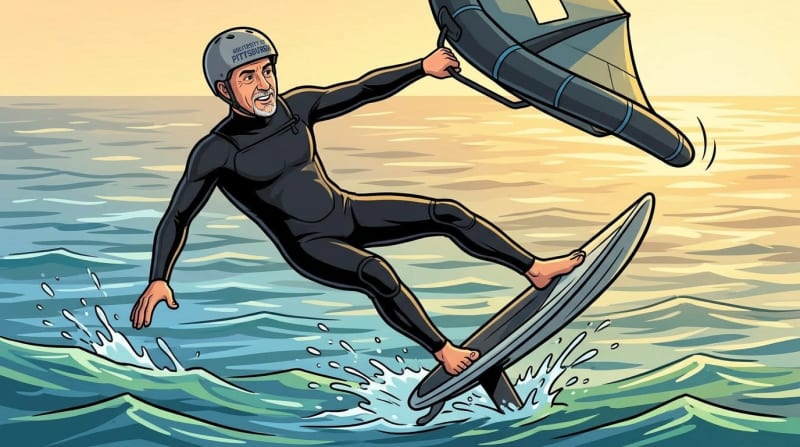
The knee-drop is the one every surf-to-wingfoil instructor mentions without being asked. When a surfer starts losing balance, the automatic response is to drop the center of gravity — crouch, get low, find the board with your knees. On a surfboard, this sometimes saves you. On a foilboard, it pitches weight forward and drives the foil nose-down into the water. This reflex is the most consistent muscle memory issue cited by instructors at wing foiling demo events. The correct foilboard response when you're losing control is to step back, fall off the tail, and get clear of the board. Unlearning the knee-drop takes deliberate rehearsal before it becomes automatic — but knowing to watch for it means you can catch yourself mid-reaction.
The second reflex is paddling to reposition. There's no paddling in wing foiling. When you're out of position or too far upwind of where you need to be, the answer is the wing — gust it, pump it, steer yourself back. Surfers who drop the wing and reach for the rails instinctively don't just lose that session moment. They develop a habit of treating the wing as secondary, which creates a ceiling on everything downstream.
Surf etiquette and lineup positioning are the third, and less discussed. In surfing, you've internalized where to sit relative to the peak, how to respect priority, how to read the lineup and move safely within it. On a foil, you're faster than anyone in the water, your turning radius is wider, and your approach to waves looks nothing like a paddler's. The positioning habits that make you a thoughtful, safe surfer in the lineup can create real hazards on a foil in mixed company until you've specifically relearned where to be and when.
What does it feel like to catch one of these reflexes mid-session and override it in real time? That's the actual work of the first ten sessions — and it's where the most interesting learning happens.
The Right Equipment Setup for a Surfer Learning Wing Foiling
The Right Equipment Setup for a Surfer Learning Wing Foiling
Volume first, because this is where most surfers make the most consequential early decision. The 2-3x rule from Armstrong Foils is a useful starting framework: if you surf a standard shortboard at around 32 liters, your starter foilboard should be in the 90-120 liter range. If you're on a longer board, adjust up accordingly. The extra volume isn't a training wheel you'll be embarrassed about. It's what lets you practice wing handling without spending all your cognitive bandwidth on staying on the board.
Front wing size matters almost as much as board volume. High-aspect front wings — long, narrow, and efficient at speed — are what experienced foilers run because they're fast once you know what you're doing. They're the wrong first foil for someone coming from surfing because they demand precise pitch control and punish exactly the front-foot weighting errors that surf stance makes likely. Start with a larger, lower-aspect front wing in the 1500-2000 cm² range. You'll know when you've outgrown it.
Wing size for learning in average coastal conditions: a 5-6m all-around wing is the right starting point for most rider weights. Major manufacturers — Naish, Duotone, Slingshot, and others — build their beginner wings in the 5-6m range as their core learning recommendation, and the 14-20 knot window represents the sweet spot for early sessions.
The Fast Track: What Surfers Can Do in the First Five Sessions to Progress Faster
The Fast Track: What Surfers Can Do in the First Five Sessions to Progress Faster
Sessions one and two should focus on wing handling before board time. Land-based wing practice — walking through the wind window, learning to depower through gusts, shifting the leading edge from side to side — gives your hands and shoulders the vocabulary they need before your feet are asked to manage the foil simultaneously. This feels slow because you're not in the water yet. It isn't slow. Every deliberate hour on land compresses multiple water sessions.
Body dragging with the wing — standing in waist-deep water in your dominant surf stance, letting the wing move you — is where surf instinct is most directly useful and most directly correctable. You know how to read pull through your body. The work here is learning to modulate that pull without dropping the wing, to shift power from side to side, to recover from a gust before it takes you off your feet. Let your surf instinct run in this phase. Pay attention to where it serves you and where it doesn't. That diagnostic is more valuable than any pre-written checklist.
The highest-leverage single investment for a surfer learning wing foiling is finding an instructor who knows both sports. Not just a certified wing instructor, and not just someone who surfs. Someone who has made this specific transition and can name precisely which of your movements are assets and which are interference. That person exists in most coastal wing foiling communities — the sport is young enough that most of its practitioners came from somewhere else first and remember the transition clearly.
"The surfers who progress fastest aren't the ones who forget they surf. They're the ones who get specific about what to use and what to override."
The community you'll find in wing foiling has an unusual generosity to it. It's a sport built largely by watermen and women who were figuring it out as they went — borrowing from kite, windsurf, surf, and SUP and inventing the rest. That openness is still there. Show up honest about where you are, and you'll find people happy to help you map the terrain.
The water's the same ocean. What happens when you leave the surface is entirely different. Come find out what that feels like.
Content ID: PRmbM0CGb7cpPt7k9Stya8jC
See an error? Tell us.
Comments
Share with the Community