
Before You Hit the Water: What Every Beginner Needs to Know About Their First Wing Foiling Session
The Short Version
- Most beginners who skip formal instruction spend their first three to five sessions unlearning bad habits that a certified instructor would have caught on day one.
- A low-aspect foil front wing in the 1800–2400cm² range generates lift at lower speeds and forgives the weight-shift errors that are nearly unavoidable in early sessions.
- The instinct when the board starts to lift is to lean back — that's exactly wrong, and it stalls the foil and pitches the nose up unpredictably.
- Checking foil bolts with a hex key before every session takes two minutes and prevents a mast separation mid-flight, which is not a recoverable situation.
- Spots like Kanaha Beach Park in Maui and Pamlico Sound in North Carolina offer the specific combination of steady thermal wind, flat water, and shallow sandy bottoms that make early sessions productive rather than just exhausting.
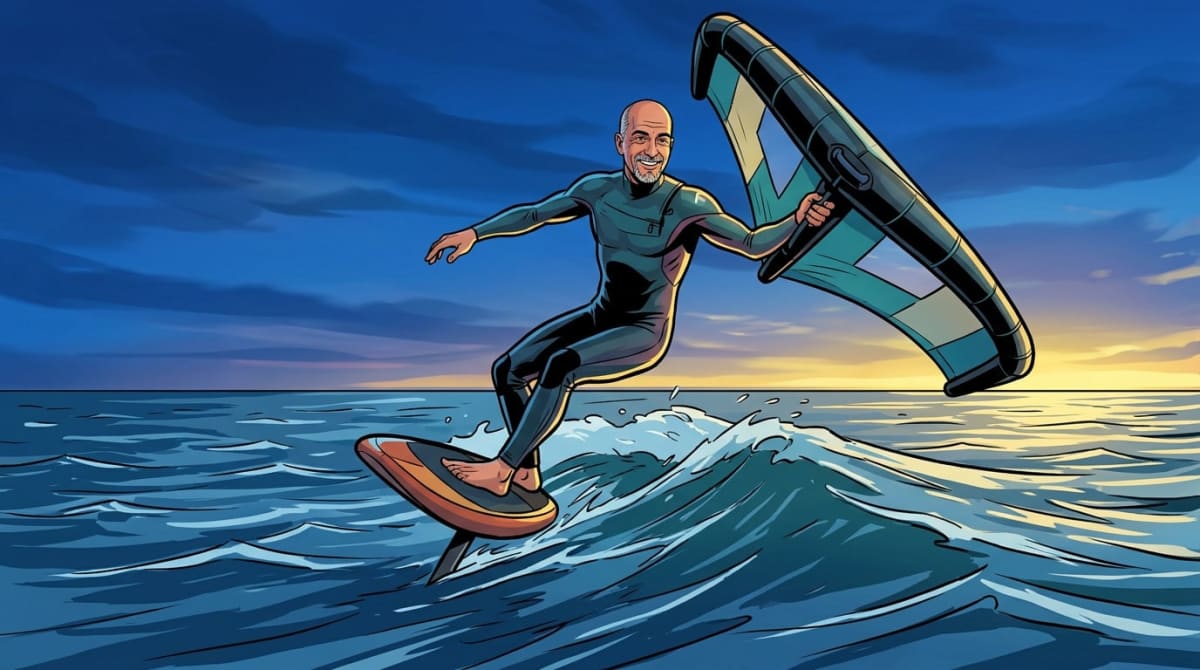
I still remember standing on the beach at Gallagher watching someone glide silently above the chop on a foil, wing barely loaded, and thinking — what is that, and how fast can I learn it? That moment of pure wonder is exactly where this guide begins. If you're about to experience your first wing foiling session, what follows is everything I wish someone had handed me before I ever inflated a wing. Before you hit the water: what every beginner needs to know about their first wing foiling session is not just a checklist — it's an invitation into one of the most stoked, generous, and quietly obsessive communities on the water right now.
Why Wing Foiling Is Winning Over Windsurfers, Kitesurfers, and SUP Paddlers
Wing foiling for beginners carries a reputation for being complicated, but talk to almost anyone who crossed over from another discipline and they'll tell you the opposite. The learning curve is faster than they expected, the gear is more portable than they imagined, and the progression is more immediately satisfying than almost anything else they've tried on the water.
Here's what makes the entry point different from other disciplines: there's no kite overhead with lines that can wrap, no boom and mast rig to wrestle in gusts, and no need for a wave to make something happen. The wing sits in your hands, you control it directly, and you can put the whole setup in the back of a hatchback. For windsurfers, that portability alone is quietly revolutionary. For kiteboarders stepping across, losing the risk profile of a depowered kite overhead feels like breathing easier. For SUP paddlers, the transition to a board with similar volume feels intuitive from session one.
What really accelerates the learning curve is how many crossover skills transfer in. If you've surfed, your board feel and weight distribution are already there. If you've kiteboarded or windsurfed, your wind reading, understanding of apparent wind, and upwind instincts are direct assets. If you've paddled SUP, your balance on a large board on moving water is exactly what the first phase of wing foiling demands. You're not starting from zero — you're translating.
And the culture around the sport reflects all of this. Because wing foiling attracted converts rather than growing from a blank slate, the tribe is genuinely cross-disciplinary and welcoming. At spots like Kanaha Beach Park in Maui, Crissy Field in San Francisco, and the Columbia River Gorge at Hood River, you'll see kitesurfers rigging next to former windsurfers next to total newcomers — and the vibe is collaborative, not territorial. The sport is young enough that experienced riders remember exactly what it felt like to have no idea what they were doing, and that memory makes them generous teachers.
What's the skill from your current sport that you think translates most directly into wing foiling?
Choosing the Right Wing Foiling Gear for Your First Session

Choosing the Right Wing Foiling Gear for Your First Session
Let's talk about wing foiling equipment, because making the right choices here is the difference between a first session that plants a seed and one that plants seeds of doubt.
The core stack is simple: an inflatable wing, a board, and a foil. But the specific choices matter enormously at the beginner stage.
The wing: For your first sessions in lighter winds — think 12–18 knots — a 6–8m² wing gives you plenty of power to work with and enough surface area that you're not fighting to generate lift. In stronger, more consistent conditions in the 20–25 knot range, a 4–5m² wing becomes the right tool. Brands like Duotone, Ozone, and F-One have established solid beginner-friendly options across multiple seasons — the Duotone Unit, the Ozone Wasp, and the F-One Swing are names you'll hear repeatedly at demo days, and for good reason. They're stable, forgiving in the window, and durable enough to survive the learning phase.
The board: Go bigger than your ego wants. A 100–120L+ board with a wide, stable platform is not a beginner compromise — it's a legitimate tool that lets you focus on wing handling and foil feel instead of fighting for balance. Many instructors recommend starting even larger, at 130–150L, to remove board balance as a variable entirely in the first sessions.
The foil: A low-aspect foil with a large front wing — something in the 1800–2400cm² range — generates lift at lower speeds and is far more tolerant of weight shifts and imperfect technique. High-aspect foils are incredible once you're flying, but they're punishing when you're still learning to weight your feet correctly.
The single best advice I can give on gear: demo before you buy. Borrow from a friend, attend a manufacturer clinic, rent from a local shop, or sign up for a lesson that includes gear. This sport evolves fast — what fits your needs at month one is genuinely different from what you'll want at month six or twelve, and the resale market reflects that turnover.
One non-negotiable that belongs in every beginner's bag: a helmet and an impact vest. This isn't a buzzkill — it's the actual culture of this tribe. Experienced wing foilers wear them, good instructors require them, and the physics of a foil mast make the reasons obvious. More on that in the safety section. For now, just know that showing up protected is showing up like you belong.
Reading the Conditions: Wind, Water, and the Best Spots to Start

Reading the Conditions: Wind, Water, and the Best Spots to Start
Wing foiling conditions can make or break your early sessions — not just in terms of fun, but in terms of what you actually learn. Picking the right day and the right spot is as important as having the right gear.
Ideal first-session conditions look like this: 15–20 knots of steady, thermal wind (not gusty, not puffy — consistent), flat water or very small chop, and a shallow sandy bottom where you can stand up comfortably at knee-to-waist depth. That combination gives you enough power to get the wing working, a forgiving surface to fall onto, and the ability to stand up and reset without swimming 50 meters back to your board.
Where to find those conditions in the real world:
- Kanaha Beach Park, Maui — arguably the best beginner wing foiling location in the world. Consistent thermal trade winds in the 15–25 knot range, flat protected water inside the reef, and a beach culture that is deeply familiar with every level of progression.
- Crissy Field, San Francisco Bay — strong afternoon thermals, relatively flat water inside the bay, and a concentration of experienced foilers who are genuinely approachable. The wind can be punchy, so choose an afternoon with a steadier forecast.
- Pamlico Sound, North Carolina — shallow, warm, flat water that stretches for miles, with consistent summer thermals. Real Watersports is based here and runs excellent beginner programs.
- Tarifa, Spain — one of Europe's most consistent wind destinations, with a long history of watersports culture and instructors who have seen every level of beginner walk down the beach.
For reading forecasts, Windy.com and iKitesurf are the tools most foilers use daily. But wind speed is only one data point. Pay attention to wind direction relative to shore — a cross-shore or slightly cross-onshore wind is ideal for beginners; straight offshore is a bad day to be learning. Look at gust variance: if the forecast shows 18 knots gusting to 28, that spread will make your wing feel unpredictable. Swell height matters too — even 1.5–2 foot wind swell can make board balance much harder when you're still in the early phases.
Here's the honest truth that no one tells you clearly enough: your first session should feel slightly underpowered and overly cautious. If you're thinking "I wish I had a bigger wing" in the first hour, that's actually fine. Learning to handle the wing cleanly in lighter conditions before you're dealing with overpowered situations builds habits that will protect you and accelerate you at the same time. That caution isn't wasted time — it's the foundation everything else gets built on.
Your First Session on the Water: A Step-by-Step Progression

Your First Session on the Water: A Step-by-Step Progression
Wing foiling progression follows a clear sequence, and respecting that sequence is the most important decision you'll make on your first day. The temptation is always to skip ahead to the flying part. Don't.
Phase 1: Land Drills
Ten minutes of wing handling on the beach before you ever touch the water is worth an hour of struggling in it. Practice sheeting the wing in and out, walking upwind and downwind with it loaded, feeling where the power window is. Notice how the wing wants to pull you forward when it's sheeted in and how it goes neutral when you open it. This is your control vocabulary — learn it in a context where falling doesn't mean swimming.
Most beginners skip the land drill phase and pay for it with messy, exhausting first water sessions. Don't be that person.
Phase 2: Wing Handling in the Water Without the Board
Wade out to waist depth with just the wing and work through the same drills. The water resistance on your body teaches you how to brace against the wing's pull without a board underfoot adding complexity.
Phase 3: Prone Paddling on the Board
Put the wing down temporarily and spend a few minutes paddling the board around. Feel how it responds to your weight shifting forward and back, how it tracks in small chop, where it feels stable. This is your foil platform — the better you know it, the less you'll fight it when the foil starts loading.
Phase 4: Riding the Board Without Foiling
Get the wing flying and focus purely on riding the board as a surfboard or SUP — no foiling, just momentum and directional control. Practice your foot positioning here: feet roughly over the mast track, shoulder-width apart, front foot pointing forward, back foot slightly angled. Keep your weight centered or slightly forward.
This is where body position becomes critical. When the foil starts to load and lift builds under the board, the instinct for almost everyone is to lean back. Resist it hard. Leaning back stalls the foil and pitches the nose up unpredictably. Weight forward, let the foil rise under you rather than pulling back against it.
Phase 5: First Foil Attempts
Don't rush phase five. When it comes, it will feel unmistakable — the board will start to feel lighter, then the nose will lift, and then for one brief surreal moment you'll be off the water. Falls at this stage are normal and they're data. Every wipeout teaches you something about weight distribution, wing angle, or speed that you couldn't have learned any other way. Treat them that way.
Wing Foiling Safety: What to Know Before You Paddle Out

Wing Foiling Safety: What to Know Before You Paddle Out
Wing foiling safety isn't a section to skim — it's the framework inside which everything fun happens. Getting this right from the start means you stay in the water, stay in the community, and build a reputation as someone people want to session with.
The non-negotiables:
- Leash your board and your wing. A runaway foil board in wind-driven water is genuinely dangerous to other people. A lost wing in any current or wind is a long swim. Leash both, every time.
- Check your foil bolts before every single session. Foil bolts work loose with use, and a mast that separates from the board mid-flight is not a recoverable situation. Two minutes with a hex key before you launch is non-negotiable.
- Never foil near swimmers, in crowded lineups, or in areas shared with non-powered watercraft. The foil mast and wings are made of hard materials moving at significant speed — the injury potential is real, and the responsibility to manage that falls entirely on the foiler.
Right of way on the water: Wing foilers yield to non-powered craft — kayaks, SUPs, swimmers, sailboats operating under sail. Understanding this from day one marks you as a respectful member of the beach community and keeps access to those spots open for everyone. Access is a real issue at many locations, and behavior on the water is what protects or erodes it.
The physics of foil injuries: After a fall, distance from your equipment is your first priority. The mast and foil wings don't slow down when you do. Experienced foilers develop a trained habit of pushing the equipment away on falls rather than reaching for it — this is learned behavior, not instinct, and it takes practice to build.
On lessons: Taking one or two sessions with a certified instructor — IKO and AWSI both certify wing foiling instructors — doesn't just reduce risk, it dramatically compresses the learning timeline. Most people who skip instruction spend their first three to five sessions unlearning habits that a qualified instructor would have caught on day one. Frame it as an investment in the experience itself, not just a safety box to check.
Joining the Wing Foiling Community: Lessons, Local Clubs, and Where to Find Your Tribe

Joining the Wing Foiling Community: Lessons, Local Clubs, and Where to Find Your Tribe
Here's something that will surprise you on your first session at any established spot: people will want to talk to you. Wing foiling community culture leans genuinely welcoming in a way that some older watersports disciplines have lost over time.
Part of this is demographics — because the sport took off relatively recently, most experienced riders are themselves recent converts who haven't forgotten what it felt like to stand on the beach completely bewildered by the whole thing. That memory makes them generous. They want to see you figure it out, because watching someone fly for the first time is one of the best things about being part of this tribe.
Real community resources worth knowing:
- The Wing Foiling Facebook groups (search "Wing Foiling" and "Wing Surfing" — multiple active global and regional communities) are genuinely useful for gear questions, spot beta, and session reports.
- Local shops with strong wing foiling programs — Maui Kiteboarding on Maui, Real Watersports in North Carolina, and similar shops in your region — often run demo days and beginner clinics that are among the fastest ways to get plugged into a local scene.
- Manufacturer clinics from brands like Armstrong, Slingshot, and Cabrinha run seasonal events at major locations that combine instruction, gear testing, and community in a single weekend.
The best thing you can do when you show up at a new spot is introduce yourself, ask honest questions, and offer to help others rig. That kind of participation in the tribe teaches you faster than YouTube alone — and it builds relationships that will translate into free coaching, gear lends, and session partners you wouldn't have found any other way.
The gear in this sport is expensive and the learning curve is real. But having even one or two people around you who are genuinely stoked on your progress changes the entire experience. The community is the sport's greatest asset — more than the technology, more than the spots, more than any single piece of equipment.
Your first wing foiling session isn't just an introduction to a sport. It's the beginning of a genuinely obsessive, endlessly rewarding relationship with wind and water that keeps surprising you years in — where the conditions are always teaching you something new, the gear keeps evolving, and the community keeps welcoming fresh converts with the same enthusiasm it showed you. Show up prepared, start slow, respect the water and the people on it, and know this: every single person you'll meet out there was exactly where you are right now, standing on the beach not quite believing what they were watching — and they cannot wait to see you fly.
Content ID: pRb1BJma2CipFsZPpQm0iP5f
See an error? Tell us.
Comments
Share with the Community