Wing Foil Beginner Progression: What to Expect Session by Session and Why You're Not Broken
The Short Version
- Most riders hit their first sustained foil between session 10 and session 25 — the range is wide, and board sport background is the biggest factor in where you land, not raw aptitude.
- The mast is a fixed-length component; most beginners can't adjust it mid-session — if crashes feel random and frequent, a shorter mast borrowed from an instructor or local rider is worth one session to test.
- Oversized wings don't just generate too much power — the tips drop and catch the water, causing hard-to-recover crashes that are an equipment problem, not a skill failure.
- Shore-based video from a fixed vantage point perpendicular to your line of travel shows what you're actually doing; helmet-mounted footage flattens board angle and wing position into unreadable noise.
- Your body is building fine-twitch muscle control in your ankles and calves through every crash, even when your mind has no idea what happened — the reps are the path, and there is no shortcut.
- Flatwater in early sessions matters as much as wind — chop makes an already tippy board nearly unmanageable for beginners and burns session time without teaching anything.
The first time you stand on a wing foil board and nothing happens — no liftoff, no magic, just you stumbling forward into the water — that moment is actually going well. I say that knowing it doesn't feel that way. Wing foil beginner progression surprises almost everyone, not because the sport is punishing, but because the plateau between "dragging through the water with a wing" and "actually flying" is longer than the YouTube videos suggest. What I want to do here is map that progression honestly — session by session, phase by phase — so you know what is supposed to be happening before you conclude that you are the exception.
Sessions 1-3: Wing Handling, First Water Time, and Why You Are Not Foiling Yet
Sessions 1-3: Wing Handling, First Water Time, and Why You Are Not Foiling Yet
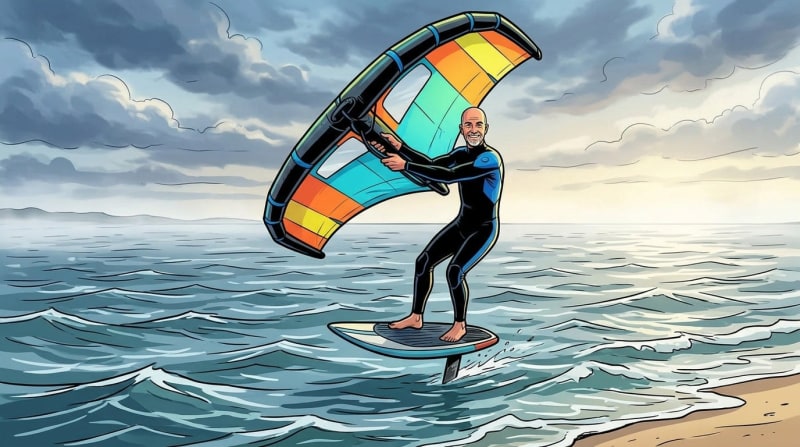
What every good instructor prioritizes in the first sessions: time with the wing on land before the foil board becomes the focus. You will hit the water on session one — but what happens on that beach before you wade in is what makes the water time count.
Wing handling on land — working with an inflated wing in steady breeze before you wade in — is not a formality. It is where you develop the feel for the wind window, that three-dimensional space around you where the wing generates power at different angles. Sheeting in and out, finding where the wing pulls forward versus lifts you off your feet: all of this is far easier to internalize on solid ground. When I first picked up a wing on the beach and felt it surge in a gust, my instinct was to grab harder and lean back. The right response is the opposite — depower it, redirect it, let it work. That lesson on land cost me nothing. The same lesson learned in the water would have consumed session time I couldn't afford to waste.
In sessions one through three, success looks like this: you can hold the wing in moving air and feel where the power is, and you can depower the wing intentionally when you need to. That is it — not direction changes, not grip switches, not turning the board. The foil board is genuinely tippy at this stage. Simply staying balanced while the wing pulls you forward is a real achievement, and it is the correct goal for these sessions.
One thing most people learn the hard way: wind conditions in these early sessions matter enormously. Go out in too little wind — below 12-13 knots on most beginner setups — and the wing cannot generate enough pull to keep the board moving. A board that isn't moving is nearly impossible to balance on. The session becomes a grinding loop of falling and climbing back on, with no positive feedback and a lot of frustration. Chase the wind for early sessions. A steady 14-15 knots makes these sessions instructive. Anything lighter makes them discouraging in ways that have nothing to do with your aptitude.
One more condition variable worth naming: flatwater. The foil board is tippy even in calm conditions — add chop or small waves and it becomes genuinely difficult for a beginner to manage. Climbing back onto the board after a fall in choppy water is exhausting in a way that compounds fast: scraped shins, sapped energy, and the board slipping away every time you try to mount it. If you have a choice between more wind with chop and less wind on flat water, choose flat water in the early sessions. The instability of chop is not a skill challenge you can work through at this stage. It's an obstacle that costs session time without teaching anything.
The wind window concept is the single most important thing to internalize before you spend meaningful time on the foil board. According to the GWA Wing Foil World Tour, the sport's governing body, structured beginner programs that emphasize early wing handling consistently produce better outcomes in sessions six through ten than approaches that rush to the board. wing foiling is now the fastest-growing watersport globally by participation, and the instruction community around it has learned a great deal about what early-phase teaching actually works.
Here is roughly where early session time goes, based on what instructors across the community consistently report:
The board shows up in those first sessions — but wing handling on land and in the water dominates. Instructors aren't withholding the board. They know the board is irrelevant until the wing is working.
What is the most useful thing you can practice between sessions one and three? Land drills with an inflated wing: the hand positions, the power stroke, the depower. Every minute on land translates to water time spent learning rather than fumbling.
Sessions 4-8: Knee Starts, Taxiing, and the Beginner Fatigue Wall
Sessions 4-8: Knee Starts, Taxiing, and the Beginner Fatigue Wall
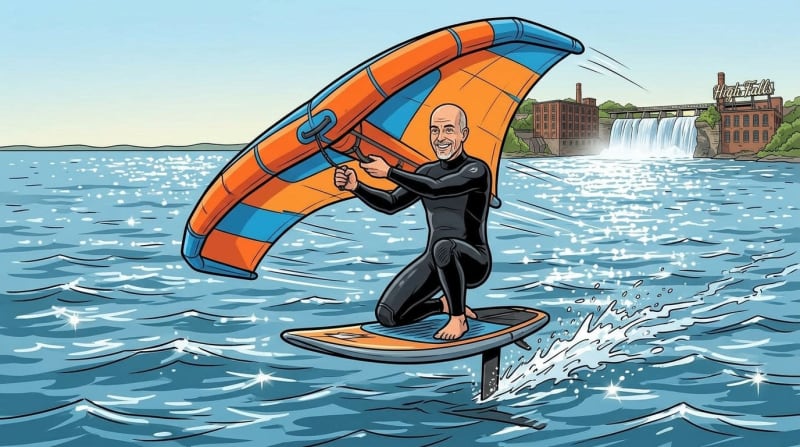
One clarification before diving into this phase: "water start" has a specific meaning in wing foiling — it refers to the advanced technique of getting up from being fully in the water, which comes much later in your progression. What you are learning in sessions four through eight is called taxiing — the runway before the flight. You get onto the board on your knees, use the wing to generate forward momentum, find your balance, and work toward getting to a standing position while keeping the board moving. Taxi first. Fly later.
This is the phase that separates people who end up wing foiling from people who walk away. Not because it is impossible, but because taxiing demands something specific that the earlier sessions did not: coordinating your lower body, your core, and the wing at exactly the same time, on an unstable surface, in moving water, while the board tries to slide out from under you.
Effective taxiing requires several things happening together: the wing must be generating consistent forward pull, the board must be pointed at a workable angle, and your weight distribution must be keeping the nose from diving. Wingfoil Daily identifies the most common error in this phase directly: getting vertical too early — standing up before the wing is generating consistent power — leads to falls that teach nothing and consume session time that could be spent actually learning.
The knee start is how most instructors address this. Rather than trying to pop from prone to standing in one motion, you come up to your knees first, establish balance and wing pull, and then rise to standing once the board is moving forward with momentum. Some instructors have beginners work toward a more direct stand, because the knee position creates awkward board angle issues in choppy water. Both approaches work — the right one depends on your background sports and how naturally you read board angle underfoot.
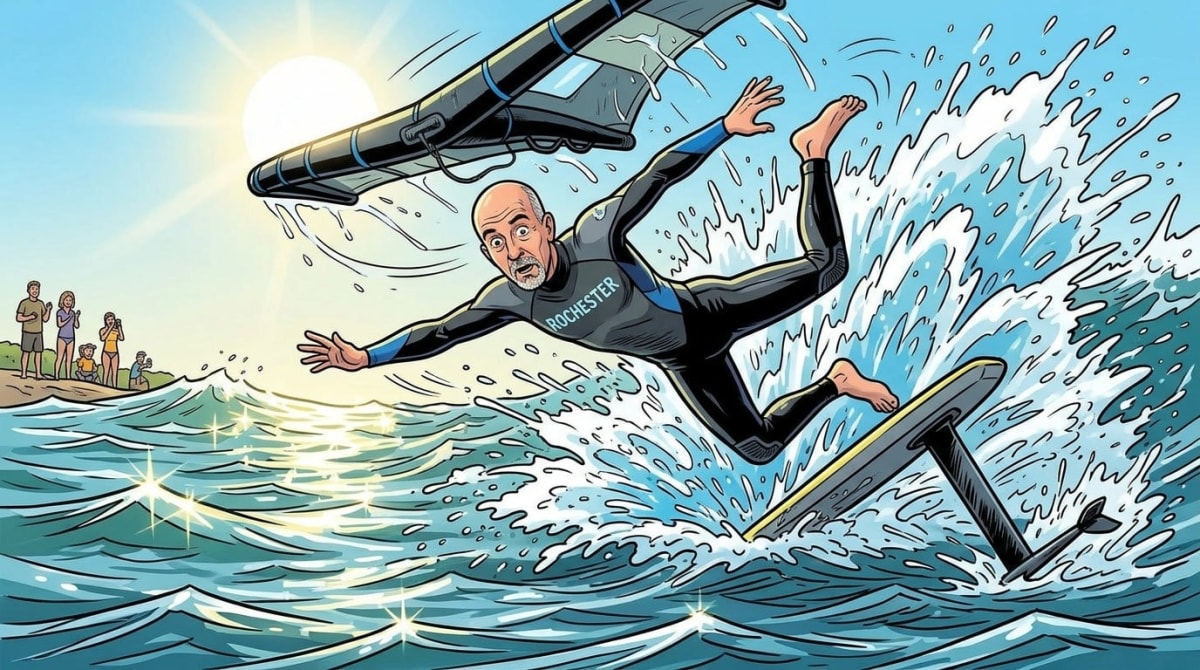
Here is what nobody warns you about adequately in this phase: it is exhausting. Falling off the board and climbing back onto it — repeatedly, for a full session — uses more energy than it looks like from shore. The fatigue is physical, but it hits decision-making before it hits your muscles: you start rushing the stand-up, making sloppy choices about wing angle, stop reading what the board is telling you. This is still the beginner phase. The goal here isn't to push through the fatigue to heroic results. The goal is to recognize when the session is done and come in with something to think about.
What wind conditions are you actually practicing in? A steady 14-knot day is more instructive than a gusty 18, every time. If you have the choice, take the steadier wind, even if it means a shorter session. Gusty, variable conditions are punishing when your timing is already under pressure.
Sessions 9-15: First Flights and the Crash-Landing Education
Sessions 9-15: First Flights and the Crash-Landing Education
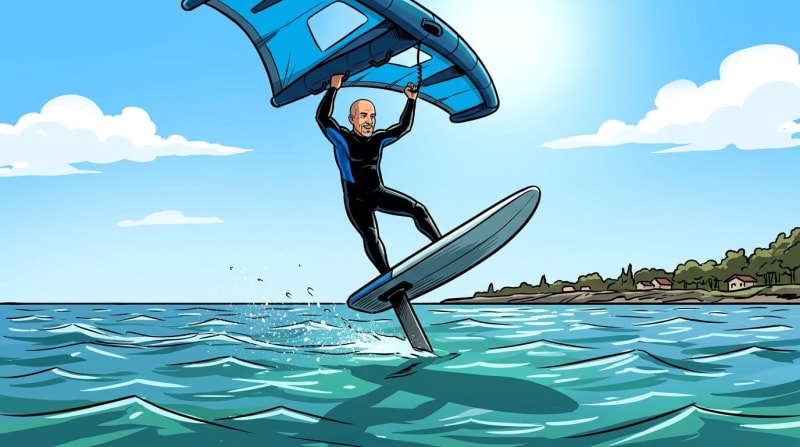
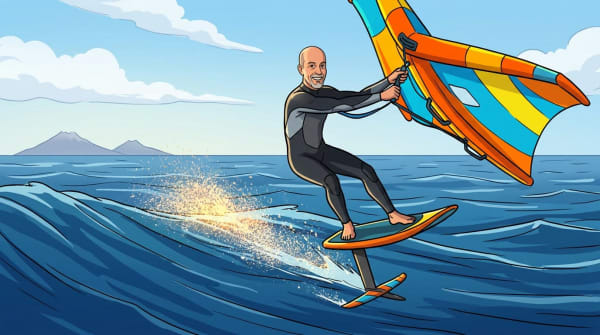
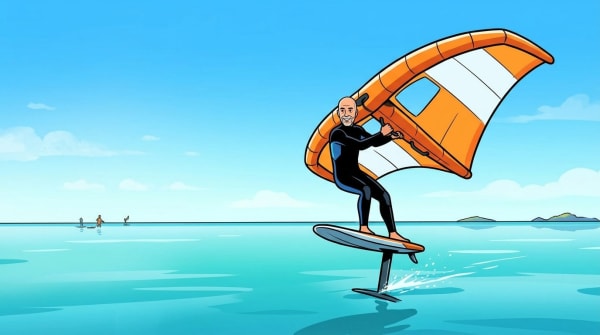
The first sustained foil happens differently for everyone, and this is one of the more interesting things about the sport: most people describe it as sudden. Not gradual. One session you are taxiing on the surface and touching down repeatedly, and then — often without a clear reason you can identify in the moment — it holds. The board rises. You are flying.
What is actually happening when it clicks: you have developed enough unconscious feel for front foot pressure that you are no longer actively thinking about it. The same way a cyclist stops consciously managing balance, your body has internalized the foil feedback loop. The moment that internalization happens is different for every rider, which is part of why the timeline range is so wide.
The most common reasons first flights end in crashes — and this matters to get right because the physics are counterintuitive: front foot pressure, mast length, and wing position. On front foot pressure specifically: too much sends the nose into the water and you pearl forward; too little lets the nose pitch up, the foil overshoots, and you stall off the back. That balance is finer than it looks in the first few flights, and it tends to go wrong in both directions before it starts going right. On mast length: the mast is a fixed-length component — you cannot adjust it mid-session. A mast that is too long for your current skill level makes the foil reactive to small inputs, which is punishing when you haven't yet developed the reflexes to manage it. Most beginners are working with whatever mast came with their setup, and that's fine — what matters is knowing that mast length is a variable worth discussing with an instructor or the local community if you're consistently overshooting the foil. On wing position: letting the wing drop too low or fly too high disrupts the balance between power and lift at exactly the moment you need to manage the foil.
How to tell if a crash is teaching you something: a productive crash has a recognizable cause — you felt where the board went, you know the wing dropped. An unproductive crash is random — you have no idea what happened. If your crashes are consistently random, you are likely either attempting something beyond your current baseline, or your mast length is working against you. The next section addresses both.
There is something else worth naming about the crash phase that doesn't get said enough: your body is learning even when your mind has no idea what happened. The left-right balance on a foil board demands fine-twitch muscle activation in your ankles and calves that you simply have not developed yet for this specific movement. It cannot be rushed. There is no shortcut. The reps are the path. Every time you stand up and fall down, the neurological wiring is updating — slowly, invisibly, reliably. The crashes look like failure. They are the work.
The gift in this phase — and it is a real gift — is that wing foiling crashes are almost always recoverable information. You fall. You get back up. You felt something. The crashes are the curriculum.
The Plateau: Why Progress Stalls and What Actually Helps
The Plateau: Why Progress Stalls and What Actually Helps
The plateau in wing foiling is real, common, and has two primary causes — both fixable once you know what to look for.
Cause one: the mast is too long for your current skill level. This is an equipment issue that disguises itself as a skill problem, and it is one of the harder ones to diagnose because most beginners are working with a single mast — whatever came with the board. The mast is a fixed-length component; unlike a boom or harness line, you cannot shorten it in the field. What you can do is borrow or rent a shorter mast from an instructor or a local rider — something in the 60-70cm range rather than 75-85cm — and try a session on it. A shorter mast makes the foil significantly less reactive to small inputs, which is exactly what you need when you are still developing the reflexes to manage it. Wingfoil Daily identifies mast length as the leading culprit in the intermediate plateau. The frustrating part is that access to a shorter mast requires knowing someone who has one — which is an argument for connecting with a local instructor or wing foiling group where gear lending is common.
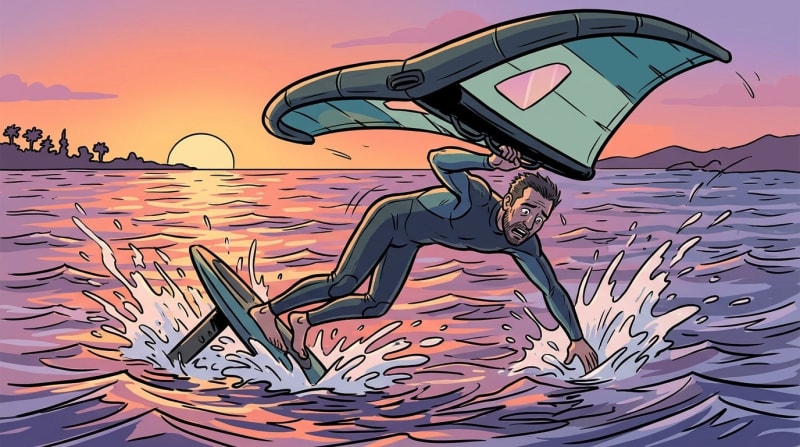
Cause two: wing size too large for the conditions. A wing sized for 12-15 knots becomes overwhelming in 18-20 knots. But oversized wings create a specific problem beyond raw power: the tips. Larger wings have more canopy, and when that canopy tilts — which happens constantly while you are still developing wing control — the tips drop toward the water. A wing tip catching the surface can pitch you forward without warning, and recovering from it at this stage is genuinely hard. Smaller wings are significantly easier to manage: the tips stay out of the water, the canopy stays overhead, and you are working with a package you can actually feel and respond to. The tradeoff is real — a smaller wing needs more wind to generate comparable pull — but for most beginners at the plateau, the instinct to reach for the bigger wing in the name of more power is exactly backwards. Smaller and manageable beats larger and overwhelming every session.
What GoPro review actually teaches you — and what it does not: video review is valuable, but helmet-mounted cameras capture everything at a wide angle that flattens board angle, mast position, and wing height. The angle makes it nearly impossible to see what you are actually doing wrong. Shore-based video is categorically more useful — shot from a fixed vantage point perpendicular to your line of travel, it shows you what you look like in the water from a stable, readable perspective. If you have been reviewing helmet footage and concluding "I have no idea what I'm doing wrong," the problem is probably the camera position, not a gap in your self-awareness. Get someone on the beach with a phone pointed sideways at your line.
Lesson vs. self-teaching at the plateau: at sessions four through eight, self-directed practice with video review is reasonable — you are building basic patterns. At the plateau, the math changes. A good instructor who can watch you from the water and give specific feedback on a specific session is often worth more than ten more self-directed sessions. The plateau is almost always caused by something you cannot see yourself. Someone who can see it can fix it in an afternoon.
What becomes possible on the other side? Consistent riding upwind, jibing, downwind runs, the beginning of tricks. The plateau is not a permanent feature of your wing foiling life. What gets you through it is specific feedback and an equipment check — two things that are more accessible than most people realize.
What Normal Progression Looks Like: An Honest Timeline
What Normal Progression Looks Like: An Honest Timeline
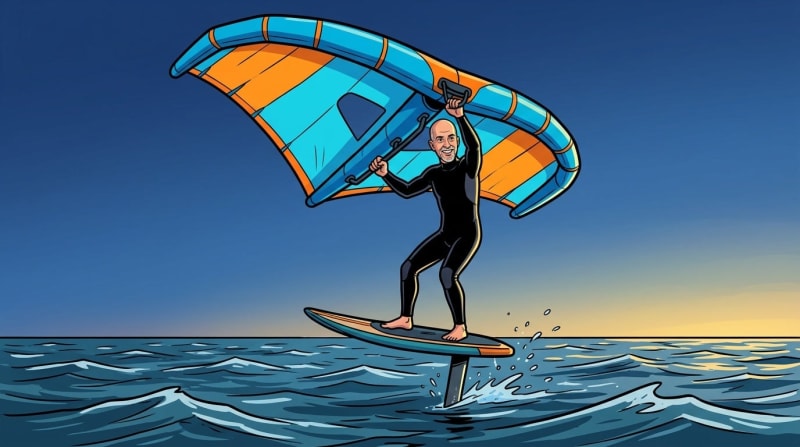
Here is the number you are probably looking for: most riders achieve their first sustained foil ride — more than a few seconds genuinely off the water — somewhere between session ten and session twenty-five. The GWA Wing Foil World Tour estimates that most recreational participants reach independent riding between sessions eight and twenty, with wind and water consistency as the primary variable.
That range is wide on purpose. Riders who arrive at session eight typically have background in kitesurfing, windsurfing, surfing, or wakeboarding — the spatial balance and board feel from those sports transfers significantly. Riders who take twenty-five sessions are often completely new to board sports. Getting there in twenty-five sessions with no board background is not slow. It is completely normal.
Here is what the progression gate map typically looks like, based on the GWA's estimated range and community-reported milestones:
The skills that unlock everything else: a consistent knee start — meaning you can get onto the board, taxi, and stand three times out of five in reasonable conditions — and the ability to hold the foil for three seconds without immediately crashing. If you have those two things, the path from there to comfortable riding is shorter than the path that got you to that point. Three seconds becomes five becomes ten becomes thirty, and then it stops being about "holding the foil" and starts being about where you want to go. That transition, when it happens, tends to feel sudden.
Why comparing your timeline to YouTube and Instagram is the worst thing you can do: the content you see on social media skews toward exceptional progression, because exceptional progression is more shareable. The rider sessioning twice a week in clean, consistent 15-knot trade winds will get to a foil faster than the rider going once every two weeks in gusty, variable conditions — and neither of those riders is who you usually see featured. What to watch instead: community footage from local spots in real conditions, instructors who film beginners during actual sessions rather than highlight reels, and forum threads where people track their session counts honestly.
What does it mean to belong to this community before you can really ride yet? Because you already do. The wing foiling community has something worth naming: experienced riders remember the beginner phase with unusual warmth and go out of their way to help. Show up at a beach where wing foiling is happening, and someone will usually come talk to you — offer a tip, loan a pump, share what conditions are doing that day. That is not an accident. It is what the sport has valued from the beginning.
What gets handed to you freely now — the knowledge, the encouragement, the honest feedback on your session — is the same thing you will eventually hand to the next person showing up on that beach not knowing what to expect.
You are not broken. You are mid-process. Keep going.
Content ID: Ht3Y2CmOksaGDlMmCW0PTVS8
See an error? Tell us.
Comments
Share with the Community