
Ultimate Guide To Caribbean Wingfoil Destinations
The Short Version
- Orient Bay in St. Martin is the top pick for first-timers, with Wind Adventures offering weekly unlimited wingfoil rental for around €550 and a full Cabrinha quiver right on the beach.
- Cabarete in the Dominican Republic has the deepest wingfoil infrastructure in the entire Caribbean, with multiple operations including ION Club, Swell Surf Camp, and Cabarete Kite Point all running current gear and instruction.
- Leeward versus windward positioning is the single most important booking decision you'll make — the western resort sides of most islands sit in a wind shadow and are essentially useless for foiling.
- Rincón, Puerto Rico delivers real Atlantic wave foiling for intermediate and advanced riders, but has no dedicated wingfoil rental or instruction, making it a bring-your-own-gear destination only.
- Inflatable boards travel well and work fine for beginners, but the flex that goes unnoticed early on becomes a real limitation once jibes click and riders start pushing into dynamic wave conditions.
Ultimate Guide To Caribbean Wingfoil Destinations
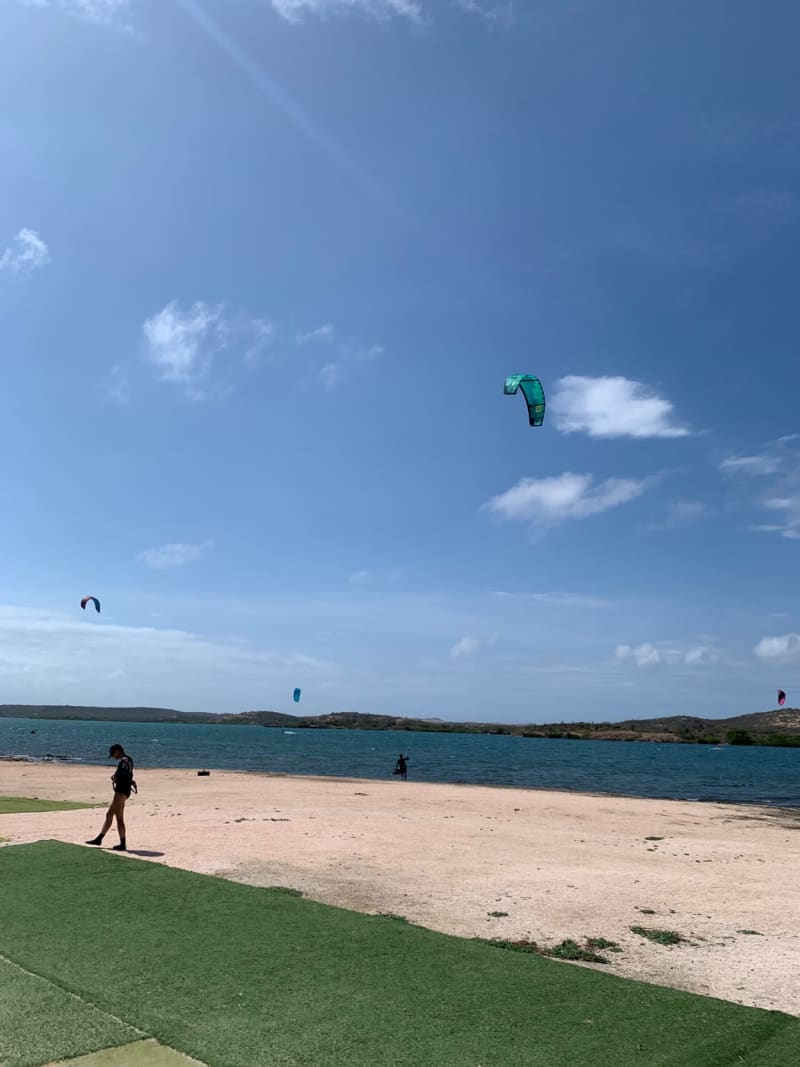
I was foiling across a glassy bay on the east side of Curaçao when it happened. A sea turtle, resting near the surface, spotted my foil coming and dove — fast, urgent, surprisingly athletic — disappearing into the blue in a second. I laughed out loud into the wind. That moment is the Caribbean in one image: extraordinary wildlife, warm turquoise water, steady trade winds, and you, flying above it all on a foil. There is no other place on earth quite like this for wingfoiling.
I've been chasing trade wind sessions across the Caribbean for several years now — St. Martin, Curaçao, Puerto Rico, St. Lucia, the Cayman Islands, Tortola, St. Thomas, and more. Some of those stops were wingfoil gold. Others were beautiful islands where the foil stayed in the bag. This guide is my honest account of both, plus research on destinations the community consistently points to that I haven't yet ridden myself. My goal isn't to sell you on a resort. It's to help you find your people and your water.
Why the Caribbean for Wingfoiling
Why the Caribbean for Wingfoiling
The Caribbean's secret weapon is the trade winds — steady easterly flows that blow from the northeast almost every day from December through April. This is the core wingfoil season. January through April is the sweet spot: winds are consistent, the Christmas wind spike has passed, and the water is warm enough that a rashguard is all you need.
What makes a Caribbean destination actually worth the trip comes down to four things I look for every time: consistent wind reliability, easy water access and clean launches, gear rental availability, and quality instruction on the ground. Islands that check all four boxes are rare. The ones that do are in this guide.
One thing the Caribbean teaches you quickly is that leeward and windward are everything. The western, developed sides of most islands sit in a wind shadow — beautiful for lounging, useless for foiling. The windward eastern and southern coasts are where the trade winds hit first and where the sessions happen. Keep that in mind when you're booking accommodation.
The Destinations
The Destinations
Orient Bay, St. Martin — The Top Pick
If you're planning your first Caribbean wingfoil trip and you want to get it right, Orient Bay is where I'd send you. I've foiled here three times and it delivers every single time.
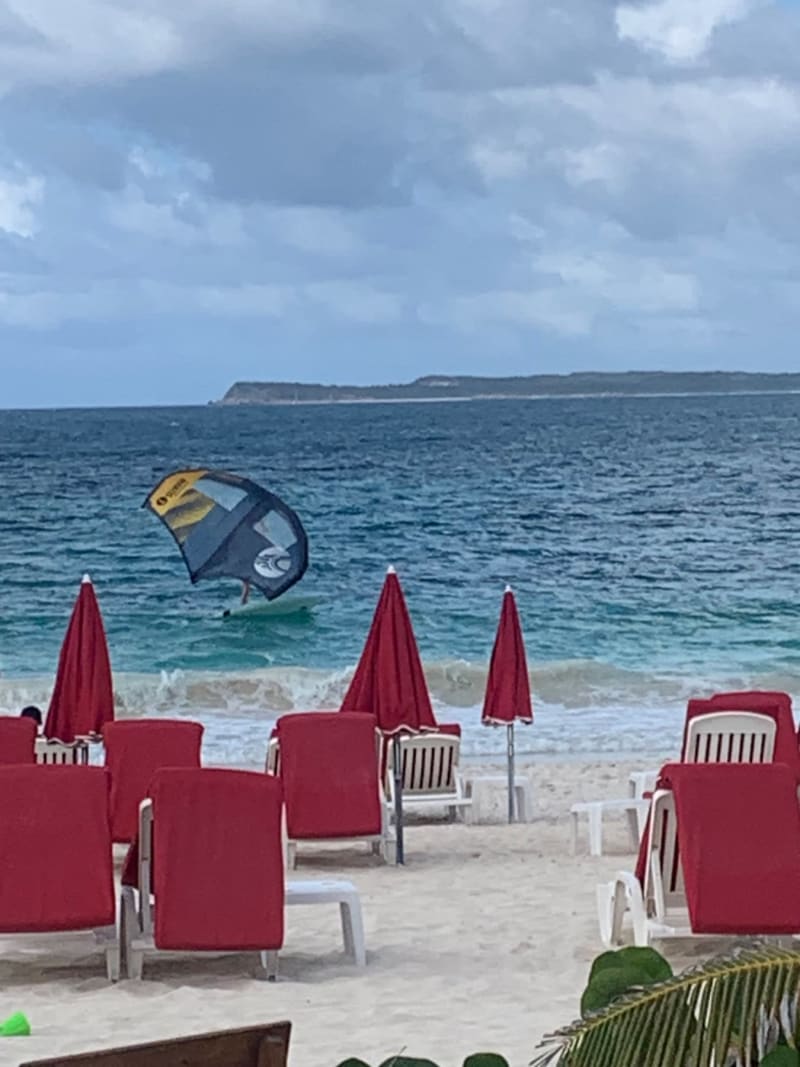
Orient Bay sits on the French side of St. Martin, fully exposed to the windward Atlantic. The wind is consistent year-round — averaging around 13 knots on most days, with stronger 18-20 knot sessions making up roughly one day in five. Mornings are the best window; wind typically softens midday and rebuilds from mid-afternoon on. The bay itself is beautiful, wide, and forgiving — a mix of chop and swell depending on conditions, with enough room for everyone to find their line.
The anchor here is Wind Adventures, located right on the beach at Orient Bay. It's one of the most well-organized water sports operations I've encountered anywhere in the Caribbean. They run a full Cabrinha quiver for wingfoil rental and offer instruction at all levels. A weekly unlimited rental runs around €550 — genuinely good value if you're staying more than a few days. The staff are knowledgeable, the gear is current, and the vibe is welcoming to everyone from first-timers to riders looking to push their limits. Beyond foiling, they run catamaran trips to Anguilla and Tintamarre that are worth an afternoon off the water.
St. Martin also has the logistical advantage of Princess Juliana International Airport, with good connections from the US East Coast. It's one of the easier Caribbean islands to get to without a connection.

Cabarete, Dominican Republic — The Rental Capital
I haven't foiled Cabarete myself, but I'd be doing you a disservice not to put it near the top of this list. The community consensus — and the infrastructure — is that clear.
Cabarete on the Dominican Republic's north coast has built itself into one of the most complete wingfoil destinations in the world. The trade winds come in side-onshore, which means you're not getting dragged out to sea while you're learning — a significant safety advantage for beginners. The lagoon inside the reef offers flat water; the outside reef offers wave riding for intermediate and advanced riders. Most months you can count on 15-20 knot sessions at least three weeks out of four.
What makes Cabarete exceptional for this guide is the rental and instruction ecosystem. ION Club runs a full operation with Duotone and Fanatic gear. Swell Surf Camp offers wingfoil lessons and rental with F-One equipment, plus beach lockers and a service that alerts you when the wind is good and rigs your gear for you — so you just show up and get in the water. Pro Kite Cabarete and Cabarete Kite Point round out the options. There is no other destination in the Caribbean with this depth of wingfoil infrastructure.
If you're a beginner who wants to learn in a place where the community is already established and the gear is waiting for you, Cabarete belongs at the top of your shortlist.

Curaçao — Sint Joris Bay
Curaçao is where the sea turtle dove, and it's where I keep coming back to in my mind when I think about what Caribbean wingfoiling can feel like at its most elemental.
The island has a split personality that matters enormously for foilers. The west side is where all the development is — resort hotels, restaurants, beautiful sunsets over the water. It's also all reef and coral with almost no clean water access. Don't plan to foil from your beach resort on the west side. It's not happening.
The east side is a different story. Sint Joris Bay is a wide, protected bay with consistent windward exposure and flat water that rewards beginners and early intermediate riders enormously. The trades hit the eastern shore cleanly, the water is shallow enough to feel safe, and the setting — ringed by arid, rust-colored hills above turquoise water — is unlike anything in the more developed islands. Local kite schools have expanded into wingfoil instruction and rental here in recent years, making it increasingly accessible without your own gear.
Curaçao is also an easy island to base yourself on logistically. Hato International Airport has direct flights from several US cities, and the island is far enough south to sit outside the main hurricane belt.
Bonaire — Lac Bay Flat Water Paradise
I haven't foiled Bonaire yet, but every serious wingfoiler I know who has been there says the same thing: Lac Bay might be the best flat water wingfoil location in the entire Caribbean.
Bonaire sits just east of Curaçao in the Dutch ABC islands, and like its neighbor it sits below the hurricane belt with year-round trade winds. Lac Bay on the eastern side of the island is a shallow, crystal-clear lagoon with steady wind and almost no chop — the kind of water that lets beginners find their footing fast and lets experienced riders work on technique without fighting the conditions. Bonaire Kiteschool offers daily wingfoil rental with morning-to-afternoon availability, and Frans Paradise adds instruction options as well.
What makes Bonaire interesting beyond the foiling is that roughly half the visitors come for world-class scuba diving. If you're traveling with someone who doesn't foil, Bonaire solves that problem beautifully. It's a genuinely low-key island — no major nightlife, excellent restaurants, and the kind of unhurried pace that makes a week feel like two.
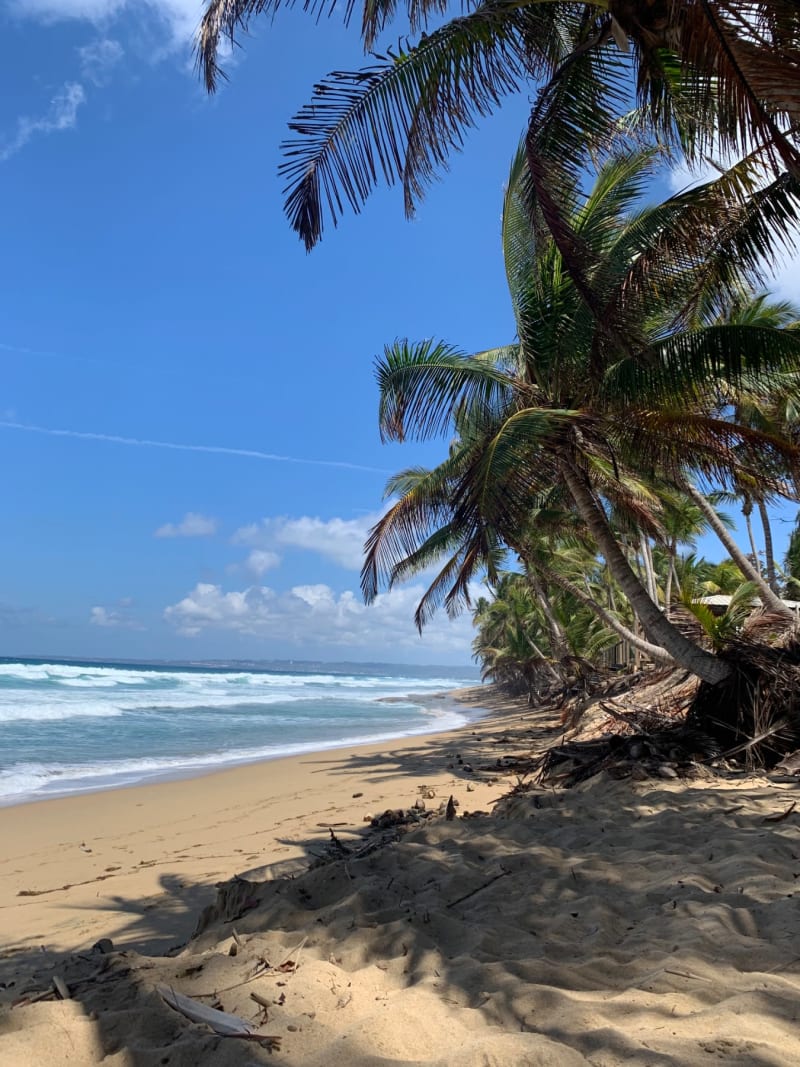
Rincón, Puerto Rico — For the Wave Rider
Rincón is known internationally as a surf destination, and that reputation is well-earned. What doesn't get talked about as much is that it's also one of the most interesting wingfoil spots in the Caribbean — specifically if you want waves under your foil.
The breaks around Rincón are real Atlantic surf, not the gentle bump-and-chop you find in more sheltered Caribbean bays. On a good day the sets are powerful and consistent. For intermediate and advanced riders who've mastered the basics and want to feel what wave foiling can actually be, Rincón delivers in a way that flat water Caribbean destinations simply can't.

The town itself is relaxed and genuinely charming — good food, a laid-back surf culture, a community that doesn't feel overrun by tourism. There are protected bays right near town that work well when the open ocean is too much, which means even less experienced riders can find a session.
The honest downside: I didn't find dedicated wingfoil rental or instruction in Rincón. This is a bring-your-own-gear destination for now. If that's a dealbreaker, Cabarete or St. Martin will serve you better. But if you've got your equipment and you want to foil somewhere that feels wild and alive, Rincón belongs on your list.
St. Lucia — Southern Tip Surprise
Most people who visit St. Lucia stay on the north end near Castries or in the lush interior near the Pitons. The wingfoiling crowd knows a different St. Lucia entirely.
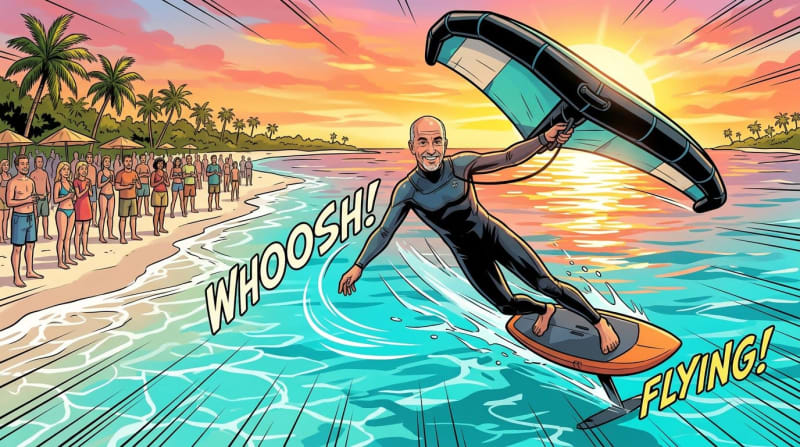
The southern tip of the island near Vieux Fort — just minutes from Hewanorra International Airport — catches the trade winds full force off the Atlantic at Anse des Sables beach. I foiled here and was genuinely surprised by how good the conditions were. The wind is consistent and side-onshore, the reef creates a protected flat water zone inside for building confidence, and the waves outside the reef open up for riders ready to push further.
Coconut Bay Beach Resort sits right on this stretch of beach and runs a full Surf Shack operation — IKO-certified wingfoil instruction, rental gear, and instructors who evaluate your level before putting you in the water. It's a resort-based operation, which means non-foiling travel companions have plenty to do while you're on the water. Worth booking well in advance; space in the instruction program is limited.
The rest of St. Lucia is worth exploring if you're there. The island is lush, volcanic, and dramatic in a way the flatter Dutch islands aren't. A day trip to the Pitons or the drive-in volcano at Soufrière is worth the journey.
I've Been There — But the Foiling Story Is Complicated
I've Been There — But the Foiling Story Is Complicated
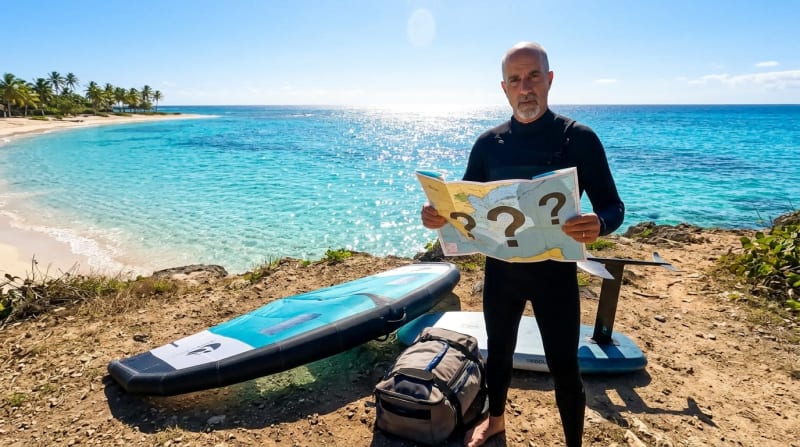
Not every island I've visited delivered clear wingfoil possibilities. I want to be honest about that.
Culebra, Puerto Rico is one of the most beautiful islands I've set foot on. Getting there requires a puddle jumper from the main island, and some of the more remote beaches demand real commitment to reach with gear. There may well be rideable conditions for an adventurous rider who does the homework — but I can't point you to confirmed spots or rental operations with confidence.
Cayman Islands is stunning above and below the water, but the reef and coral situation is pervasive. I genuinely couldn't identify a wingfoil-ready launch during my time there. That doesn't mean the spot doesn't exist — it means I didn't find it.
St. Thomas is accessible and beautiful, but heavily touristed. I didn't foil there and didn't see the conditions that would have made me want to.
Tortola, BVI has windward exposure on the northeast side and the trade winds are real. The BVI is genuinely extraordinary sailing territory. But there's no established wingfoil infrastructure I could confirm, and without your own gear and local knowledge it's a difficult target.
Traveling With Your Gear
Traveling With Your Gear
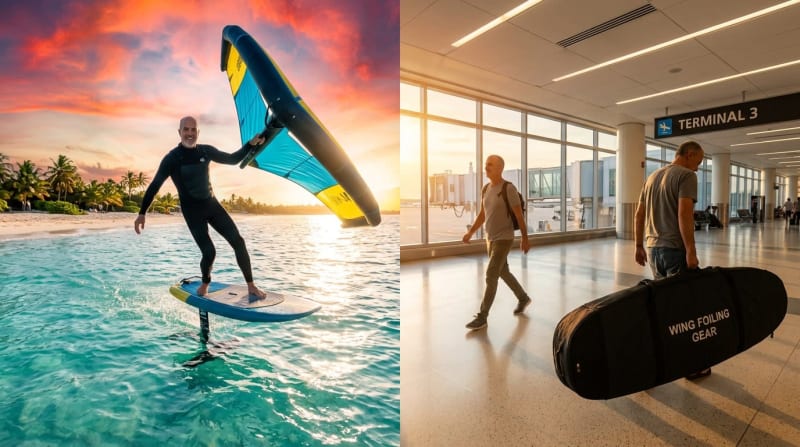
The question every Caribbean wingfoiler faces: bring your kit or rent on arrival?
For trips of a week or less to a destination with solid rental options — St. Martin, Cabarete, St. Lucia — renting on arrival is worth serious consideration. You travel light, skip the airline fees, and show up ready to ride without wrestling a board bag through customs. The rental gear at the operations mentioned in this guide is current and well-maintained.
If you're going somewhere without rental infrastructure (Rincón, most of the BVI), or if you're staying two weeks or more, bringing your own gear starts to make more economic sense.
My own board progression tells the travel story pretty well. I started on an inflatable Naish 140 liter, then moved to an inflatable Naish 100 liter as my skills developed. Both traveled beautifully — they pack down small, fit alongside your foil and wings without triggering oversized fees, and for a beginner they're genuinely excellent on the water too. If you're early in your foiling journey, an inflatable is a completely legitimate quiver choice and a smart travel decision.
But here's the honest truth about inflatables: once my jibes started clicking and I began riding waves, I wanted rigidity under my feet that an inflatable simply can't give you. The flex you don't notice as a beginner becomes something you feel constantly as an intermediate rider pushing into more dynamic conditions. That's what led me to pick up a WAKA folding board this year — a hard board that folds for travel, which is a genuinely interesting middle ground I hadn't seen solved well before. I'm writing this from St. Martin right now, putting it through its paces at Orient Bay. A full review is coming — but early impressions are very promising. Stay tuned.
Pack your foil with padded covers, wrap everything in your wetsuit and impact vest, and mark the bag fragile. Bring a spare pump. Triple-check your gear list the night before — replacement parts are hard to find on most of these islands. And check your airline's specific policy on oversized sporting equipment before you book; the fees and rules vary significantly and change often.
Finding Your People

Finding Your People
The Caribbean wingfoil community is smaller than you might think and more welcoming than you'd expect. The riders you meet at Wind Adventures in Orient Bay, at the ION Club in Cabarete, at Coconut Bay in St. Lucia — they came from everywhere and they're all there for the same reason you are. That shared purpose is its own kind of belonging.
What I've found across all these islands is that the best sessions rarely happen alone. Someone on the beach knows which end of the bay is working today. A local instructor has the tide window dialed. Another rider spots conditions you would have missed. The sport is generous that way — information flows freely among people who love it.
Come with your gear, your curiosity, and some flexibility in your schedule. The wind will do the rest.
Content ID: 6vZomvEYnaGPluAdaAAihEIg
See an error? Tell us.
Comments
Share with the Community