
Wing Foiling in Fuerteventura: The Canary Islands Spot That Delivers Every Time
The Short Version
- Fuerteventura sees 80–90% wind reliability during peak summer months, with side-shore trade winds running 20–30 knots in the north and 30–40 knots in the south on the same day.
- The island splits into two distinct zones: Corralejo in the north suits all levels with flatter water and more beginner infrastructure; Sotavento in the south is where serious conditions live.
- The GWA Wingfoil World Cup runs July 27–August 1, 2026, with €25,000 in prize money across Surf-Freestyle and FreeFly-Slalom — the largest prize pool on the entire 2026 tour calendar.
- Arriving a few days before the GWA event starts lets you get sessions in before competition crowds arrive; the week after is historically quiet and clean.
- Gear rental is widely available through local schools at Flag Beach, Corralejo Bay, Matas Blancas, and Sotavento, making it realistic to travel without checking equipment.
Why Fuerteventura keeps coming up
Why Fuerteventura keeps coming up
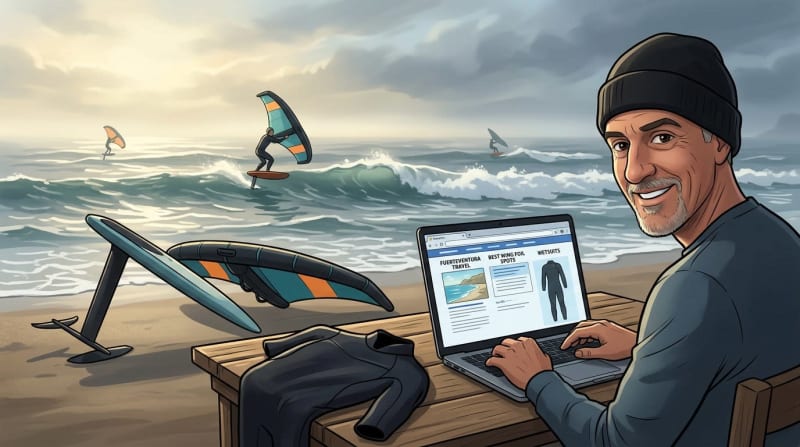
The name means something. Fuerteventura translates from Spanish as "strong wind" — and the island earns it. Located about 100 kilometers off the northwest coast of Africa, this second-largest Canary Island sits directly in the path of the northeast trade winds that blow from the Atlantic toward the Sahara almost year-round. For wing foiling, that's not a coincidence you stumble onto. It's the whole point of going.
The island has been on the world windsurf and kitesurf map for decades. Wing foiling in Fuerteventura is a newer chapter in that same story — one that's accelerating quickly, with a growing network of local schools, dedicated spots at every skill level, and now the GWA Wingfoil World Cup arriving July 27–August 1, 2026 with the largest prize pool on the entire tour calendar at €25,000. If you've been looking for a reason to build a trip around Fuerteventura this summer, the GWA event is a compelling one. But the conditions that make it worth watching are the same ones that make it worth riding.
The wind: what you can actually count on

The wind: what you can actually count on
From April to October, Fuerteventura sees a 60% chance of wind over 15 knots on any given day. In the peak summer months of June through August, that probability rises to 80–90%. In the north around Corralejo, summer winds typically run 20–30 knots. In the south at Sotavento, the same day can deliver 30–40 knots — accelerated by a thermal effect from the surrounding hills.
The wind is driven by the alisios, the northeast trade winds, which blow consistently side-shore or cross-shore across most of the island's coastline. For wing foiling, side-shore wind is ideal — it gives you clean power without pushing you offshore, and it keeps conditions predictable across a long session.
If you want big conditions, December through May delivers stronger swell alongside the wind. If you're earlier in your progression or prefer cleaner, flatter water, summer is the better call — smaller swells, lighter crowds at some spots, and consistent wind that teaches you exactly what your gear can do.
The spots: north vs south

The spots: north vs south
The island splits cleanly into two worlds for wing foilers, and knowing which one suits your level saves you from a frustrating session.
Corralejo (North) is where most travelers base themselves — it's a proper town with restaurants, surf camps, gear shops, and easy access to multiple spots within a short drive or walk. Corralejo Bay offers flat, calm water protected by a harbor breakwall, with consistent north to northeast side-shore wind that makes it genuinely good for beginners and for drilling turns and jibes. The main caveat: rocks are present in the water, especially at low tide, so timing your entry matters.
Flag Beach, two minutes from downtown Corralejo, is the north shore's main watersports hub — best in northwest to north wind, which runs April through August. It works for beginners and intermediate riders, but gusty conditions mean you want to be comfortable riding upwind before committing here.
For experienced riders willing to explore: Majanicho in the far north is a wave spot that performs exceptionally well in north winds, with flat water inside the bay for freestyle riders and serious wave conditions outside it. Remote and rocky, but riders who find their way there tend to come back.
Sotavento and Costa Calma (South) is where conditions get serious. Sotavento is one of the world's most iconic windsurfing and wing foiling locations, with strong, consistent cross-offshore winds and a vast tidal lagoon that functions as a natural training ground for beginners and intermediates. The GWA World Cup is held in this region — not by accident.
Matas Blancas, just north of Costa Calma, is a flat-water freestyle spot with offshore wind and water locals describe as mega flat — ideal for locking in technique or pushing your freestyle game. Costa Calma itself is beginner-friendly with direct beach access from hotels, though the side-offshore wind means beginners should focus on riding upwind.
"The wind in the south can regularly reach 40 knots in the afternoons."
— wind-hounds.com, on Sotavento's summer conditions
Timing a trip around the GWA World Cup

Timing a trip around the GWA World Cup
The 2026 GWA Wingfoil World Cup Fuerteventura runs July 27–August 1 — right at the peak of the island's wind season. The event features both Surf-Freestyle and FreeFly-Slalom disciplines, drawing the full world-class field to compete for the largest prize pool on the 2026 tour. Watching GWA competition in person is a different experience than following it online — the scale of what elite riders do in 35-knot wind, at the same spots you'll be riding that morning, lands differently when you're standing on the beach.
If you're building a summer trip, arriving a few days before the event starts gives you time to get dialed in at your spots before the competition crowds arrive at the venue. The week after the event is historically clean — good wind, post-competition quiet, and the local schools and shops back to full attention on riders who aren't watching the pro heats.
Getting there and getting set up

Getting there and getting set up
Fuerteventura's airport at Puerto del Rosario sits roughly halfway down the island. Corralejo in the north is about 30 minutes from the airport; the neighboring island of Lanzarote is a 30-minute ferry from Corralejo and has its own international airport — making it a reasonable alternative arrival point.
A rental car is worth it. Surf camps throughout the island offer affordable accommodation close to the spots, and having your own transport lets you chase conditions north to south depending on where the wind is playing that day. The difference between a 25-knot day in Corralejo and a 38-knot day in Sotavento is a 45-minute drive.
Gear rental is widely available through the local schools at Flag Beach, Corralejo Bay, Matas Blancas, and Sotavento — so traveling light is realistic if you're not ready to check a foil bag. Most schools run Fanatic, Duotone, and Takoon setups. If you do travel with your own gear, check airline equipment policies carefully before you book.
What would a week of consistent 25-knot sessions do for your foiling — and is this the summer you find out?
Content ID: 3WgsbntUWv9kLeC65gHvapbt
See an error? Tell us.
Comments
Share with the Community