Wing Foiling in Tarifa, Spain: Conditions, Best Spots, and How to Plan Your Trip
The Short Version
- Tarifa logs over 300 windy days per year thanks to the Venturi effect created by the Strait of Gibraltar, which funnels and accelerates air between Europe and Africa just 14 kilometers apart.
- The Levante, blowing east off the Mediterranean at 20–40 knots, dominates roughly 60% of wind days and produces the flat, glassy water that makes Tarifa exceptional for wing foiling.
- Valdevaqueros is the go-to beach — a 4-kilometer stretch about 10 minutes west of old town with a massive natural dune acting as a safety backstop on strong Levante days, and it's where the GWA Wingfoil World Cup is scheduled for June 24–27, 2026.
- Day gear rental runs €45–65 at most beach centers, and weekly packages with accommodation at ION CLUB Tarifa start around €890, so there's no real need to travel with your own equipment.
- Flying into Málaga is the practical gateway from the US East Coast, with East Coast round-trips starting around $375–500 and a drive of roughly 1 hour 45 minutes to Tarifa along the A-7 coastal road.
The Place I Keep Coming Back To — In My Head
The Place I Keep Coming Back To — In My Head
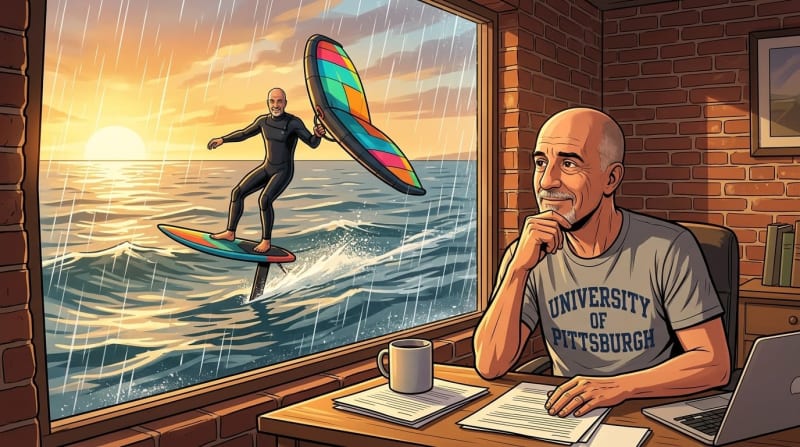
I have been to Europe fifteen times. Three trips in 2025 alone — Italy, Greece where I finally got on the water wing foiling in Naxos, then Spain for Barcelona and Mallorca. And yet somehow, every year I plan these trips, I find myself checking the same wind forecast. Tarifa, Spain. The southernmost tip of Europe. Fourteen kilometers from Africa.
I have researched Airbnbs in the old town. I know which beaches are west of the village and why that matters. I have a rough idea of the logistics from Málaga. I just have not made the trip yet — partly the practical calculus of building a week around a specific wind sport destination, partly the challenge of aligning it with a family travel agenda. But Tarifa keeps surfacing in every conversation I have about where to go next. And now, with the GWA Wingfoil World Cup landing there June 24-27, 2026, there is a real peg to plan around.
Here is everything I know about it — research included — for anyone else who has been circling this destination.
Why Tarifa Exists at the Intersection of Two Worlds
Why Tarifa Exists at the Intersection of Two Worlds
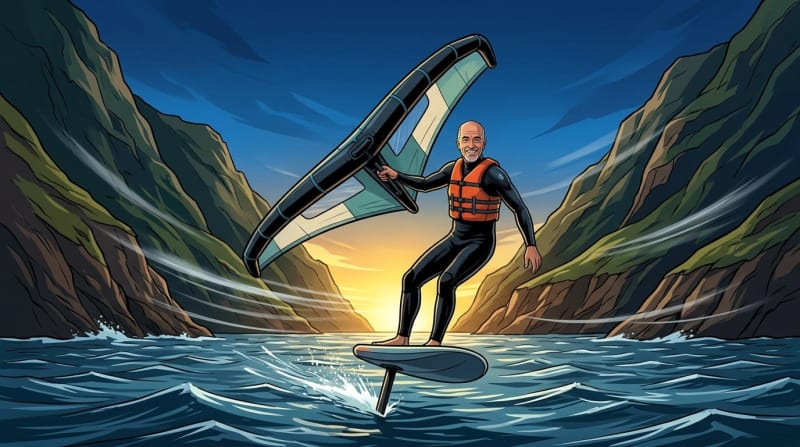
Tarifa sits at the exact point where the Atlantic Ocean meets the Mediterranean Sea, and where the European and African continents are separated by just 14 kilometers. That geography does something unusual to the wind. The Strait of Gibraltar creates a Venturi effect — a natural funneling that accelerates air passing through it, reliably and repeatably, in a way that almost no other coastline on Earth replicates.
The result: over 300 windy days per year, according to multiple wind sports operators based there. Not 300 days where it might be windy. Three hundred days where the wind shows up and gets to work. ION CLUB Tarifa describes it plainly: a wind guarantee close to 100%.
The two winds that drive this are called the Levante and the Poniente, and understanding them is the difference between a great session and a frustrating one.
Two Winds, One Coast
Two Winds, One Coast
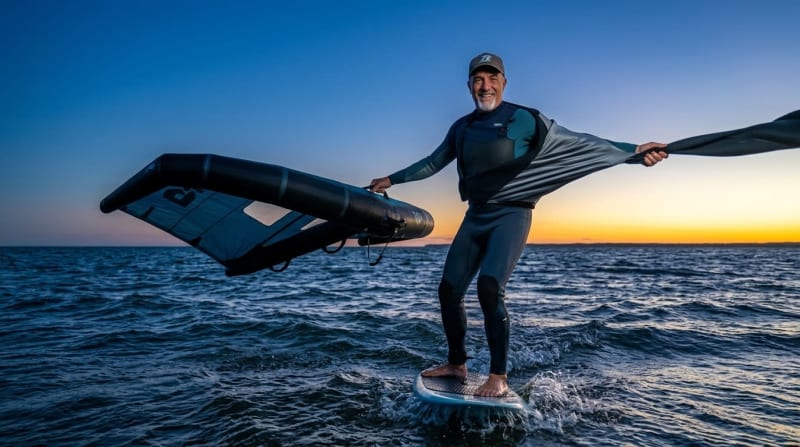
The Levante blows from the east — out of the Mediterranean, warm, dry, and strong. Matos Tarifa puts the Levante at roughly 60% of wind days annually, with average speeds of 20 to 40 knots and gusts that can reach 50. It is the dominant wind of Tarifa and its defining characteristic: side-offshore at Valdevaqueros, which keeps the water glassy and flat — perfect for wing foiling — but means you need to respect your limits and carry a rescue card on strong days.
The Poniente blows from the west — off the Atlantic, cooler, more humid, more consistent. It runs at 12 to 22 knots on average and is side-onshore, which makes it the forgiving option: if something goes wrong, the wind pushes you back to shore rather than out to sea. The Poniente dominates in summer, arriving as a thermal wind that builds through the afternoon, typically peaking between 4 and 7 PM.
For wing foiling specifically: Levante days give you flat water and strong, consistent wind — ideal for powered riding and longer sessions. Poniente days bring wave potential and a safer exit if your foil skills are still developing. Ozu School Tarifa recommends Windguru for reading which wind is coming and how strong — Tarifa forecasts require local knowledge to interpret correctly.
The Beaches — West of Town Is Right
The Beaches — West of Town Is Right
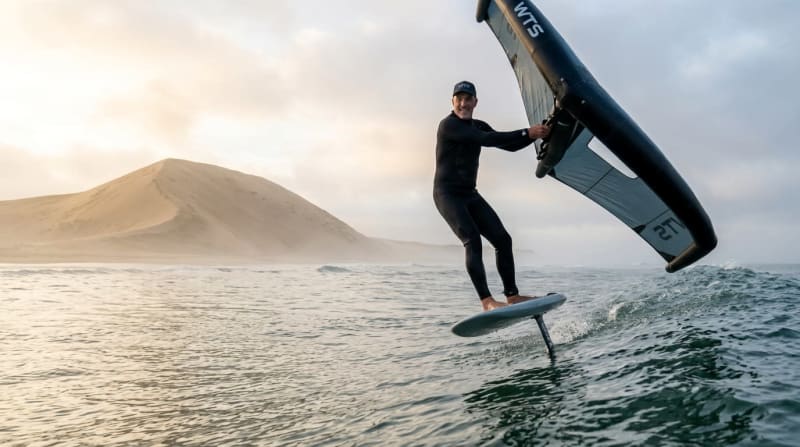
My research confirmed what every serious wind sports guide says: the main wing foiling action happens at beaches northwest of the town center, not at the town beach itself.
Valdevaqueros is the flagship. Located about 10 minutes west of old town Tarifa, it is a 4-kilometer stretch of sand anchored at its north end by a massive natural dune — a critical safety feature that stops your drift if something goes wrong in Levante conditions. ION CLUB and the Duotone Pro Center are stationed here directly on the beach. Water depth runs waist-deep for 50 to 100 meters offshore, forgiving for falls. This is where the GWA runs its events. On a strong Levante day, you will see the world's best wing foilers here.
Playa de Los Lances Norte is three kilometers north of town — a 4-kilometer beach with consistent side-shore Poniente wind and a designated channel for wing foilers away from the kite crowd in summer. Surf Center Tarifa and Wingfoil Center Tarifa operate here with full gear rental and rescue boats.
Punta Paloma, just north of Valdevaqueros, is closer to the dunes and better for lighter wind days — good for building confidence without full Levante intensity.
Bolonia, further north along the Costa de la Luz, is a quieter alternative when Tarifa itself is too strong — beautiful beach, Roman ruins nearby, noticeably fewer people. Kite Fun Tarifa also notes it as the launch point for epic downwind runs with Levante, ending back in Tarifa.
Staying in Town — Why It Makes Sense
Staying in Town — Why It Makes Sense
I have gone back and forth on this: stay in the old town of Tarifa, or put yourself on the beach at Valdevaqueros? My instinct is the same as it always has been on trips like this — stay in the most interesting place and accept the short logistical overhead.
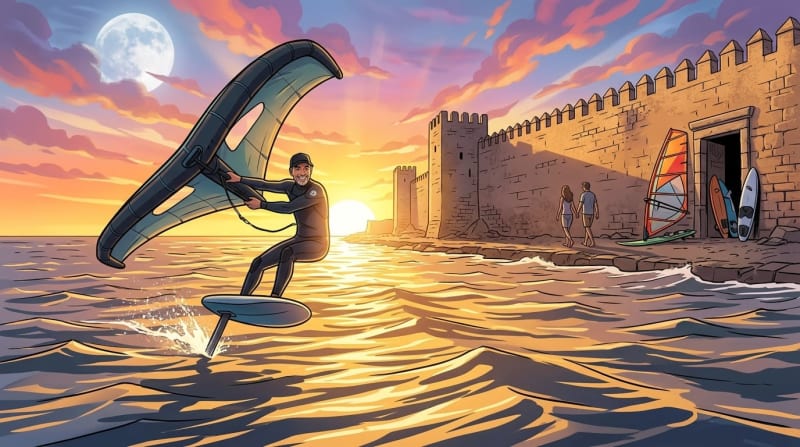
Tarifa's old town is a proper Andalusian medina with Moorish walls, white-washed streets, genuine tapas bars, and a waterfront that rewards an evening walk. If your travel partner is not a wing foiler — or even if they are — having a real town to come back to at the end of the day matters. Valdevaqueros has a beach club and a Michelin-recognized restaurant in BIBO (from three-star chef Dani García, attached to the ION CLUB center), but it is fundamentally a beach strip. Town has more.
The tradeoff is 10-15 minutes by car to the spots. Worth it. Surf Center Tarifa and most operators confirm you need a rental car anyway — there is no reliable public transit to the wind spots. Wingfoil Weather's guide lists Hotel Arte Vida as a boutique beachfront option at €150-250/night, Hotel Dos Mares as a classic mid-range at €80-140/night, and Hostal La Calzada as a clean central budget option at €35-60/night. For Airbnb in the old town, search within the walled medina — smaller apartments, walking distance to everything.
For rental gear, ION CLUB Tarifa at Valdevaqueros has 25+ Duotone wingfoil boards and the full range of wings, renewed every season. Weekly packages with accommodation run around €890. Wingfoil Weather lists day rental from €45-65 at most centers — no need to travel with your own equipment.
Getting There from the US East Coast
Getting There from the US East Coast
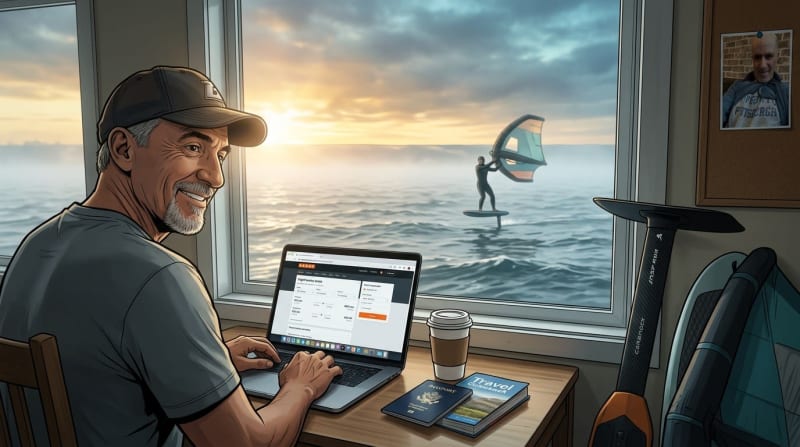
No direct flights to Tarifa — the town has no airport. The move from the US East Coast is straightforward: fly into Málaga (AGP), which has connections from New York, Boston, and other East Coast hubs via Iberia, TAP Air Portugal, and others. Travelocity data shows East Coast round-trips to Málaga starting around $375-500 depending on timing.
From Málaga Airport, the drive to Tarifa is approximately 1 hour 45 minutes via the A-7 coastal road. Jerez (XRY) is closer at 1.5 hours if the routing works. Gibraltar (GIB) is just 45 minutes but has limited US connectivity and requires a border crossing.
Rent the car at the airport — every operator confirms it is essential. Budget a week. Five days on the ground gives you enough margin to catch two or three quality sessions even accounting for wind variability, while leaving time to explore the old town, the coast toward Bolonia, and the Strait of Gibraltar.
What would it mean to finally stop checking the Tarifa forecast from Rochester and actually be there when the Levante arrives? Africa on the horizon. Valdevaqueros with the dune at your back. The GWA pros somewhere in the lineup. That trip is more accessible than most wing foilers assume — and the logistics are solved.
The only thing left is booking it.
Content ID: 4qswreg6ZmUDGU8zKK7gIrc5
See an error? Tell us.
Comments
Share with the Community