Downwind Wing Foiling on Lake Ontario: What It Is, Why It's Addictive, and How to Start
The Short Version
- Linking three bumps without touching the wing is the moment people describe as immediately addictive — and it explains why a growing local crew has been running Lake Ontario's south shore for several seasons now.
- Lake Ontario's roughly 200-mile east-west length lets a sustained westerly build real fetch, and a two-day blow at 18–22 knots produces the organized, rideable bumps the Rochester foiling community chases.
- Downwinding rewards balance and swell reading, not wing pressure — so if consistent jibes are still a struggle, adding bump reading on top will likely turn sessions into frustration rather than fun.
- Board shape matters more here than in regular winging: downwind boards are longer, narrower, and create less drag, making bump entry noticeably easier than on the shorter, wider boards that work well for cross-shore riding.
- Two-car logistics are non-negotiable — one car at the finish, one at the launch — and a last-minute shuttle collapse on a good wind day is described as a particular kind of frustrating.
What Downwinding Actually Is
What Downwinding Actually Is
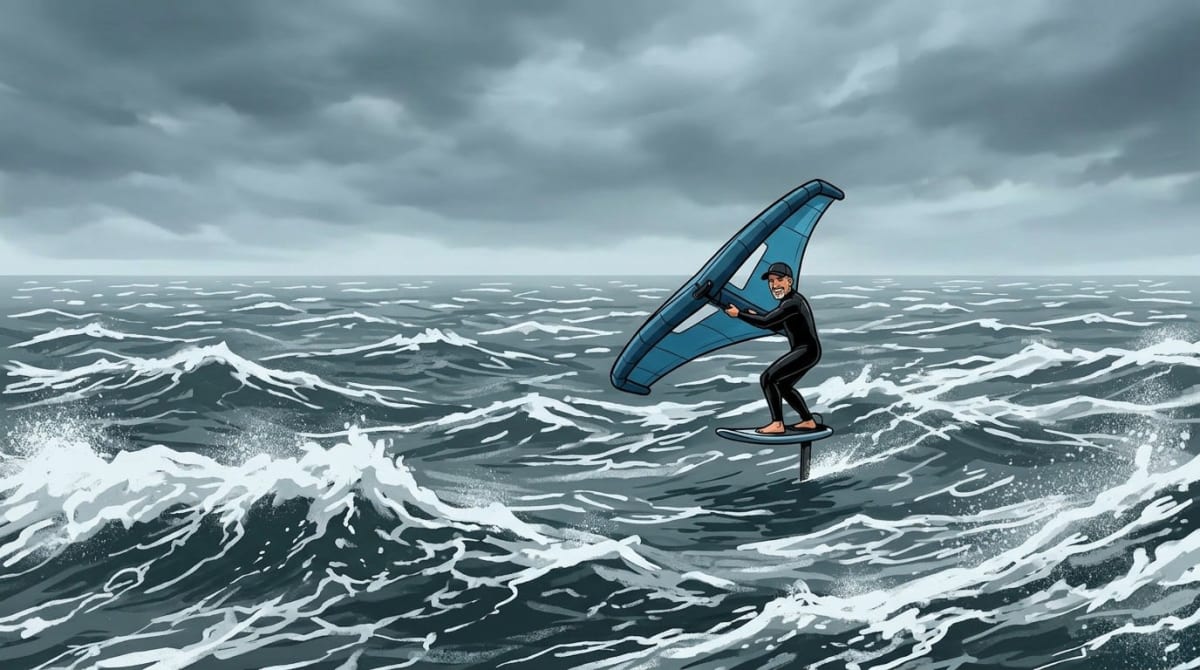
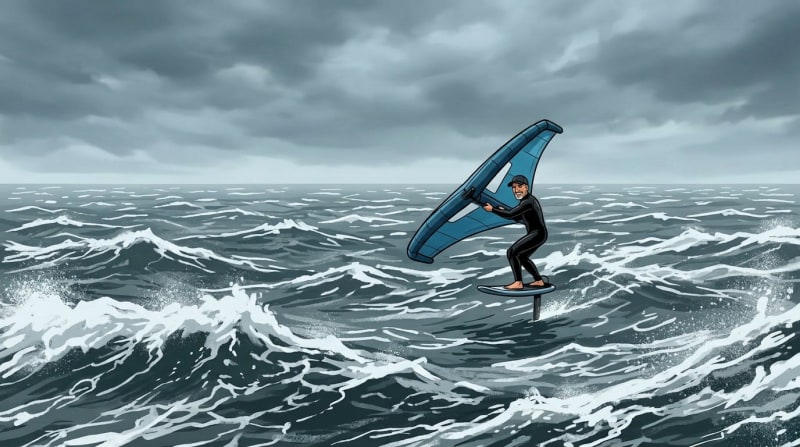
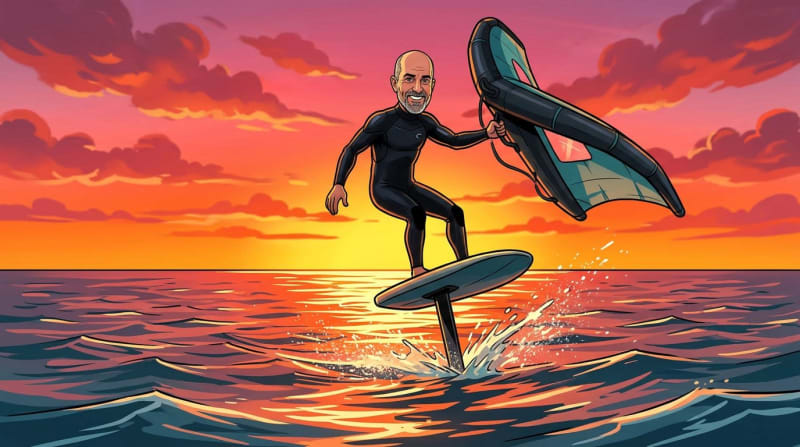
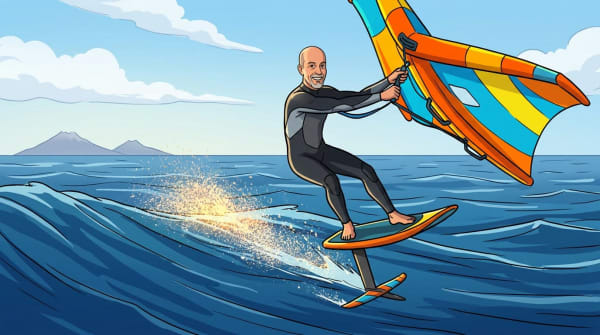
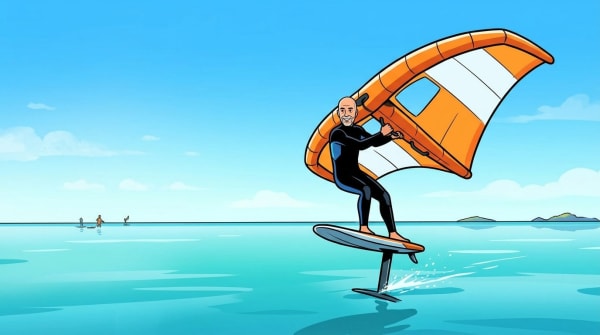
Downwinding isn't just riding with the wind. It's a different discipline — one where the goal is to get on foil and stay on foil using the energy already moving through the water, not the pressure of the wing in your hand. You use the wing to get up, then you flag it, neutralize it, and let the lake's wind-driven swell carry you. The foil does the work. You're riding water energy, not wind energy.
That distinction matters because it changes what skills you need. cross-shore wingfoiling rewards quick reflexes and active wing management. Downwinding rewards balance, swell reading, and the ability to stay on foil through variable energy — pumping when the bump fades, finding the next one before you lose altitude. According to Next Steps Watersports, the goal is to get from point A to point B purely on the energy in the water, typically generated by wind swell or wind bumps. Once you've felt it — linked three bumps without touching the wing — it's immediately clear why people get obsessive about it.
Why Lake Ontario Works
Why Lake Ontario Works
Lake Ontario is a legitimate downwinding venue, and not a compromise version. The lake is roughly 50 miles wide and 200 miles long, and its east-west orientation means wind running the length of the lake builds substantial fetch and generates wave periods longer than most Great Lakes spots, as documented in the Surfski Knowledge Base. The prevailing wind direction across the Great Lakes region is westerly, according to NOAA's lake effect precipitation data, which on Lake Ontario means a sustained west or northwest wind has the full length of the lake to build swell before it arrives at the Rochester shoreline. On the right day, the bumps running into the south shore are organized and rideable — not ocean swells, but real energy with real glide.
Frontal weather systems in the region can last from five hours to several days, and rideable waves are typically created by winds in excess of 15 knots that have blown over water for more than 50 miles, per the Surfski Knowledge Base. Rochester sits right in that pocket. A two-day westerly at 18–22 knots produces conditions the local foiling community has been running for several seasons now.
The Rochester Runs
The Rochester Runs
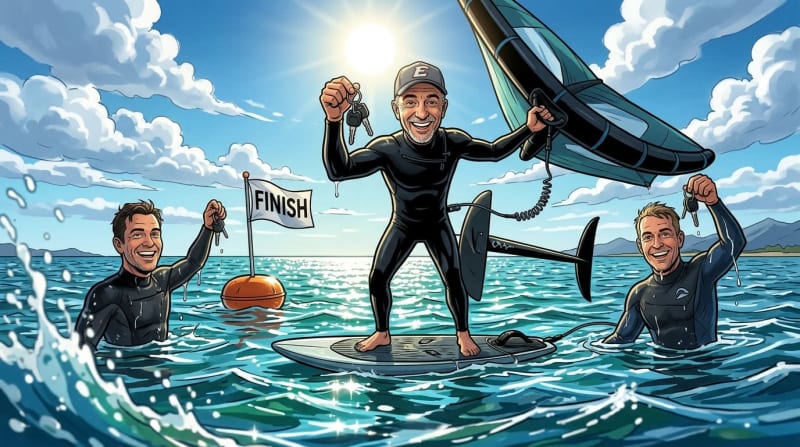
Three seasons ago, Greg, Jason, and Marc left a car at Manitou Park at Windsor Beach — the western launch — and ran a downwinder east along the south shore to Montana Beach near the Irondequoit outlet, finishing near Marge's Bar, Abbott's, and Bill Gray's. They came back with the grins that tell you everything you need to know about what that run feels like.
That corridor — Windsor Beach east to the Irondequoit outlet — is the signature local run for a reason. The launch at Manitou Park sits in clean water with room to get on foil before the swell lines organize. The run tracks the south shore east with the prevailing westerly or nor'westerly behind you, and the Irondequoit outlet gives you a defined landing point with easy shore access. The distance is manageable for a first run — long enough to feel the rhythm of linking bumps, short enough that one off day won't turn into an ordeal.
What You Actually Need to Be Ready
What You Actually Need to Be Ready
Downwinding requires a different skill foundation than cross-shore wingfoiling, and being honest about the prerequisites saves a lot of frustrating sessions. The key shift: you can't rely on wing pressure to hold yourself on foil. In cross-shore winging, the wing is doing a lot of the stabilizing work. Downwinding asks you to balance on the foil through variable swell energy with the wing largely neutralized. According to TotalWing's downwind guide, you need to be able to fly non-stop for at least three minutes before increasing run distance — and consistent jibes are the practical threshold. If you're still fighting your jibes, you're not ready to add the complexity of bump reading on top.
Next Steps Watersports notes that beginners are better served starting on bay or lake runs where the bumps tend to be more groomed and in a single direction, without ocean current to complicate things. Lake Ontario's south shore is exactly that environment — predictable bump direction, no current, a coastline that keeps you oriented. The first time you stay on foil through two connected bumps without touching the wing, the sport makes a different kind of sense.
Board choice matters more here than in regular winging. According to MACkite's board comparison guide, downwind boards are longer and narrower than standard wingboards, extremely efficient through the water, and need less wind to get going — which makes them well-suited for inland lakes where the wind isn't always perfectly consistent. If you're riding a midlength, you may be closer to ready than you think. The shorter, wider boards that work well for cross-shore winging create more drag in the water and make bump entry harder.
How to Start
How to Start
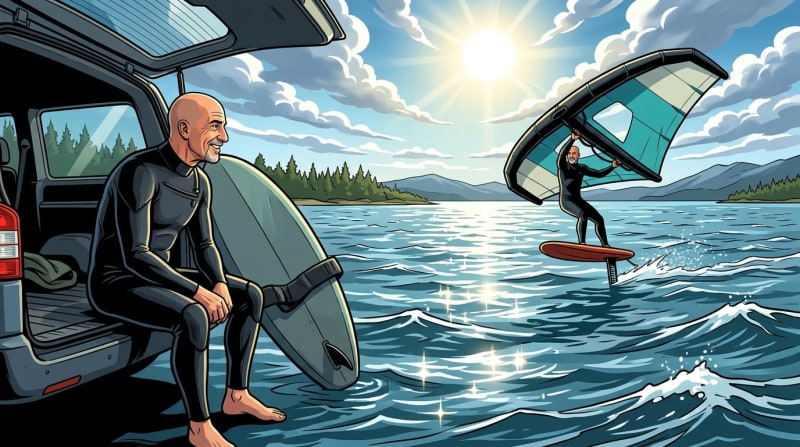
The two-car logistics are non-negotiable. One car drops at the finish — wherever you're landing — and drives the other car back to the launch. After the run, everyone piles into the finish car and retrieves the launch car. You also need willing drivers for both ends, or at least someone comfortable shuttling while the foilers are on the water. Don't underestimate this part of the planning: a last-minute logistics collapse on a good wind day is a particular kind of frustrating.
Start with shorter runs before working up to longer distances — TotalWing recommends no more than 2 km for your first runs. The Windsor Beach to Irondequoit outlet corridor is a solid first target, but the best resource for identifying other runs along the Rochester shoreline is the local foiling community — people who have already figured out which stretches work in which wind directions and where the reliable launch and landing points are.
For forecasting, look for sustained westerlies or nor'westerlies at 18 knots or better that have been blowing for at least several hours before your session. Windance's lake foiling guide recommends checking that you have clear water downwind of your line with no obstacles in your fall zone, and identifying a backup exit point in case the wind shifts or drops mid-run. The lake can change faster than the forecast, and having a plan B for coming ashore somewhere other than your intended finish is the difference between a good story and a bad one.
The full session — car logistics, rigging, the run itself, retrieval — takes most of a morning. Plan for it. Come back with big smiles.
Content ID: 87vIh3x8kgG9sp7CcYgtywyq
See an error? Tell us.
Comments
Share with the Community