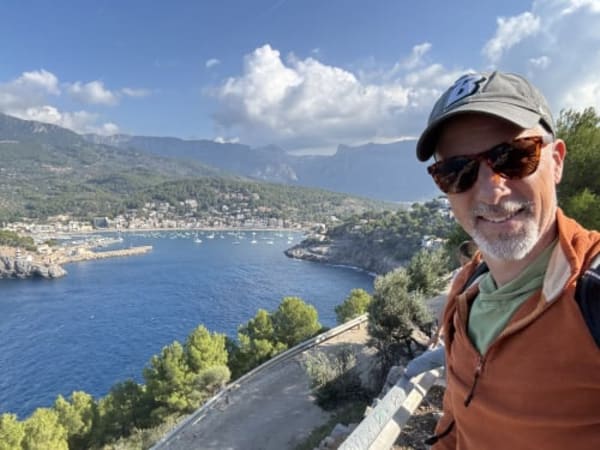

Wingfoil Curacao: The Secret Bay by the Ostrich Farm That Changed My Jibe
The Short Version
- The bay's narrow ocean inlet blocks Atlantic swell so completely that the water inside stays glassy even when the trades are pushing 15–25 knots outside — a rare setup that lets foilers actually feel their mistakes instead of blaming chop.
- Astroturf launch mats, rolled out on the shore by unknown community members and free to use, are the small but telling sign that someone found this place and chose to make it better for the next person.
- Green sea turtles are visible from the water in numbers good enough that non-foiling travel companions will be genuinely occupied — their presence also signals strong water quality and a healthy marine ecosystem according to NOAA Fisheries.
- Finding the spot requires turning off an unmarked dirt track flanked by an actual ostrich farm, with no signage and no GPS pin — the directions are purely earned, passed person to person.
- Curacao averages around 3,000 hours of sunshine per year and sits outside the hurricane belt, making its trade wind conditions some of the most reliable in the Caribbean for trip planning.
- Shallow flat water does something specific for jibe practice that choppy open-ocean conditions can't: it removes the consequence of failure enough to let riders repeat attempts without fear, which motor learning research identifies as a key accelerant for building new movement patterns.
I almost turned around. The paved road had dissolved into a rutted dirt track, dust was coating my rental car, and there were — I want to be clear about this — ostriches staring at me from behind a fence with the specific contempt that only ostriches can manage. This was not what I had in mind when someone back at the dive shop mentioned a "really good wingfoil spot on the east side." But then I saw them: kite canopies, bright against the blue Caribbean sky, rising above the tree line like the universe's most colorful breadcrumbs. I kept driving. Wingfoil Curacao doesn't get nearly enough coverage in the spots conversation, and what I found at the end of that dirt track might be the best-kept secret in the Caribbean.
How to Find This Secret Wingfoil Spot (Yes, Turn at the Ostrich Farm)
The spot sits on the windward east side of Curacao, which already tells you something important: this is where the real conditions live. There's no Google Maps pin, no signage, no helpful "KITE BEACH THIS WAY" arrow bolted to a post. There's just an unmarked dirt track that peels off the main road, and if you're not looking for it, you will absolutely miss it. I did. Twice.
The turn-off is easy to describe in retrospect and genuinely confusing in the moment: small, unpromising, and immediately flanked by ostriches to your left. I don't know why ostriches are the landmark, but they are, and honestly I've navigated by worse. That sensation of being genuinely lost — of having made a wrong turn into someone's farm — lasts for about ninety seconds before the trees open up and you hit a small parking area that is very clearly set up by people who know exactly what they're doing.
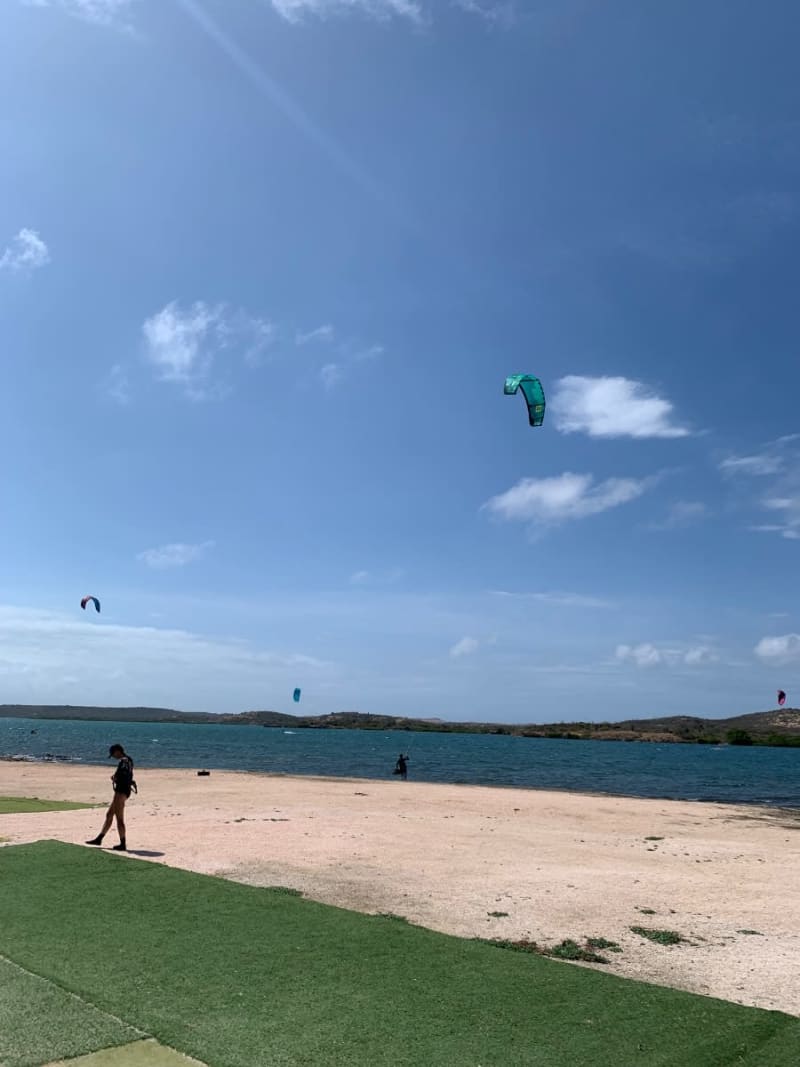
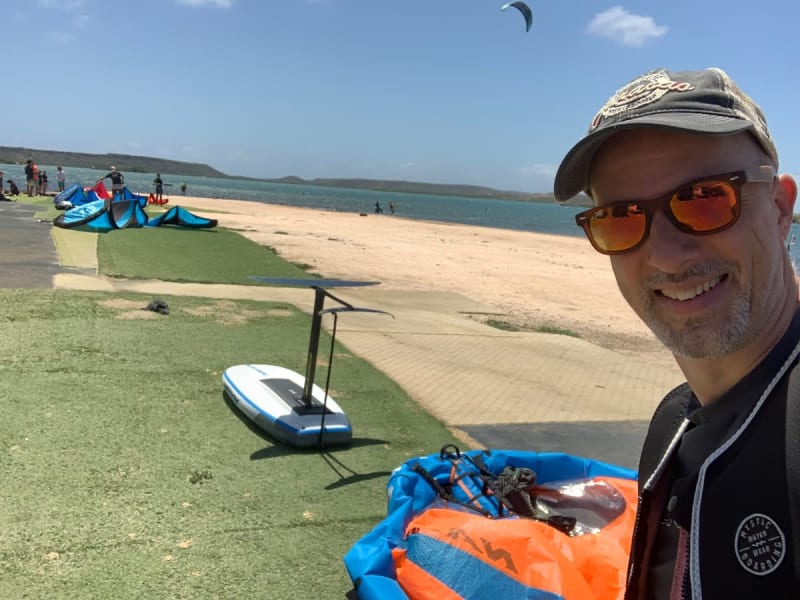
Here's the detail that got me: astroturf launch mats. Rolled out on the shore, clearly placed with intention, free to use. Someone put love into this place. Someone found it, figured it out, and instead of keeping it for themselves, they made it a little better for the next person. That is the entire ethos of this community condensed into a rectangle of synthetic grass.
This is the kind of secret wingfoil spot Curacao locals trade in whispers — earned knowledge, passed forward freely. The people who know about it had to find it the same way you did, which means when you tell someone else, you're continuing something. That's worth something.
Why This Bay Is Almost Perfectly Designed for Wing Foiling
Why This Bay Is Almost Perfectly Designed for Wing Foiling
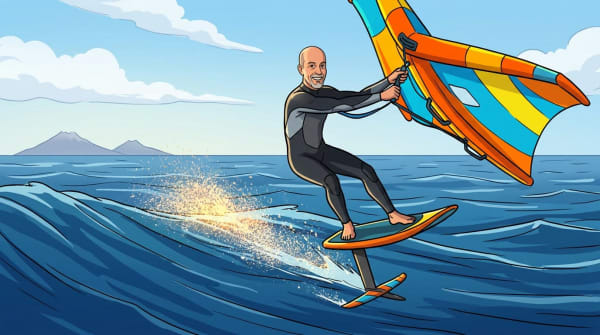
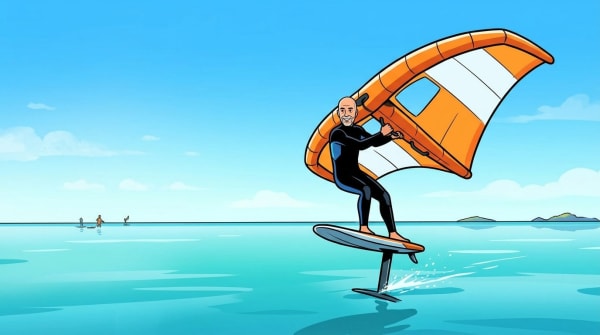
The geography here is the kind of thing that makes you wonder if someone designed it specifically for flat water wing foiling. A large protected bay with only a narrow inlet to the open ocean — that's the whole game. The strip of land between the bay and the Atlantic blocks ocean swell before it can get to you, which sounds like a simple thing until you've spent a session on a choppier beach trying to feel your mast lift through two-foot wind chop. Here, the water inside is glassy or close to it, even when the trades are ripping outside.
What that means practically for foilers: you can actually feel what your wing is doing. When you're trying to dial in trim — that sweet spot where the wing is powering the foil without over-driving it — chop interference is the enemy. It disguises your mistakes and introduces variables you can't control. Flat water strips all of that away. Your errors are your own, and so are your breakthroughs.

The wind arrives consistent and side-shore thanks to the east coast's windward orientation, which is a genuine asset for anyone working on upwind angles. You're not fighting shifty or gusty conditions. The breeze is just... there. Reliable. Like a training partner who shows up every time.
The bay also offers a natural split between shallow water near the beach and deeper interior water further out. Kite learners can work in the shallows without threatening anyone, while more experienced foilers have the room and depth they need further in. The coexistence works — when we were there, kite school students and intermediate foilers were running completely separate programs without anyone getting in anyone else's way. That's a rare thing in a small spot, and it makes this the kind of place you want to bring the whole crew, whatever level they're at.
Working on Jibes Here: Why the Conditions Are a Cheat Code
Working on Jibes Here: Why the Conditions Are a Cheat Code
I'll be honest — jibes were the whole point of this session. I'm at that stage where I can ride, I can go upwind, and I can crash a jibe with impressive reliability and deeply inconsistent style. The flat water and consistent breeze at this bay turned what is usually a punishment-loop into something that actually felt like progress.
Here's what makes it work for wing foil jibe practice: the bay is large enough that you can lap it and repeat attempts without spending half your time dodging kiteboarders, swimmers, or your own equipment shame. You get a run, you try the jibe, you either nail it or you don't, and then you have enough space and time to reset before the next attempt. In open-ocean conditions, a failed jibe often means getting pushed downwind into chop, having to water-start in a confused sea, and arriving back upwind already tired. Here, a failed jibe means touching down in flat, knee-deep water, laughing at yourself, and going again.
That brings up the psychological thing nobody talks about enough: shallow water gives you permission to try. Knowing you can touch down — that you're not going to be swimming in five feet of chop if something goes wrong — is quietly transformative for learning new maneuvers. The confidence boost is real, and it shows up in your riding.
If you're at the stage where jibes feel impossible, a protected, spacious, flat-water bay is exactly the environment that accelerates the learning curve. The research on motor skill acquisition is consistent here: variable practice in high-consequence environments slows learning, while repetition in controlled conditions builds the movement pattern first (Schmidt & Wrisberg, Motor Learning and Performance, Human Kinetics, https://us.humankinetics.com). This bay is a controlled environment. Use it that way.
And those astroturf mats? After a two-hour session, when your arms are done and you just want to derig and sit in the shade, rigging your kit on a surface that isn't sand or coral rubble is a small mercy that feels enormous in the moment.
The Turtles: An Unexpected Bonus You Won't Be Able to Stop Talking About
The Turtles: An Unexpected Bonus You Won't Be Able to Stop Talking About
Nobody told me about the turtles.
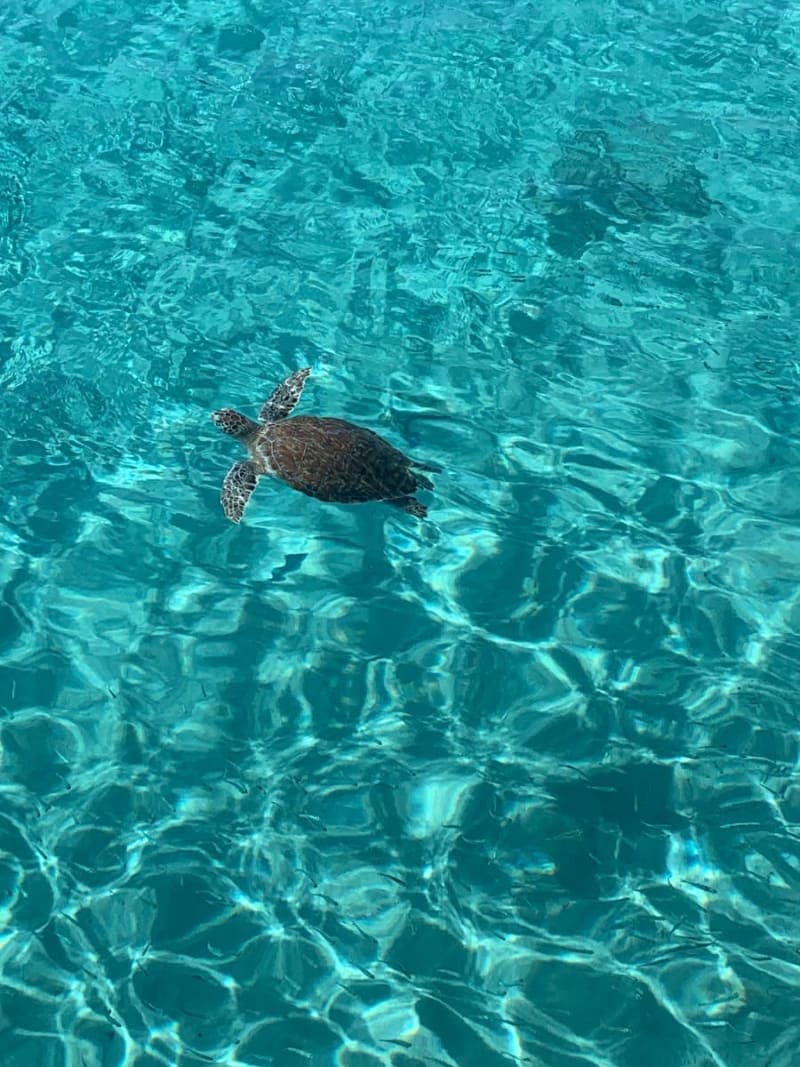
The bay is full of them — green sea turtles, visible from shore, almost certainly gliding beneath you while you foil. The water is that specific shade of Caribbean turquoise that makes you feel like you've been edited into a screensaver, and the clarity is such that you can watch a brown shell moving through it from twenty feet up. I have a photo: crystal water, the turtle maybe three feet below the surface, the color contrast between the shell and the sand so sharp it looks staged. It is not staged.
This is the kind of wildlife encounter that changes the shape of a trip. If you're traveling with a partner or family members who don't foil — and at some point you will, because that's just how this works — this is your answer to "but what do I do while you're on the water?" They'll be watching turtles. They'll be fine. They might even admit they had a good time.
The presence of sea turtles is also worth noting as an indicator of broader ecosystem health. Green sea turtles are a protected species under the U.S. Endangered Species Act and equivalent international agreements, and healthy populations in an area typically reflect good water quality and a functioning marine food web (NOAA Fisheries, https://www.fisheries.noaa.gov/species/green-turtle). This is not a degraded bay. It's a genuinely healthy marine environment, which is something worth caring about.
The community angle here is simple: spots like this exist because the people who use them don't trash them. Pack out what you pack in. Give the turtles space. The secret wingfoil spots that stay good are the ones where the tribe that finds them acts like they want to come back.
Who This Spot Is Perfect For (And Who Should Manage Expectations)

Who This Spot Is Perfect For (And Who Should Manage Expectations)
Let me save you a trip if this isn't your spot, and help you recognize it if it is.
This bay is built for: intermediate foilers working on transitions, anyone in the beginner kiteboarding Curacao pipeline who needs shallow protected water, and riders who want consistent trade wind conditions without the randomness of open-ocean swell. If you're somewhere in the middle — past your first five sessions, not yet threading jibes reliably — this is your spot. Full stop.
When we were there, kite schools were actively running lessons from the shallow end of the beach. The setup was professional, the students looked appropriately terrified and then less terrified, which is the correct arc. The geometry of the bay — wide, protected, knee-to-waist deep near the shore — is genuinely well-suited to teaching. As someone who remembers the exact feeling of not knowing which end of the bar to grab, I found this oddly moving to watch.
Experienced foilers will find enough depth and room in the bay's interior to open up and work on higher-level skills. It's not a race course, but it's not limiting either.
What this is not: a swell spot, a deep-water jump venue, or a beach with a bar, a food truck, and a playlist. There are no amenities. The vibe is working foil spot, entirely unfrillled, the anti-resort beach. The people who love it love it because of what it isn't as much as what it is. If that sounds like your community — low-key, skill-focused, perfectly happy eating a granola bar in a parking lot — welcome home.
Practical Info: Gear, Conditions, and What to Bring
Practical Info: Gear, Conditions, and What to Bring
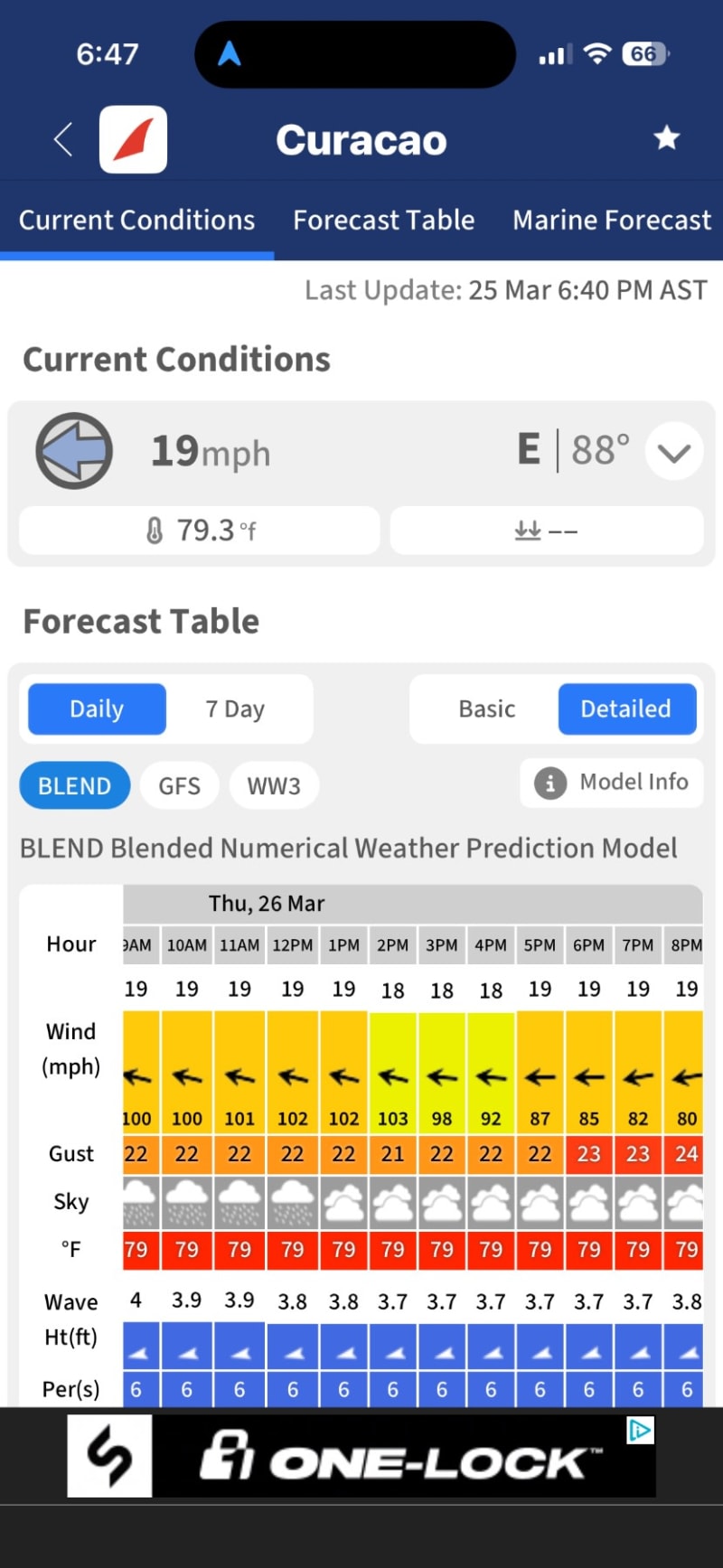
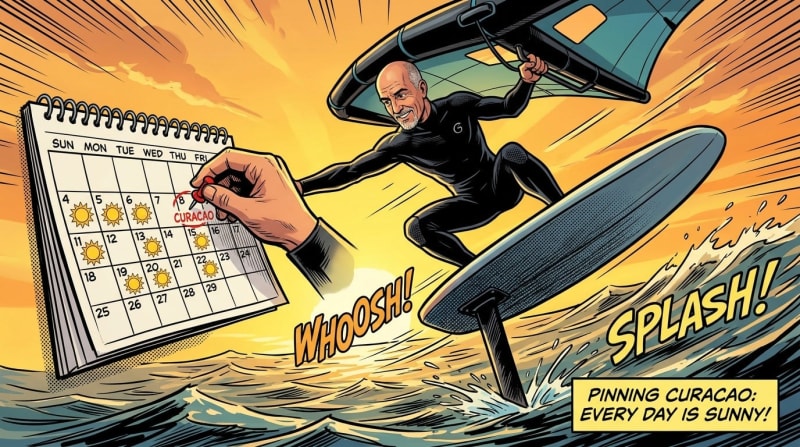
The east coast trade winds in Curacao are among the more reliable things on this planet. Winter through spring is peak season — expect 15–25 knots on a good day, arriving side-shore to slightly side-onshore. Curacao sits outside the hurricane belt, which means you're not playing weather roulette the way you might elsewhere in the Caribbean. The island averages around 3,000 hours of sunshine per year and sees relatively low rainfall, making Curacao trade wind conditions about as consistent as it gets for planning a foil trip (Curacao Tourist Board, https://www.curacao.com/en/knowledge-base/weather).
For wing size: the gear visible on the astroturf when we rigged up told the story clearly. A medium-sized wing in the 4–6 meter range is the call for most adult riders in these conditions. Too big and you'll be overpowered in the gusts; too small and you're fighting for lift in the lighter moments. Somewhere in the 5m range is a reasonable center of gravity for planning, and you can adjust from there once you know what the day is doing.
Bring water. Bring snacks. Bring sunscreen you'll actually apply, not sunscreen you'll find in your bag six months from now with good intentions still intact. There are no rentals, no kiosk, no food trucks. This is a self-sufficient session spot — you bring what you need, you take back what you brought, and you manage yourself accordingly.
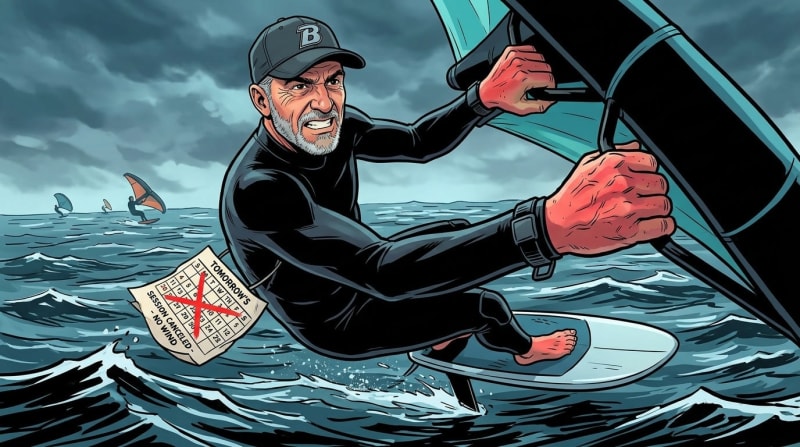
One gear note worth making: the UV exposure in the Caribbean at midday is not theoretical. A good rash vest or UV jacket isn't optional if you're spending two-plus hours on the water — it's the difference between functioning the next day and not. A Mystic Water Wear rash jacket was the right call for this session and would be again. UV index in Curacao regularly hits 11 or above, which the WHO classifies as "extreme" and recommends covering exposed skin (World Health Organization, https://www.who.int/news-room/q-a-detail/ultraviolet-radiation).
Come prepared, come stoked, and you will leave already mentally planning when you can come back.
If you're building a wingfoil Curacao itinerary and this bay isn't on your list, add it now — before the algorithm finds it, before someone puts a pin on it, before the thing that makes it feel discovered gets diluted. The turtles are there. The flat water is there. The trade winds are there. And somewhere on that dirt track past the ostriches — who are still judging you, by the way, and will continue to — there's a community of people who found the same thing you're about to find and loved it enough to leave the astroturf mats out for you. Go find your people out there.
Content ID: 7oGATP0R8oHf31zmBPygZeCF
See an error? Tell us.
Comments
Share with the Community