

What Is a Parawing? An Honest Explainer for Wing Foilers in 2026
The Short Version
- The parawing concept only hit its modern form with the BRM Maliko in late 2024, yet by early 2026 nearly every major brand — Duotone, F-One, Ozone, Naish, Ensis, North, Cabrinha — already has models in production.
- Unlike an inflatable wing, a parawing is designed to be used as little as possible — you fly it to get on foil, then stow it and ride purely on swell energy.
- Sizing precision matters more with a parawing than with a wing: a 5m parawing is comfortable in roughly 15–22 mph, while a comparable 5m inflatable wing covers 15–30 mph in experienced hands.
- Competent foil skills are a hard prerequisite — tacks, jibes, and reliable foil control need to feel comfortable before adding a parawing, because trying to learn both simultaneously tends to end in frustration.
- Going from a 75-liter wingfoil board to a 90–100 liter board can meaningfully open up your usable wind range on a parawing, making board choice as important as wing size.
What a Parawing Actually Is
What a Parawing Actually Is
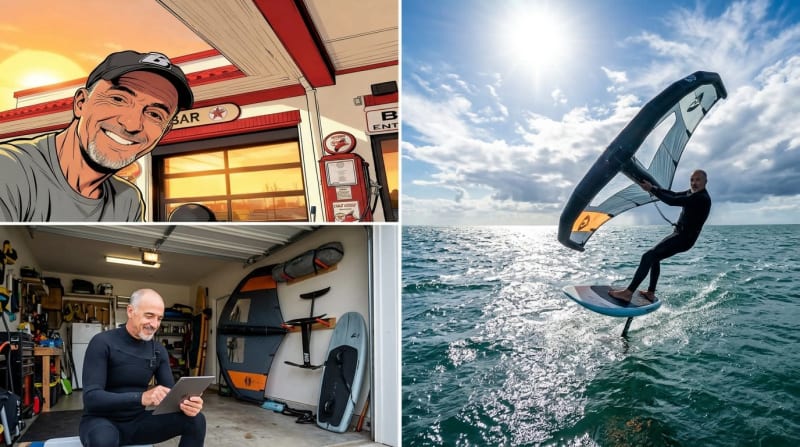
A parawing is a compact, soft-canopy wing flown on short lines — typically two to four meters — with a control bar. No inflation, no struts, no pump. The canopy is a single-skin ram-air design borrowed from paragliding: it takes shape from air pressure alone and collapses into something small enough to stuff in a waist pouch. The whole package is dramatically lighter than any inflatable wing in your quiver.
The concept surfaced in its modern form with the BRM Maliko parawing in late 2024, and the adoption curve since then has been steep. By early 2026, nearly every major brand — Duotone, F-One, Ozone, Naish, Ensis, North, Cabrinha — has one or more models in production, along with parawing-specific boards and foils. What started as a niche tool for downwind specialists has become one of the most talked-about gear categories in the sport.
How It Differs from a Wing

How It Differs from a Wing
The functional difference comes down to intent. An inflatable wing is designed to be in your hands continuously — you use it to generate power, tack, jibe, and maneuver through an entire session. A parawing is designed to be used as little as possible. You fly it to get on foil, then pack it away and ride purely on swell energy. That's not a limitation — it's the whole point.
The short-line setup creates a tighter, more direct feel than a full kite window. There's less lag, less line management, and the soft structure drifts cleanly once depowered. Because there's no inflation required, rigging takes seconds and packdown is faster than any inflatable alternative. Some wingfoilers are now carrying a parawing on downwind runs as a backup — something like a reserve chute — in case conditions change or their wing fails mid-session, according to MACkite Boardsports.
One important distinction from a wing: a parawing generates forward drive, not vertical lift. To get on foil, you need to build speed and apparent wind first. According to MACkite's gear guide, you can't pull and go the way you can with a wing — that changes how you read conditions before you even launch.
When to Reach for a Parawing

When to Reach for a Parawing
This is where it gets practical. Parawings have a narrower usable wind range per size than inflatable wings, and the direction you can travel relative to the wind is more constrained. Understanding both will save you a frustrating session.
On wind range: a 5m parawing is comfortable in roughly 15–22 mph, while a 5m wing covers 15–30 mph in experienced hands, according to MACkite. Parawings generate more power per square meter, but that narrower range means sizing matters more, not less. If you're unsure whether your size fits the day, open it on the beach and feel it before committing to the water.
On direction: roughly 30 degrees downwind of the true wind is where most parawings build speed efficiently. Going perpendicular to the wind doesn't work, and straight downwind is too slow to generate the apparent wind needed for foil liftoff. The sweet spot is a beam-to-broad reach angle — which is also, not coincidentally, the angle that produces the best downwind runs.
The conditions where a parawing earns its place in the bag:
Onshore wind with rolling swell. This is the parawing's home turf. Onshore conditions that make wingfoiling awkward — where you're fighting to get out through the break — become productive with a parawing. You can power upwind efficiently, then stow the wing and ride bumps back in hands-free, redeploying between sets.
Downwind runs with wind-driven swell. The classic use case. Use the parawing to get on foil, pack it away, and link swells for as long as they hold. At spots where the best conditions require a long upwind slog to reach, a parawing makes the return trip a non-issue.
Sideshore wave spots. As Ensis rider Balz Müller describes in the Ensis parawing guide, you can use a parawing like a ski lift — drag yourself out to the peak, pack it, and surf back in hands-free. The parawing handles the transit; the wave handles the ride.
Marginal days with steady 10–20 knot wind. At the lighter end of foiling conditions, a parawing can unlock sessions that an inflatable wing would struggle with, because foils are efficient enough to stay aloft on minimal power once you're up.
Where a wing still wins: flat water, active cross-shore sessions where tacking and jibing upwind is part of the ride, gusty conditions that require continuous active power management, and any day where wind range and versatility matter more than packability. Wingfoiling's ecosystem — the range of wing sizes, the established learning curve, the ability to ride smaller gear at higher speeds — remains the more all-around path for most conditions, according to King of Watersports.
Who It's For (and Who It's Not)
Who It's For (and Who It's Not)
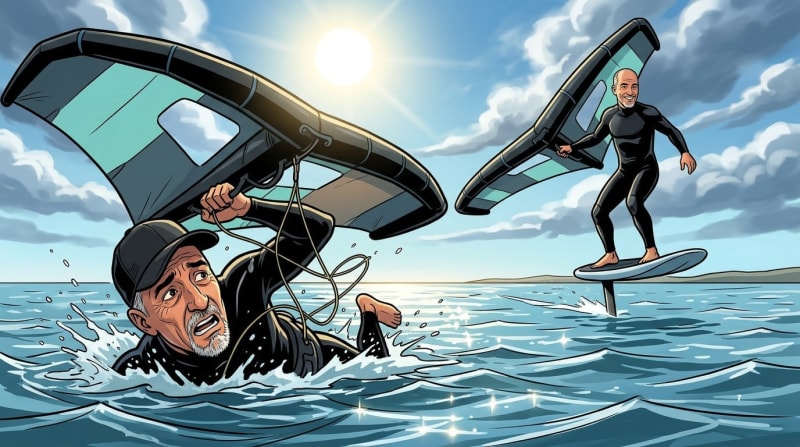
The prerequisite is honest: you need to be a competent foiler before a parawing makes sense. tacks, jibes, and reliable foil control should already feel comfortable. The wing handling itself transfers quickly from wingfoiling — the concepts are familiar, the short lines feel more direct — but the foil skills underneath have to be there first. New foilers who try to learn foiling and parawinging simultaneously are likely to find it frustrating.
For experienced wingfoilers, the learning curve is manageable. Balz Müller, one of the early testers of the Ensis Roger parawing, describes getting pulled onto foil as straightforward for anyone who already foils — the bigger adjustment is learning to handle, pack, and redeploy the canopy efficiently mid-session. That comes with water time.
Should You Add One to Your Quiver?
Should You Add One to Your Quiver?
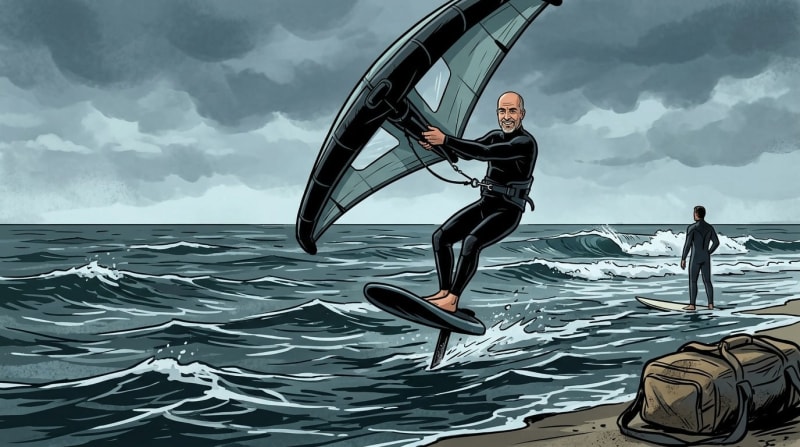
The honest answer depends on how you ride. If your sessions are mostly flat water, cross-shore rippers on a lake or bay, a parawing is likely to sit in the bag. If you're already chasing downwind runs, surfing swell, or regularly dealing with onshore wind at your spots, it becomes a genuinely useful addition — not a replacement for your wing, but a specialist tool that opens sessions you'd otherwise skip or struggle through.
Board sizing is worth noting. Parawings generally work better with longer, narrower midlength shapes than the shorter boards many wingfoilers use. A bigger board means easier foil liftoff, which in turn lets you fly a smaller parawing size that keeps you out of the overpowered zone. According to The Inertia's parawing roundup, going from a 75-liter wingfoil board to a 90–100 liter board can meaningfully open up your usable wind range on a parawing. If you're already riding a midlength, you may be closer to a compatible setup than you think.
The category is still maturing fast. Second-generation models from most brands are already out, with meaningful improvements in upwind performance, top-end stability, and ease of redeployment. If you've been parawing-curious but waiting for the gear to catch up — 2026 is probably the right year to try one.
Content ID: vFSwvTbvzdqsz5SaSBCrzkRk
See an error? Tell us.
Comments
Share with the Community